book review · stupid human tricks · Uncategorized

Brain Training for Riders: Interview with Andrea Monsarrat Waldo

Previously, I reviewed Andrea’s terrific book, Brain Training for Riders: Unlock Your Riding Potential with StressLess Techniques for Conquering Fear, Improving Performance, and Finding Focused Calm. In Part II of this three-part series, I asked Andrea a number of interview questions about her book and about some things I was curious about that she didn’t address in the book. (In Part III, coming on Friday, Andrea will answer questions from blog readers as long as they’re posted as comments or emailed to me by midnight on Monday, February 12.)

Remember: you can enter to win a copy of the original book! Just check out the original review post for the entry instructions.

Interview with Andrea Monsarrat Waldo

Q: A lot of the situations and emotions you describe are ephemeral or inside one person’s head. How did you find the process of getting all those thoughts out into written form? Was it difficult, or did it just flow?

Many of those things came from inside my own head, so those were easy!! Others were from my students, and I’m used to getting people to describe their emotions in detail, so it flowed pretty naturally for me–it’s the language I use all the time.

Q: You write very honestly and thoughtfully about your own struggles with Lizard Brain and getting over a bad fall. I’ve been thinking a lot lately about what drives people to keep doing risky things even when they get nervous about them. Really, all equestrian disciplines have inherent risk, but you’re an eventer – a sport that arguably has higher risk than most. Do you have any thoughts on what keeps driving us to do these things even when our brains are screaming no?

I heard someone say once, “Anxiety is excitement without breath.” Those two emotions are two sides of the same coin. Human beings seem to have an inherent need to challenge ourselves; the quest for growth and learning appears to be built right into our DNA. Some people have this drive more than others, and for those of us like this, the reward of the thrill overrides the power of the fear.

Q: You’ve taught a lot of clinics, both on riding and on your StressLess program. What would you say the most common fear that people have is?

There are two biggies: death and embarrassment/rejection. Often these are divided by age: people under 30 tend to fear looking foolish, while people over 30 more often fear serious injury. When you’re younger, you haven’t lost the invincible feelings of adolescence, or the self-consciousness of that phase, so you are less concerned about the physical risk. As we get older, we have more experience with the consequences of danger, both our own and other people’s; we also have more responsibility, so we worry about things like how to pay the mortgage if we are injured badly enough to be out of work. Having children is a significant game-changer too: many women tell me that they became much more cautious once they had kids of their own. Fear of embarrassment or failure is still there as we age, but it’s usually less powerful.

Q: A lot of the challenges you describe are problems of action: you can act to change them, or at differently, or apply work to get through them. What advice would you give for riders facing problems of inaction? In other words, what the brain gets up to when the best solution is to do absolutely nothing. I know I’m not the only one who has turned around halfway home from the barn to go and make absolutely sure I latched the grain room door securely, or turned off the lights, or gotten the blanket changes right, or other, similar weaselly thoughts. How do you recommend easing the brain through those kinds of anxiety moments?
 At that point, it’s practicing anxiety tolerance, or getting comfortable with being uncomfortable. You have to do nothing, then discover that everything turned out ok, before your brain will allow you to do nothing without the intense anxiety. This SUCKS, btw!! To make it a tiny bit easier, it helps to give your brain some crutches, or something else to focus on. You could write yourself a note when you close the grain bin: “Hey, I closed the grain bin today, Jan. 28th. You don’t have to check again.” While you’re riding it out, give yourself something else to focus on–practice leg-yielding while you’re hacking, keep your horse on the bit, talk to yourself about your goals for the year–anything to keep yourself occupied while you wait to see that everything turns out okay. Getting past any anxiety, though, is all about learning to sit with the discomfort and realize “I’m anxious, it feels awful, and I’m still okay. I hate this feeling, and I’m still okay–it’s just a feeling, and it will pass.” Our Lizard Brain needs to recognize that every anxious thought isn’t true, and that anxiety isn’t fatal. It doesn’t know this on its own; we have to train it to listen to our Rational Brain.
Q: I personally tend not to worry about my own skin. I guess I’m lucky in that. I figure if something bad happens to me I made my choices, and I have pretty high pain and embarrassment tolerances. But I do worry about causing harm to my horse. If he bolts outside, the panic in my brain is not “what if I fall off and die?” it’s “what if he keeps running and never comes home and gets trapped in the woods and colics and dies or gets hit by a car or…?” Yells of “loose horse” at a show scare me almost more than the ambulance does. Any thoughts on overcoming that niche fear?
I think this must be what parents deal with on a regular basis when they send their kids out the door every day. The fear of loss is the flip side of love. To a certain extent, we have to do the same thing we do with the danger of riding: accept that there is inherent risk in dealing with flight animals, and that sometimes they make bad/downright stupid decisions, and that we can’t control every single thing that happens. In the moment, though, what we need is action: never mind what *could* happen, the question is, what do you need to *do* right now to prevent those things from happening? He’s loose-grab a halter and grain. Also, remember what you know: “What if he never comes home?” Remember that horses are herd animals, if he gets lost, he’ll do his best to find buddies–so put the word out that he’s lost. And remember that you’re not alone–horse people come together in crises. We look for lost horses, we hook up a trailer as fast as we can to get someone’s horse to the surgery clinic when they’re colicking. We can’t 100% rid ourselves of the anxiety, but we wouldn’t want to–it’s the thing that reminds us to buckle throat latches on halters, to do night check when we don’t feel like it, to notice when a step sounds a little bit off when they’re walking next to us.
Q: Horse people are not always the easiest to get along with. There’s a reason we chose a sport in which we relate to one-ton animals instead of other humans. Are there any StressLess techniques you’ve found useful in applying to barn drama?
Haha I think you just handed me my next book subject! First, we have to be brutally honest with ourselves: what role do we play? No one thinks that they create drama! Notice whether you join in group bitching sessions, or get worked up when that person does the annoying thing she always does (my biggest habit–why am I surprised when people are who they have always been?), or roll our eyes behind someone’s back. Second, I live by the saying, “Not my circus, not my monkeys.” If it’s not my problem, I try to find something better to do.  If it *is* my circus–it’s happening in my barn–that doesn’t mean they’re my monkeys–it’s not necessarily my job to solve it or get involved. If they are, in fact, my monkeys–two of my students are sniping at each other, or I’m pissed off at one of my business partners for something–then it’s time for me to deal with it, and deal with it directly, not by complaining to someone else to let off steam and then not do anything to change the situation. Like I said, I could write a whole second book on this one!
Q: Your section on how to transition people on from a horse that’s not a good fit for them was fantastic. I’m starting to think about retiring my partner of over a decade. I was in the same position as the young rider you described – I chose him over a specific discipline or specific goals. I hope my next horse will be a bit more competitive and ready to event, though. Any advice on transitioning from a longtime, beloved-but-not-easy partner to a new horse?
It’s a bit like dating someone new after you got out of a difficult but meaningful relationship. You have to let yourself grieve for the old one, no matter how right the decision to move on is. Next, be sure you’re not getting the old guy in a different package–we all have a type we gravitate towards! Bring along a friend who is willing to say, “Stop picking the bad boys in leather jackets!”  I can’t emphasize this one enough, because we’re comfortable with what’s familiar, and we gravitate toward it. I’ve always had challenging horses; when I was shopping for Chauncy, I tried a horse down at Sue Berrill’s. She told me to stop picking at him and just soften the rein on the way to the jump. I did, and he sailed over it. I looked at her and said, “I could be a monkey up here and he’d jump.” She just said, “Yup.” I said, “But it doesn’t count unless you suffer for it!” She just about fell off the jump she was sitting on, she was laughing so hard!
Once you find a new horse, then you have to be aware of the baggage you’re bringing to the new relationship. When you get into familiar scenarios with the new guy–you’re working on going through water, and your last horse was allergic to getting wet–it’s really important to remind yourself to ride the horse you have now, not the one you used to have. And you have to give yourself the same patience that you give your new horse: it takes time to get used to a new horse, even when the last one was easy, and getting over “baggage” always takes longer. You’re going to make mistakes, but you’d be making mistakes anyway, right? A good trainer or any good set of eyes on the ground is really helpful at this point. After I sold my ditch-phobic Dutch mare, my business partner Mary came to the start box with me at every event and said, “Remember, ride Sizzle out there–don’t ride Lizzy.” The first time I jumped a ditch on Sizzle, I separated the poor girl’s ribs with my spurs. She was like, “WHAT?!? I’m going already! What’s your problem?” Fortunately she jumped it, instead of bucking me off, which was what I really deserved!
Thanks SO much to Andrea for taking the time to answer these questions – I think you can all see through her interview answers that she’s just as terrific as she comes across in her book!
Now: make sure to enter the giveaway to get your own copy, and comment here (or email me, beljoeor[at]gmail[dot]com) with your questions for Andrea by midnight on Monday, February 12 and look for Part III with Andrea’s answers on Friday!


horse blog yard sale · Uncategorized

Horse Blogger Yard Sale is a GO!

horsebloggeryardsale

People expressed enough interest via the poll in my post on Wednesday to make this a go, so we’re on!

Here’s how it will work:

On Sunday, February 25, I will post a kickoff post. That post will include the blog hop widget. When you post your list of things for sale, make sure you go to that first post and link through. Then, copy the code to your post so that everyone can get to you.

Basic rules of civility and adulthood apply. Please represent the things you are selling accurately, communicate politely, and follow through on your commitments. No one’s policing anything, but let’s just all be cool, ok?

The online yard sale will run for a week, through March 4.

book review · stupid human tricks · Uncategorized

Book Review: Brain Training for Riders by Andrea Monsarrat Waldo

51892rNSrWL._SX330_BO1,204,203,200_Brain Training for Riders: Unlock Your Riding Potential with StressLess Techniqus for Conquering Fear, Improving Performance, and Finding Focused Calm by Andrea Monsarrat Waldo
$12.88 on Amazon

I think it’s nearly impossible to be an equestrian and never to have experienced a moment of fear, or worry, or self-doubt. In fact, I might argue that if you sail through all horse-related endeavors with perfect confidence and ease, you’re doing something wrong.

Andrea Waldo is an eventer and trainer based out of Charlotte, Vermont. (Full disclaimer: I’ve known her for years and did an eventing clinic with her many years ago. She’s just as terrific in real life as she comes across on the page!) She was also a practicing psychotherapist for nearly two decades, and holds an MA in Counseling. So she is uniquely positioned to write a book about the brain demons involved in horse sports.

Andrea has also graciously agreed to be part of this three-part review of her book. In this part, today, I’ll summarize and review the book itself. In part 2 (next Monday), I’ll do an interview with her, and then in part 3 (next Friday), she’ll answer your questions.

I’m also hosting a giveaway for a copy of the book. SO. At the end of this post, ask any questions you might have for Andrea – and be sure to enter the giveaway widget when you do so!

The book has five major sections, and I’ll go through each.

Introduction

Sometimes, book introductions aren’t terribly useful, but this introduction actually sets the tone of the whole book. Andrea is really aiming for a full system in this book, and so she starts by laying out a few of her baseline assumptions and theories, as well as what she’s trying to do as a progression through the rest of the book. She also confesses to her own stress and anxiety issues to show that no one is immune.

The most useful takeaway for me from the introduction was her firm argument that relaxation is not the “ideal performance state for riding.” Such a simple and overlooked idea! Trainers so often talk about being “relaxed” like your mental and physical states should be the same whether you’re sipping fruity drinks on a beach or galloping toward a cross country fence. Andrea blows that myth up right away, and the book is immediately better for it.
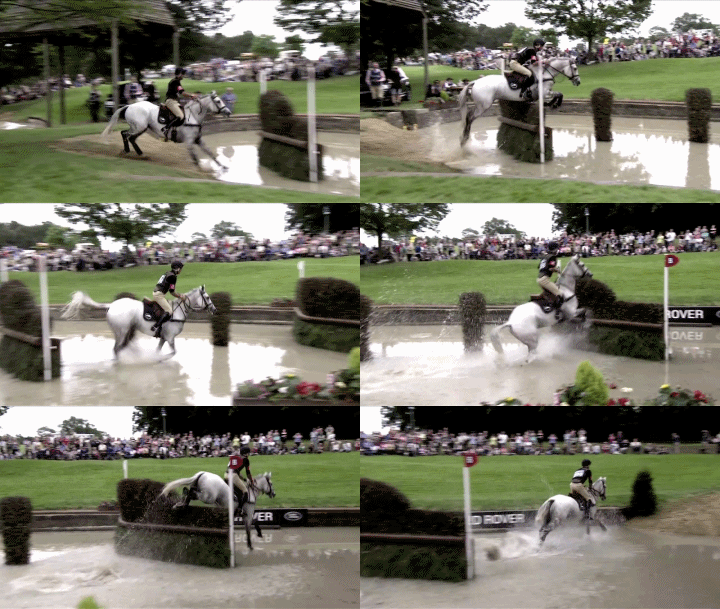
Equestrian GIF - Find & Share on GIPHY

Brain Training

The progression for the book is to start by laying out some concepts and exercises to get you in the habit of using simple techniques, then to apply those techniques to everyday riding situations, then really difficult riding situations, then show a variation on them that can be useful to trainers, rather than just riders.

In this first chapter of the book, she introduces the idea of the Lizard Brain: that primordial part of our brains that is responsible for self-preservation and stress responses. She points out that the Lizard Brain does not distinguish between an actual tiger and an imagined tiger: it floods the system in response to both. In understanding that, we can start to take a step back and simply acknowledge the feelings flooding through us without getting towed under by them.
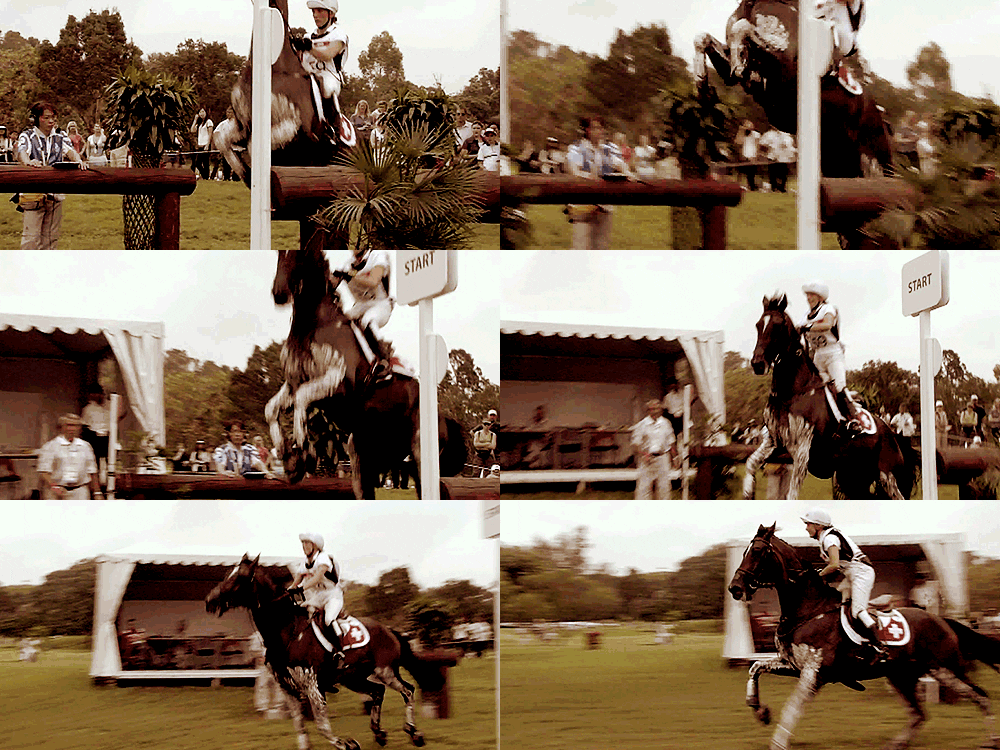
Jumping GIF - Find & Share on GIPHY

She writes a lot about negative self-talk and how to work through it, the differences between bragging and assertion of competence, and advises us to “make a habit of noticing when things go well.” The best thing about her discussion of these things is that she actually lays out a compassionate, straightforward, well-written and well-argued way to go about it. She’s not talking down to her reader: she’s taking the reader’s hand and actually coaching them.

The entire book is chock full of exercises that serve as building blocks for working things through – hence the “training” part of the book’s promise. There are a lot of them, and even if you don’t have the time to physically write out your answers, I found just closing my eyes and thinking them through to be enormously helpful. They complement and add to each other as you go through.

I found one directive from this chapter particularly useful: “If you need to air your anxiety to relieve some stress, make sure you also talk about what you are going to do to address it.”
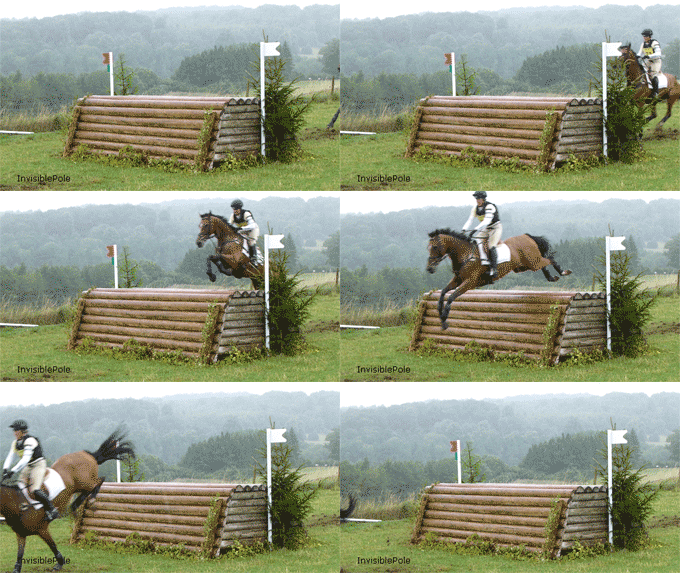
Horse Trials GIF - Find & Share on GIPHY

Focus, Confidence, and StressLess Performance

Once you’ve internalized the training lessons of the first section, Andrea starts to put them into practice in achieving good mental states while riding and competing.

There are a lot of different things you can do to help; the first is to establish a good sense of focus. If you’re totally in the moment, you’re responsive and not worried. I love that she pointed out that focus is not some magical personality trait – it’s a learned, repeatable behavior. I also loved that she suggested an exercise for practicing how to transition your body and mind from tense to calm.

https://giphy.com/gifs/horse-eventing-jumping-iIp9NtxNvJuus

Practice is also highlighted: what quality practice looks like, how to manage the mistakes you’re going to make, and how to start to ramp up the outside stressors. She writes about how to give yourself intentional exposure to mental and emotional risks, and shares the story of a student who had a bad fall and then wrote out a multi-step program for how to move herself past it.

Plans are really important – and setting good goals is a cornerstone of making a good plan. If you don’t know what a successful show season or ride looks like, then you’re always going to feel like you’ve come up short. It’s important to be clear and honest with yourself – Andrea writes that “luck favors the prepared.”

One of my double-underlined notes from this chapter was a summation phrase that really hit me: “you don’t have to feel okay to be okay.” Your Lizard Brain lies, and you need to recognize and work with that.

https://giphy.com/gifs/horse-s-cross-country-jumping-chatsworth-trials-uJOw0IkESNoAg

Battling the Big Demons

We’ve all had at least one really Big One – a fall, a failure, an injury, something that has taken over our brain to an outsized degree. This section moves all the techniques of the previous chapters past the everyday worries and into tackling problems that take up residence in your brain and just. won’t. let. go.

One of the best things about this chapter, for me, was how Andrea balanced things you can do yourself with when to know you need more help – from a trainer, from other people in your life, from a therapist. Books can’t do everything!

https://giphy.com/gifs/horse-ing-eventing-nY1vYp3IlOv04

There are some things you can do on your own, though. First, it’s important to think about psychological injuries in the same way we would a physical one. She points out that we would never put our horses back in work right after a bad injury, and we shouldn’t tough out a brain injury either. Acknowledging the emotions that come up is important, and letting yourself feel it all is the way through.

I’m sure we’ve all had people in our lives ask us why we keep doing these crazy things, and Andrea has a bit about how to work with your family and friends who ask all the frustrating questions you can imagine. I admit, I’ve fallen into the trap of getting snippy and angry right off the bat with people who ask me those things, because I have people in my life who are assholes about it, but Andrea’s methods here are much better!

https://giphy.com/gifs/horse-eventing-trials-5EFSiLDk3xQdy

StressLess Techniques for Trainers

Technically this section is for trainers, but trust me, it’s useful for riders too. Basically, Andrea works through different types of challenges that students might present, and how to teach them. I particularly liked her statement that “every emotional, relational, and social issue in a rider’s life eventually shows up in the riding arena.” I thought “how true!” and then “yikes, my poor trainers.”

Now that you’ve read the summary of the book, I’m sure you want a copy of your own! Check out the Rafflecopter giveaway below; I’ll be drawing the winner on Friday, February 16.

And if you have any questions you’d like to ask of Andrea, comment away or email me: beljoeor[at]gmail[dot]com. She’ll answer questions in Part III of this series, on February 16. You can comment with questions up to midnight on Monday, February 12.

a Rafflecopter giveaway

lesson notes · Uncategorized

Lesson Notes: Hands Up, Leg On, Good Pony

If anyone was wondering if I still rode my own horse, the answer is yes! Mostly. Sort of. Winter sucks.

Anyway, in keeping with my 2018 goals, I had a lesson on Monday afternoon. I was nervous about it beforehand, because I did not have the best prep. I haven’t been able to ride consistently because the weather and the day job are conspiring against me. Then I was away for a week. Then he came up juuuuuust a touch off in his RF – you know, THAT FOOT.  Overall, I did pretty well in riding it out, texting the farrier a bit, going through the logic checklist of things it might be, waiting and re-checking, and so on. It paid off because on Sunday he was pretty much better and then for the lesson on Monday he was great.

In addition to being the world’s greatest barn manager, our BM does a great lesson. She gets that I do what I can, when I can, and strikes a nice balance between pushing and understanding. The barn owner is herself a Grand Prix rider and trainer and she’s amazing, but I just don’t have the funds or the time to ride with her regularly; I use her for aspiration lessons and the BM for the grind through the winter.

I’m just going to list a few takeaways, because overall it was a really terrific lesson.

  • Still need to keep my hands up. Way up. And I need to think harder about the mechanisms I use to ask for bend: up and toward my outside hip, not blocking him down too low. Then to release, release forward instead of out.
  • I need to work on the cycle of ask-release right off the bat in the walk, testing out the horse I have that day and getting him reaching down and supple through his back right off the bat.
  • His canter transitions have been stuttering in part because of my hands, as above. I need to stay up and not give in to the temptation when going up, or he’s blocked, and then I need to not drop my hands because that’s cuing him to break.
  • In the canter, keeping my shoulders open and back and loose lets me follow much more and ride through my seat more effectively.
  • Overall, she’s like to see me working much more through my seat. Both because it’s good dressage and also because it will help hold him together through his lazier moments.
  • We had one awesome/hilarious bit in the canter when his hind end was totally underneath him and pushing up, but he was also soft in the mouth and through the poll, and it was like it fried his brain because everything in between those two points was total flaily tossed salad. I just stayed in the middle of it and laughed really hard and praised him. It was a fun moment to feel, though, because I could see through it to what a better canter would be and it’s always cool, even after riding the same horse for over a decade, to feel when something totally new is taking shape.

Onward and upward! Hopefully I’ll get more consistent riding time in February, and then another lesson in March.

Uncategorized

Horse Blogger Online Yard Sale?

Yard-sale.jpg

I have what may be a great or a terrible idea.

Would anyone be interested in joining an online yard sale blog hop?

The idea is that we choose a week and during that week everyone with horse stuff they want to sell publishes a post with all of that stuff in it. We link everyone’s posts via the blog hop widget.

If anyone out there makes cool stuff and sells via Etsy or anywhere else, you can be included if you do a sale and write a blog post about it.

I’m thinking February 25 – March 4, maybe. The beginnings of spring.

If you think you’d participate, or just browse, can you answer the poll below? If you can’t see it because you’re on an RSS feeder, click through to the post to answer.

stupid human tricks · Uncategorized

Expectation v Reality

Me: I have my first lesson in months today! I’m going to get there an HOUR early, and put on all his Back on Track stuff, and maybe touch up his clip, and really groom him thoroughly, and give him a nice long walking warmup before the lesson even starts!

Also me: Shoot, I forgot the dog has to go out and all the pieces to the barrier that keeps her in the kitchen are in different parts of the house and how are my winter breeches missing??? It’s ok, I still have time for a few more emails while the dog is out, wait, WHAT, we got six more inches of snow and my car is covered in solid ice? I AM A TERRIBLE FAILURE AT LIFE.

sigh.

I got there 30 minutes early and was still on before the lesson started, and it was superb (recap on Thursday) but oh boy, my brain. Could it maybe just not?

2018 goals · Uncategorized

January Goals Check In

How has a month gone by already?!

Original Goals Post

Horse Goals

1. Take 6 lessons through the year. – first lesson of 2018 is scheduled for this afternoon!
2. Ride 3 new-to-me horses. – not yet; waiting until summer, probably
3. Research 3 different retirement situations. – I’ve sent a bunch of inquiries, and have received one answer so far.
4. Write retirement budget for Tristan. – I have a rough draft of a budget that’s going to need a lot more work.
5. Reach goals for horse-specific income stream. (Primarily through Etsy shop.) – this is going slowly, but I’m chipping away.
Stretch: 6. Read and review 12 books about riding on the blog. – first review coming at the end of this week!

Financial Goals

1. Fully fund Tristan’s savings account (to $1,500) – sitting at $700/$1,500
2. 50% fund my overall emergency fund savings account (to $7,500) – started the year with a car accident that dipped into this, so sitting at $4,600
3. Track every purchase made in 2018. – check for January!
4. Create 30 day wait list for any purchase over $25 (excluding groceries & emergencies). – check!
5. Pay off 50% of energy improvement debt. – we’ve paid off 16% of the total
6. Stretch: 75% fund my overall emergency fund savings account (to $11,250)

House Goals

The only goal I’ve worked on has been #2, in that I’ve reached out to a contractor to help, because goddamn I am not finding the motivation to do it myself.

1. Finish dining room (finish wallpaper, skimcoat lower half, plaster upper half, paint).
2. Finish garage in basement (finish strapping, put up drywall, plaster drywall, paint floor, clean out).
3. Finish upstairs guest bedroom (strip wallpaper, plaster, deal with ceiling, repaint).
4. Develop plan & budget for preserving mud room mural.
5. Build second raised bed, start seedlings indoors, can/process results of garden.
6. Stretch: Finish breakfast nook room (strip wallpaper, plaster, figure out heating, repaint)

blog roundup · Uncategorized

Weekly Blog Roundup for Saturday, February 3, 2018

Short and sweet this week; I’ve been working insane hours at the day job.

As a reminder, I’m running free standard shipping on everything in my Etsy shop. Check it out if you’re looking for a Valentine’s gift, or just something to relieve the miserable cold doldrums of February.

Arlo HD Security Camera Review from The Exquisite Equine
Useful information on a nifty product.

Monday Question: Bedding from The Feral Red Horse
Any advice on bedding, the different types thereof?

Head, Heart, Soul from In Omnia Paratus
❤ ❤ ❤

Not allowed to change from Incidents of Guidance
Really good & interesting clinic review.

THE RANGE BOOK from Go Big or Go Home
I love this format for tracking rides.

Quilted Ponies from DIY Horse Ownership
So cute. SO CUTE.

finance friday · horse finances · Uncategorized

Finance Friday: Let’s Talk About Budgeting

Welcome to Finance Friday 2018! All year long, we’ll talk about personal finances on the first Friday of the month, with the goal to getting us all in better overall financial shape. We know horses are expensive, and we need to be ready as we can for those expenses – both planned and unplanned.

BelJoeorFinanceFridays

Each month, I’ll cover a topic or invite a guest poster to cover a topic. We’ll do an overview that takes into account varying approaches, offer up some additional reading (both from other horse blogs and from the personal finance world), and pose a question for everyone. We’ll also use these monthly posts as check ins for everyone on how they’re doing with the goals and obstacles that they laid out in January.

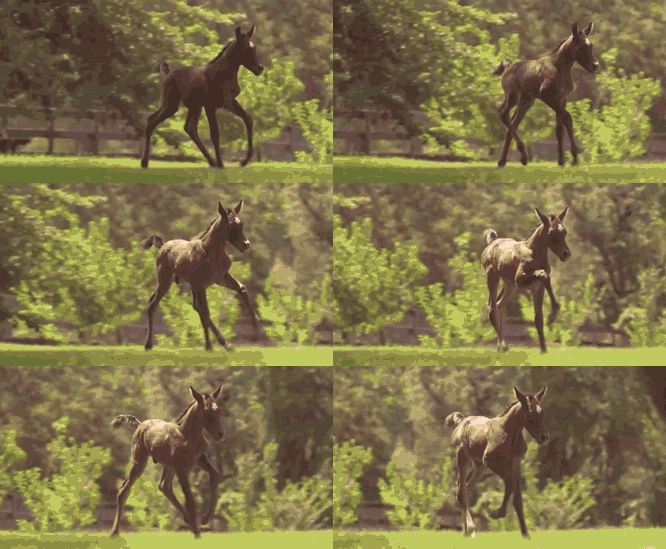
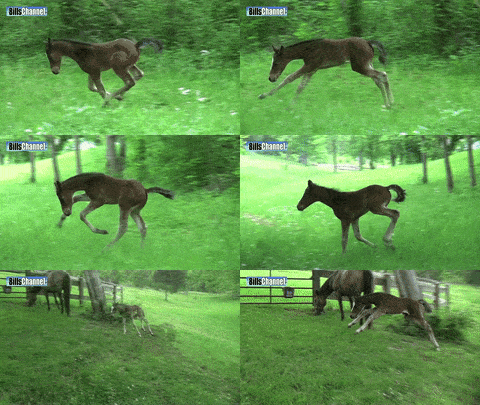
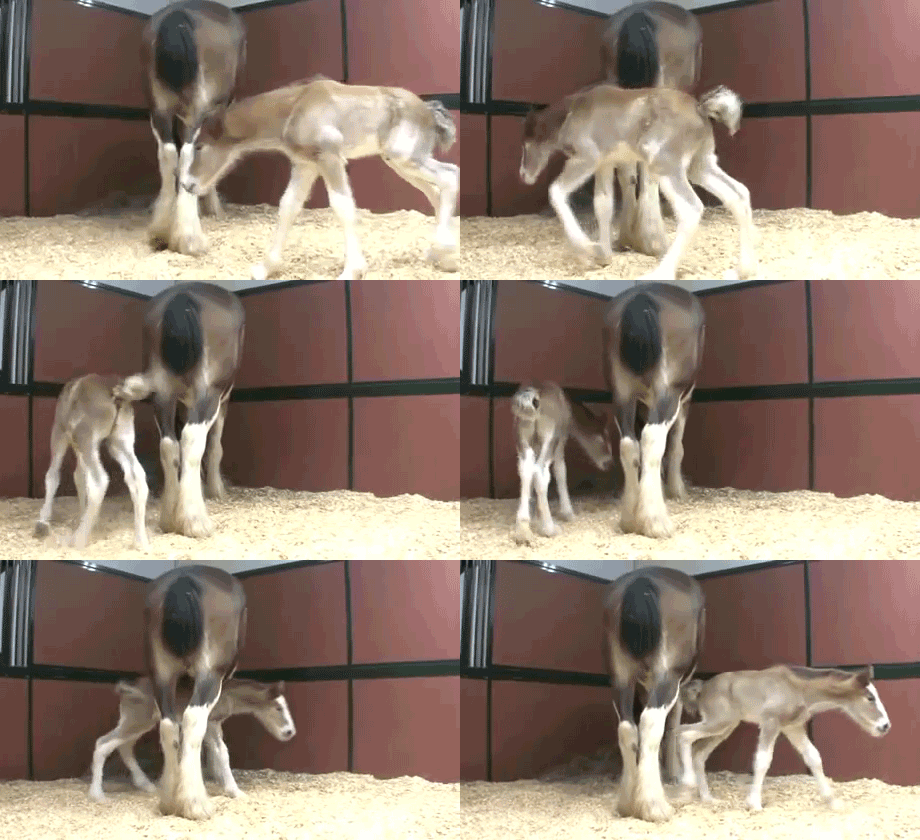
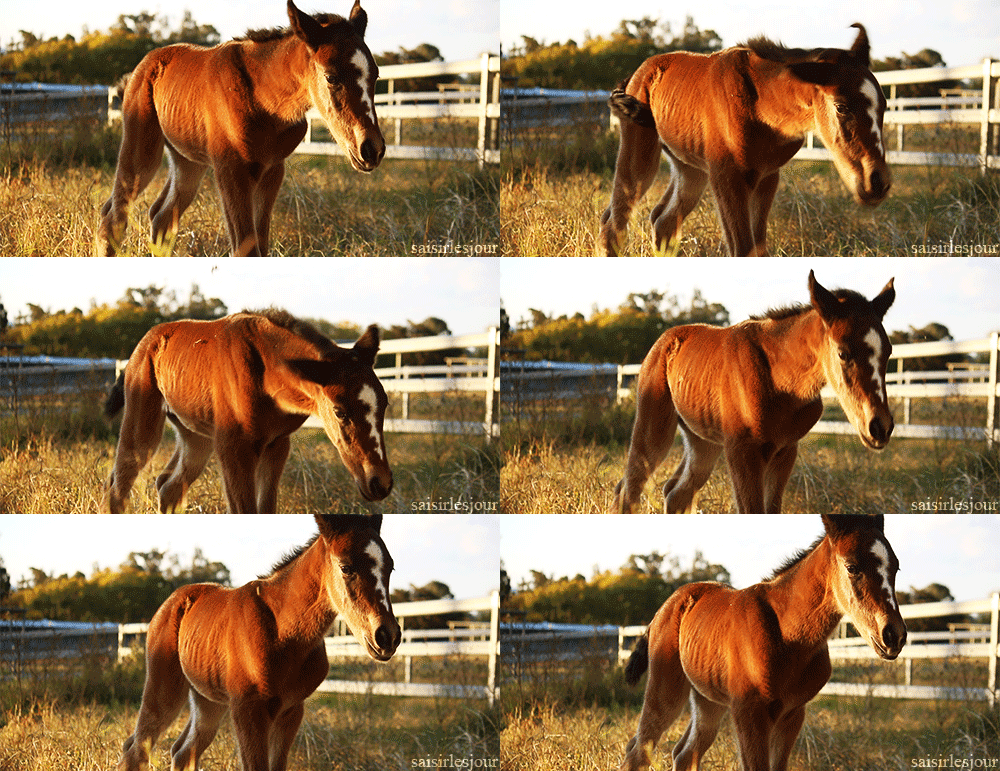
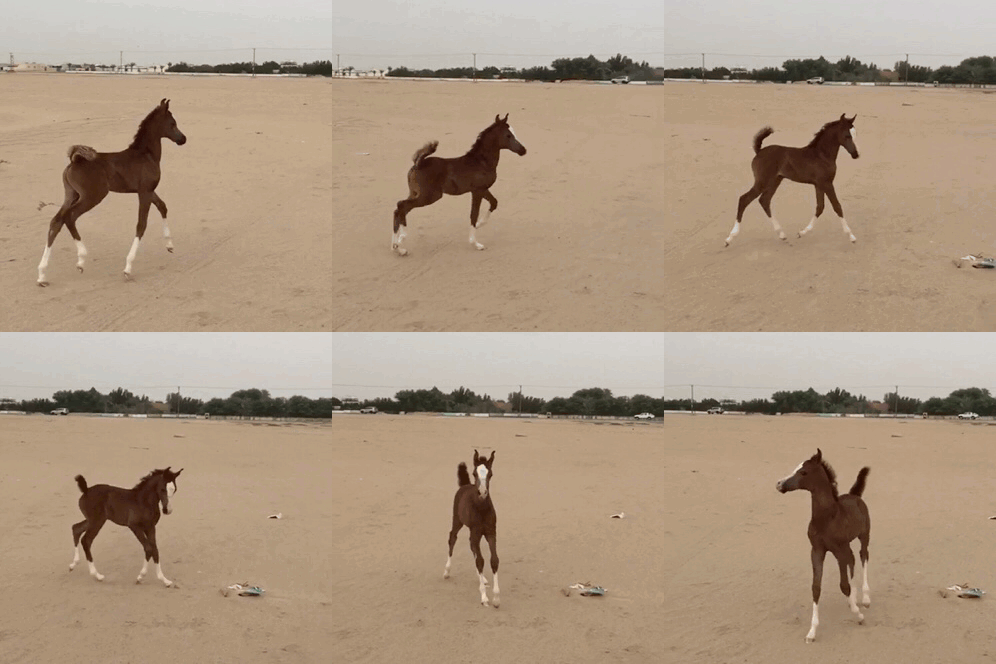
We’ll be relieving the stress of talking about money with gifs of cute foals.

This month, we’re starting at square one: budgeting.

tumblr_mnkr73L4TY1r7cji2o2_400.gif

What is a budget?

Let’s start realllllly simple. It’s not that I think anyone is dumb! It’s that I want to start at square one so that we can explore some of the philosophy and utility behind budgeting.

Put simply, a budget is a tallying of finances. It accounts for money coming in (revenue) and money going out (expenses). Budgets can be project-based (say, a budget that’s written just for your show season) or they can be all-encompassing (every penny you make and earn in a given period). Most people use some combination of both. I see a lot of horse people with different levels of budgets – maybe one for just the show season, then a second for horse expenses, and then maybe a third for their overall finances. Like nesting budgets, each with different purposes and each at a different level of detail.

You can look at a budget from the point of view of expenses or revenue. An expenses budget would look at everything it costs to do something – say, have a summer of showing – and then tallies that money up to a total number that you either have to allocate or raise. A lot of project-based budgets work best in that way. A revenue budget, on the other hand, would look at money coming in and then allocate that money to different purposes – rent, food, gasoline, board, new tack, etc.

Budgets can have different levels of specificity. You can plan out your show season down to the smallest detail: gas to and from, food purchased at the show, hotel room, entry fees, trainer fees, a percentage off the top for shopping at the fair or contingency, etc. to infinity. Or you can make an educated guess: I know that an average entry fee is X, an average tank of gas is Y, and I usually spend Z on food.

The good news? There’s really no wrong way to do it. Go with what works for you. If granular detail makes you crazy, go bigger picture. If you feel more in control and less harried if you’ve planned everything out, then by all means sit down with a glass of wine and start making alllllll the lists.

The most important thing is that you budget.

VibrantDependableFoal-max-1mb.gif

How do I create a budget?

There are two schools of thought on creating a budget.

The first says to take a period of time and to track your expenses over that period of time. Sit down with a highlighter, pen and paper, and start just putting things into categories. What are you spending money on, and where is it going? When you have finished, you have a clear idea of where you have spent money in the past, and so a realistic idea of what some of your necessities costs and what you’ve been spending on more discretionary things. You can then tweak your spending up or down in certain areas.

The other school of thought is more top-down, and it starts with your revenue. How much money do you make in a month? Start with that number at the top. Now start parceling it up. You do need some basic information to do this – how much you spend on major things – but the idea is more that you are looking at bigger categories and writing it a bit more aspirationally.

A subset of these two types is the two ways that you can account for things in your budget. You can either allocate every single penny – or you can allocate for the major ongoing expenses and categories of expense, and then let the rest be leftover – for fun money, or savings, or whatever you want.

Either way works for people. If this is the first time you’ve ever created a budget, then you have to do some of the work in the first way, just to get a clear-eyed picture of where they money is actually going. It can be a good idea to revisit it after major life changes to see if you need to tweak it.

I tend to hold with the second: I look at what my monthly income is, and write a budget from there. I also dedicate every single penny of my income to some purpose – which means I have four different budget categories for savings accounts, with according monthly transfers. I find that method a bit easier for those of us who might not make a whole ton of money (yay nonprofits!). It’s not like I have enough money and am just spending it in slightly unwise ways. There’s never enough, and I need to give every single penny a job to do, and keep it in marching order.

tumblr_nkpgitOKIl1rjhxazo1_500.gif

Budgets only work if…

1.) You track your expenses. There are a lot of ways to do this. You can use online services like Mint or You Need a Budget, and some banks also provide budgeting tools online. You can use a simple Excel spreadsheet held in a place that you can get to easily – say in Google Docs or Dropbox. You can use good old-fashioned pen and paper. The only right way to do it is the way that works best for you, that holds you accountable and gets you to track every penny you spend. Yes, all of it. Make it an ironclad habit.

2.) You’re honest with yourself. Actually, none of this personal finance stuff works if you’re lying to yourself. That includes “yes, I will totally only spend $20 this month on going out with friends!” and “it’s fine, I know my budget line says this but I can totally make that up by doing less later in the month!” No one on earth is so perfect that they don’t feel the temptation to lie to themselves about this stuff. We all justify, prevaricate, and squirm when we’re faced with these internal narratives. We’re human, and that’s okay! The best way to deal with it is to understand and be kind to ourselves, but also be clear-eyed and honest as much as possible.

3) You hold yourself accountable. That means two things: first, it means picking a regular time (weekly, monthly, whatever) to check in and ask questions. Did I track everything this week? Do I have to fill in gaps? Did I go overboard on one thing? What’s my realistic plan for getting to the end of this period and still meeting my goals? What do I still have left that needs to get done, and do I have enough in the budget to do that? What should I say yes or no to based on the answers to those questions? Second, it also means also asking big questions of your budget each month. Does it need to be adjusted more generally? Were you too hard on yourself when you set a certain goal? Not hard enough? Did you have a major or minor life change that means you need to rethink some of your planning?

tumblr_nsjx3fbwJW1t0go5oo1_500.gif

In Conclusion

Budgets are tools. Think of them like crops: they can be horrible or they can be useful, entirely depending on how they’re applied. They not in themselves inherently bad. I think a lot of times when we say “on a budget” or “not in my budget” we’re thinking in terms of a negative. We feel like budgets don’t let us do the things we really want.

If you think that way, reframe it. Budgets are a way for you to do the things that you really want. They are a neutral tool that you can pick up and use in your life to achieve great things. That doesn’t mean they’re easy, quick, or even simple. But it doe mean that if you work with them instead of against them, you’ll get a lot further.

Additional Reading

The Dangers of Heroic Budgeting from The Simple Dollar (and my response) – why going overboard can set you back
Changing the Ways I Save for Horse Shows from Cob Jockey – a good example of project-based budgeting
2017 Equine Expenditures from Hand Gallop – and here’s an overall horse budget
Our Budget from The Horse Rescue – this is a really detailed projected budget for what it would take to rescue a certain number of horses, and it can easily be adapted to your situation too
Doing the Math from Bel Joeor – an accounting I did of every penny I spent on one specific veterinary issue
These 4 Easy Steps Will Teach You How To Budget (Finally) from Money Under 30 – yes, it’s a clickbaity title, but it breaks down a lot of the steps in creating a budget and fleshes out the psychology behind them
The 50/20/30 Rule for Minimalist Budgeting from Mint Life – too may steps? here’s a really simple approach
Horses are Expensive from Not So Speedy Dressage – a phenomenal example of tracking expenses, actually a series of posts over the course of a year

tumblr_oqsklkn1Eb1w2lpgqo1_400.gif

Feedback & Check In

So, do you have a budget, whether project-specific or overall? What works for you, and what doesn’t? Is there anything that you’ve learned the hard way?

And: let’s check in! How are you doing on that goal you set for yourself? Give yourself a good old-fashioned letter grade, and think a little bit on what you can change for next month if it didn’t go great. If it did go well, think about what really worked for you. Similarly, how are you doing at that obstacle you named?

Feel free to answer in the comments, in your own head, or on your own blog.

bel joeor metier · Uncategorized

Bel Joeor February Sale!

Let’s face it: February sucks. It’s long and cold and dark and even though it’s the shortest month, it feels like the longest.

I’m fighting that this year by doing a free shipping sale in my Etsy store. EVERYTHING ships for free (via USPS first class).

If you order in the next week or so, that means it will arrive in plenty of time for Valentine’s Day. Buck the trend of commercialism and celebrate Galentine’s Day [tm Leslie Knope] instead: get something for your barn friends!

I’ve highlighted a few things below, but there are loads more available, and I’ll be adding another batch in a week or so.