lesson notes · Uncategorized

Lesson Notes

I am LOVING having two lessons a month. It’s the perfect rhythm for me, and we’re really making substantial progress. It also lets me stack good lessons. When I had weekly lessons, inevitably I’d hit one that just stunk. We hadn’t prepared, or we were burned out, or things just went sideways. That hasn’t happened yet with the two-a-month. We’re excited and ready.

So, this week, notes.

  • I need to be better about getting him sharp off my transition aids, both up and down. Up, he gets one chance before I reiterate STRONGLY. Down, I need to communicate more clearly through my seat and then carry the energy forward into the next gait.
  • My inside hand was a holy terror. It was possessed. Something horrible was going wrong, and I just could not freaking let it go. Almost physically. It was not pretty. I was convinced that if I gave at all on my inside rein Tris would spin off like a top and we’d slam into the fence. Which he does sometimes! So my concern was not entirely unwarranted, generally. Just in this specific situation.
  • We worked a bit on my challenge of asking for forward, getting canter, and needing to work back into a trot. So really a lot of maintaining crispness in gaits regardless of what they were, and of transitioning back to what I originally wanted. Then we talked a bit about good resistance and bad resistance, and how holding him in a trot using my core can be a good kind of resistance.
  • I need to work on my elbows: keeping then down and close to me, and also not allowing them to translate tension from my upper body and then into my forearm. I had a tendency to get locked up, starting with my shoulders and then progressing down.
  • My inside leg is too far forward in the canter, and putting it where she wanted it to go felt WEIRD and then I got off and my hip flexors were so angry at me I just had to stand and whimper for a moment before I could walk. Note to self: stretching.
  • But! Overall, it was really good. Really good. Long stretches in a punchy, collected, reaching, through-his-back, energized trot. And the ability to go in and out of it, and tinker with it a little bit. At its very best, it was a proper First Level trot. Now, we just need to sustain it, and then translate it into the walk and the canter.
  • Barn manager also confirms that when Tristan really puts himself together he is the VERY MOST CUTEST. I really need to get media to show you all.
book review · Uncategorized

Review: Tredstep Medici Field Boots

I have been looking for a new pair of tall boots for some time now. In 2011, when I last needed to buy a pair, I tried on over a dozen pairs in my budget range, and somehow ended up with Saxon Equileather Field Boots, which – well, they’re made out of plastic. But for all that, they held up stunningly well, and only started to fail last fall when the zipper started to slip. That’s a better track record than many high-quality leather boots!

Still, it was time to retire them. I had my eye on the Mountain Horse Sovereigns, in that beautiful two-tone brown, but every time I got close to buying them, something else intervened financially.

About six weeks ago, I took my birthday off from work, and it happened to coincide with Strafford Saddlery’s huge tent sale. I dragged my husband down, and really only had the intention of buying some Sore No More, maybe a shirt or two, and maybe a belt. I was mostly just looking to spend a fun day looking around the clearance items.

They had out a small pile of tall boots in various sizes and brands. Maybe 8-10 boxes total, and truly random – a men’s pair of polo boots, kids’ dressage boots, a bunch of “lifestyle” boots from Ariat and Dublin. I sorted through the pile more out of idle curiosity than anything.

There was a pair of Tredstep Medicis in what was probably my size. 50% off. I hesitated only briefly, pulled them out, and tried them on. I was wearing fairly form-fitting skinny jeans, so I figured they would come close to mimicking breeches, and if not, there were plenty on the sales rack I could grab briefly.

Well, they fit perfectly. So perfectly that as I zipped up I made some kind of small weird noise that caused the sales clerk to ask if I was okay. I was simultaneously delighted and angry. I walked around in them for a while, chewed my lip, and finally threw caution to the wind and bought them for $200. It was way less than I’d planned on spending, they were beautiful, and they fit me like a glove. The only nitpicky quibble I could make is that perhaps – maybe – in some far-off perfect world – they could be an inch taller.

Since then, I’ve been riding in them, and apart from the problem I’m having where they show up one of my position flaws (rolling my ankle/foot to the outside of the stirrup), I adore them. They’re beautiful. They are simultaneously supportive but comfortable. They make me feel happy and put-together every time I zip into them.

img_3606.jpg

I’m still taking them in and out of their box to wear every time, because I haven’t had a chance to make a boot bag & boot trees for them yet. I have the fabric and just need to make this a priority.

img_3613img_3612img_3607

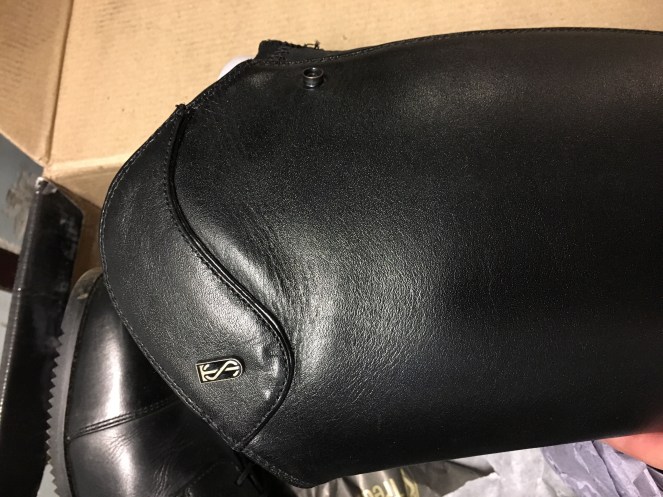
I love the light detail on the top – slightly Spanish-y, but not over the top. That little lozenge is the only branding on them.

img_3608

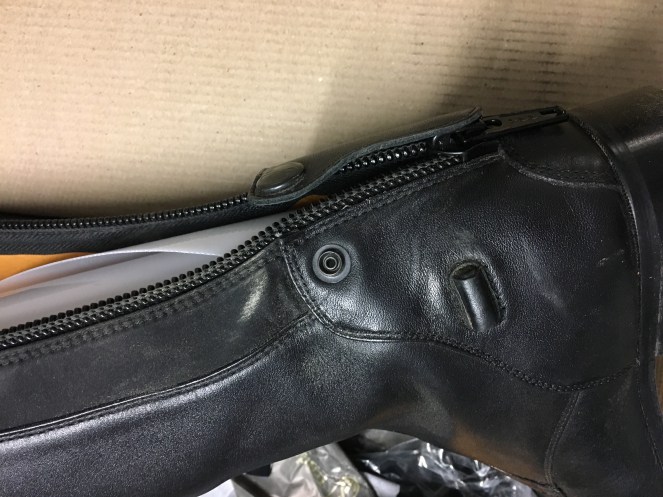
Here you can see two things that I particularly love: the lower zipper protector and the elastic in the calf. You can barely tell it’s elastic. It’s really smooth, and it matches the look and color of the books really well. It means a nice snug fit without looking awful.

img_3609

There’s also a zipper protector at the top.

img_3610

They have gel-like inserts in the footbed, which makes them legitimately comfortable to stand in.

IMG_3516

You can see what I mean here by being maybe an inch lower. When I’m standing they’re close to spot on, but when I really drop my heel they’re maybe a tiny bit low. I’ve filed that on “things I’m not going to worry about for gorgeous clearance boots.”

I’ve put maybe 20 rides on them so far, and they’re holding up just fine, but I’ll try to update when I beat on them more thoroughly.

black stallion series · book review · Uncategorized

Summer Series: The Island Stallion’s Fury

It’s that time again! Today is officially the first day of summer, which means it’s time to restart my summer series reviewing the Black Stallion books. We have some really good ones this year. First up, we’re back to Azul Island.
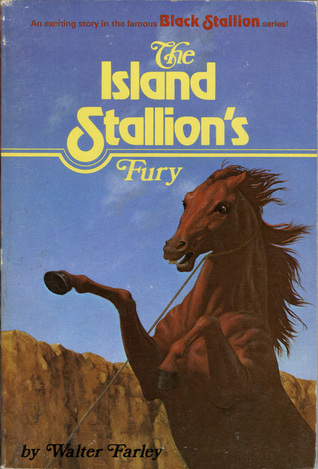
Image result for island stallion fury

Steve and Pitch return to Azul Island for an entire summer of “archaeology” and horse-watching. But Pitch’s stepbrother Tom is back and meaner than ever, and when he discovers the island he threatens to destroy it. (If you need to revisit the backstory, here’s my review of The Island Stallion.)

First things first, we are reminded in long, loving, lavish detail that the geography of Azul Island makes no fucking sense.

Its precipitous walls rose naked from the sea, rising a thousand or more feet in the sky until they rounded off to form the dome-shaped top of Azul Island….

High up on the wall at the southern end of the valley an underground stream rushed from blackness to sunlight, plummeting downward in a silken sheet of white and crashing onto the rocks of a large pool two hundred feet or more below.

Steve is back for the summer! Two whole months! Who knows what he’s told his parents (and how old he is, exactly? this was a running debate in my head through the whole book and I’m going land on ~17-18, or about Alec’s age in the early Black Stallion books). Steve’s parents might be even more negligent than the Ramsays.

Other things I spent a lot of time pondering in this book: the homosocial overtones of Steve & Pitch’s relationship, and the weird toxic masculinity / homophobic blend that Tom represents and was Walter Farley actually trying to make a useful statement about the different ways to Be A Man or was he just writing and continually surprised at what happened next?

Or is Steve just weirdly sexually into horses?

Steve swept his hands across the muscled withers. He leaned a little on the stallion’s back, and the red coat beneath his hands quivered. “Oh Flame,” he said. “It’s good…so good to be back.”

…gross, Steve. The words “caress” and “quiver” are used way more often in conjunction with horses than I feel comfortable with in this book.

The Azul Island herd (remember, the weirdly genetically superior Arabian-yet-Spanish-ex-Conquistador horses who somehow look terrific despite 300 years of inbreeding and about a mile of grazing) now numbers over a hundred. Pitch’s hard-on for the Conquistadors continues unabated.

“Horses who faced the battles and world-shaking adventures with the men of Cortes, the Pizarros and DeSoto in their conquest of the Americas!” Pitch’s eyes were bright with his enthusiasm.

I mean, if you think imperialism and genocide are “world-shaking adventures,” I guess.

After a brief comparison to the poor hapless horses out on the sandy spit that’s the only part of the island the outside world knows about, we return to the herd, where it’s foaling season. Steve notices one bay mare in particular.

From her size and actions he knew she’d be giving birth to a foal sometime during the afternoon or night.

Here’s your reminder that Steve knows basically nothing about horses. He had a pony in his backyard. That’s it. Yet he is magically now able to tell at a glance that a mare is close to foaling.

I suppose now is the time to mention that the bay mare is the only female character of any species in this entire book. Which is also the time to mention that an underlying theme of this book is Pitch’s rampant misogyny.

“Finish your beans, Steve,” Pitch said a little sternly, “and stop watching that bay mare. She won’t have her foal during the daytime. Mares are just like women; they have their babies at the most unreasonable hours of the night…just to make it hard on you,” he added, smiling.

FUUUUUUUUCK YOU, Pitch. He continues to say that he used to live in a boarding house and the woman who ran it had three children all born “between three and five o’clock in the morning.”

“Mr. Reynolds and I often discussed how unreasonable it was of Mrs. Reynolds.”

That is a whole series of creepy-ass conversations, right there. That poor woman.

Then we get a bit of heavy-handed foreshadowing about Pitch’s brother Tom, who featured briefly in the last book. He owns a plantation on Antago (the main island) and has the government license to round up the horses on Azul Island. Tom, if you’ll remember, is a violent man who adheres to old-school domination techniques. We learn all this over again in the context of examining a somehow miraculously intact cat’o’nine-tails whip that Pitch found in the Spanish caves. Because sado-masochism is a weird and yet very real undertone of this whole book.

Pitch has also been playing archaeologist some more, by which this book seems to mean he is exploring the caves and yanking things out of them and he spends a lot of time “making notes” whatever that means.

“I don’t believe there’s a finer private collection in all the world,” Pitch said proudly as he put the things in the box.

I get that you’re proud of the stuff you’ve found and removed from its context and manhandled, Pitch, but there is absolutely zero chance that you have the best private collection of Conquistador junk in the world.

The two explore the caves for a while and – look, basically this whole section is some really ham-handed foreshadowing. The caves are dark and twisty! Tom likes whips! Pitch has hidden away a whole bunch of food in the caves! Tom is super crazy! If Tom finds the valley, everything is ruined!

(You get zero points for guessing how the rest of this book goes, but buckle up, we’re going to recap it anyway.)

The bay mare does indeed have her foal overnight, but wait!

Turning quickly, he saw the other foal. Twins! The mare had had twins! He knew the odds against such  thing happening were one in ten thousand. And the odds were even greater, a hundred thousand to one, against twin foals living.

Because I am nothing if not a diligent recapper: the first set of odds do seem to be correct, but no one has put actual odds on the second. And yeah, twin foals are really bad news.

The second foal is a colt, and he looks like Flame (in that he’s chestnut, I guess) so Steve immediately leaps into action, helping the colt to its feet and trying to get it to nurse. The mare, somewhat predictably – being a wild horse, after all – takes one look at Steve and nopes the fuck out of there, and just like that, the foal is orphaned.

Now, raise your  hand if you expected a good chunk of the plotline of this book to be about raising an orphaned foal. Anyone? Yeah, I didn’t think so.

Steve has some momentary self-doubt for interfering, but don’t worry, he gets over it quickly.

Why hadn’t he left the mare alone? Why couldn’t he have stayed away from the clearing? If he had not been there to pick up the colt, to confuse the mare, she might have accepted both her twins. He knew nothing about a foaling mare. It would have been so much better if he had just left her alone!

“But she might have abandoned the colt anyway,” Steve said aloud in his own defense. “I know that…I read it somewhere….or someone told me.”

YOU WERE SO CLOSE, STEVE! SO CLOSE TO ACTUAL INTROSPECTION AND RESPONSIBILITY!

That’s not really what these books are about though, so not only does Steve reassure himself that it’s not his fault, Pitch gets in a few weirdly anthropormorphic misogynistic side-swipes at the mare: “Why won’t she accept him? She’s his mother, isn’t she?”

Then Flame arrives, and he is not thrilled. Pitch and Steve convince themselves that a) Flame understands the situation and b) he is angry with them and then c) he feels protective of his son. None of that is remotely realistic or possible. There is zero chance he gives a single fuck about this foal; in fact, there’s a decent chance he feels the exact opposite way from their assumptions. This is, after all, a foal who has appeared (to Flame) out of nowhere, and wild stallions have been known to kill foals that were sired by other stallions.

After, I don’t know, a few hours of flailing and debating, Pitch and Steve realize that the foal hasn’t eaten anything. Nothing. Nada. Definitely not colostrum.  So they redouble their efforts to reunite the foal, which prove increasingly desperate and increasingly stupid and increasingly weird.

“The band means nothing to him without his mother to guide him,” Pitch said in a low voice. “He doesn’t even know they’re his kind. He doesn’t belong.”

Okay, I know that orphaned foals can get mentally not okay and not learn basic horse skills and manners, but this foal is only a few hours old. I guarantee he doesn’t think he’s not a horse.

Cue an awful lot of process story. Like 50 pages of “should we sterilize everything? what’s the best way to get this into the foal?” and on and on. Frankly, it got super boring for a while in the middle, aside from some additional weirdness in which Pitch and Steve try to capture that poor bay mare and force her to re-adopt her foal. They try to rope her and tie her to a stake and…that will make her amenable?

Steve knew that Pitch was very nervous, even frightened. He’d had no experience roping any kind of a horse, let alone a wild mare. But he was going through with his plan just the same.

Yeah, it ends REALLY badly, with Flame trying to murder Pitch. Steve has to talk Flame out of it, and we get one of the few nicely thoughtful bits in the book, in which Pitch compares his brother Tom’s style of horsemanship to what he sees with Steve and Flame. Sections like that are why I really do wonder if Farley was trying to make A Statement about toxic masculinity.

Really, though, the whole Black Stallion series is a lot about refuting brutality and finding softer gentler ways to work with horses. We’ve seen similar plotlines over and over – it goes back to the very first book, with Alec taming the Black. It just gets even more explicit and melodramatic in this book, contrasting Steve and Tom.

Pitch and Steve realize they have to go back to Antago to get more powdered milk and to check in with a vet about what they’re doing with the foal. While they’re getting ready for the trip, the foal follows Steve into some dangerous circumstances, and badly injures his right hind leg. So they bring the foal back to Antago to get seen by the vet. On the boat ride over, Pitch tells Steve that Tom has been acting extra-strangely the last few months, and though he’s supposed to be in South America, both of them are worried that if he sees the colt he’ll know it can’t have come from the other horses on the island.

They get to the island and to the vet, whose diagnosis is just batshit.

“It’s a complete fracture of the proximal end of the tibia. We’ll use a modified Thomas splint of light aluminum.”…

“Don’t you worry about him,” he said. “Within three weeks that leg will be completely healed, and you’ll forget he ever injured it. And so will he.”

WHAT THE FUCK. Seriously though, WHAT?!?! Three weeks? A splint? AUGH. (The Thomas splint is still a thing, though, and is kind of fascinating; here’s a whole long article about it and its history.) So, yeah, the vet splints the foal up and puts him in a cast and tells them to basically let him do whatever he wants: he can walk around, even.

I just. Good grief. This is where the pacing of the book starts to move like lightning, though, so we don’t dwell on the fact that this malnourished orphan foal will recover from a tibia fracture in three weeks. No, Pitch and Steve are focused on the real, final problem of this book: Tom.

Pitch confesses that he thinks Tom may have finally gone around the bend. He’s gotten extra-bonus abusive to the people working his plantation, and then he took off in his boat for South America for reasons. But…what if he’s back? At this point, both of them become utterly fixated on the idea that Tom will be back and that he will discover Blue Valley and the secret of Azul Island.

Even though it makes zero – zeeeeeeeero – logical sense for Tom to be a) back in the area and b) to see them, you know what happens next.

The chase had entered its final stage. He would follow his stepbrother, the boy and the foal to wherever they were going and then…

And then…? That’s the end of a chapter, so who knows. Also, it’s important to me that you all know that the lack of Oxford comma in that sentence is Walter Farley’s fault and I am just faithfully retyping for you.

The whole rest of the book reads like a weird fever dream. Tom follows them to the island but he’s so far back he doesn’t really get it right (also he runs out of gas. and food. and water.). So he finds the original climbing entrance, and gets lost in the caves that Steve and Pitch found in the last cave. You know, the ones that Pitch kept saying were super-duper dangerous and twisty.

His whole being was consumed with hatred for those who temporarily had evaded him. “Fools! Fools!” he said in a hissing whisper. “To think you can get away!”

Let’s just stipulate that Tom-as-villain is a definite low point in the entire Black Stallion series. He has no real motivation – Farley writes his motivation as sheer power and dominance. He’s a cartoon villain on steroids, and though Farley tries to dredge up some sympathy for him by somehow sort of characterizing him as mentally ill, it doesn’t work.

Pitch finds Tom half-dead in the caves, feels bad for him, and brings him food and water. They’re both terrified that Tom will wake up and discover the valley, so they hatch some bizarre plan to move him from the caves while he’s still out of it and return him to Antago which is such a weird and terrible plan and they spend so much time agonizing over it that it just shreds any semblance of pacing or enjoyment of the end of the book.

It was at this point that I started rooting for them to just shove Tom back off the cliff and into the sea and wash their hands of the whole thing.

Tom, of course, escapes the caves. He discovers Blue Valley, Pitch’s “archaeology,” and the band of horses. He falls in hate-love with Flame. The whole book has been building toward this last third, which takes place over the course of only a few hours and is unsettling and poorly paced and weird and still somehow effective at conveying how disturbing the whole experience must have been.

The first thing Tom does is throws all of Pitch’s archaeology collection off a cliff, piece by piece – using his bull whip. He snaps it, picks something up, flings it off, one by one. It’s like some effed up, endless sado-masochism thing.

“You’ll do anything I want to do, won’t you? I can say kneel and you will kneel, crawl and you will crawl. I’m a little god, Phil, aren’t I? I have power, absolute power. There’s nothing I can’t do here. And no one would ever know.”

HOW IS THIS A CHILDREN’S BOOK.

…then Tom had the cat-o’-nine-tails in his hand. Fondly he fingered the whip with its nine hard leather cords.

NO REALLY.

Pitch and Steve, try, unsuccessfully to escape. Then the real trouble begins: Tom meets Flame.

Tom actually gets Flame’s attention when, for some reason, he starts whipping the new little filly – the twin of the orphaned colt. Literally for no reason. Understandably, Flame is ripshit, but sadly for him, Tom is somewhat adept with a rope and he manages to lasso Flame and tie him to a stake.

There follow many, many pages of Tom beating the shit out of Flame while Pitch and Steve watch. It’s awful, honestly. It’s brutal and bloody and vicious and I skimmed a lot of it because why are there so many pages of it???

“I’ll break you yet, you stud horse!” he shouted hysterically, repeating the words over and over as he sat watching the stallion in all his terrible, but to him, beautiful fury. His hunger for the time being was completely forgotten as he made his plans to beat this horse that knew no master.

Steve suggests that maybe Flame will kill Tom for them – finally, some sense! – but nope. Pitch is all “we need to get him to a doctor!” Which I guess is an admirable thing to say, compassion and forgiveness than all that.

The Flame torture – and the psychological torture of Steve and Pitch – continues for hours and hours.

Flame screamed again. And the sudden shrillness of it broke forever the slightest aspects of sanity which Tom had been fighting to retain. Now the mental fight was over. He screamed back at the stallion. He raced about the ledge, pawing the air with his hands, laughing, crying, shouting with no pause, going from one phase to the other, hysterically, madly.

???????????

Eventually, Flame turns the tables, chases Tom up a trail into the cliffs, and then right off the side of a cliff. Conveniently, Tom falls onto the same sandy spit where the other wild horses are. Flame is the real hero of this book, despite hardly featuring at all. (Seriously, I think Steve rides him like twice?)

For some bizarro reason Pitch and Steve are both really upset about Tom dying, so they get really dramatically upset about it (fainting, sobbing, throwing up). They rally quickly, though, and the rest of the book is a big fast-forward.

Pitch calls the police out, they investigate and declare the death an accident. Steve makes arrangements to bring the (miraculously healed!) foal back to America with him.

The cast and splint had been removed a week before, and there was no evidence of the fracture either in his appearance or movement.

From fractured tibia to 100% sound and not even marked in 4 weeks! Also,

Not far from Steve’s house were a barn and pasture where this colt would live and grow, with Steve watching him, caring for him

Ah yes, the Alec Ramsay school of boarding: those poor neighbors.

Aaaaaaaand that concludes The Island Stallion’s Fury and my way way overwritten review/recap/snark of it.

Do you have any memories of this book? Any thoughts on the most batshit part?

Uncategorized

Three Hardware Store Finds That Need to Be in Your Tack Trunk

(did I make that title clickbait-y enough?)

I think that sometimes we fall into the trap of “it’s for horses, it should be horse-specific and come from a tack store!” Now, tack stores are magical places that have a miraculous ability to scramble brains and part you from your money but leave happiness in its place. This is a true fact. But it’s also a true fact that sometimes you can buy very good horse things at other stores.

Here are three things that are in everyday usage in my tack trunk and grooming kit that I bought at our local hardware store.

1.A Really Good Knife

IMG_3605

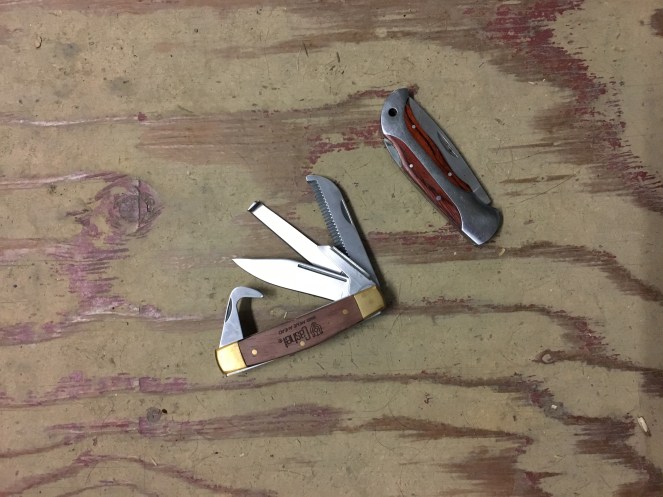
Once upon a time, I helped run a Pony Club. I had really terrific kids. They were smart, hardworking, and thoroughly prepared. Pony Club being what it is, however, they lost points in their Stable Management score because when the judge took out the knife that they had to have in their tack kit, it wasn’t sharp enough.

See, Pony Club required that the knife be able to easily cut through three strands of baling twine at a time, and well, that judge walked around with baling twine to test the kids’ knives. Obnoxiously obsessive? Maybe. But like with many things Pony Club, it’s also based in really sound, smart principles. Have really good equipment, and keep it in really good shape.

Immediately after we got back from that rally, I went to the hardware store and bought a really nice hunting knife. I’ve used it for nearly infinite things over the years, and it has a permanent place of honor in my tack trunk. More recently, I’ve added the Cashel Horseman’s Knife into the mix – it lives in my grooming kit, because it has other useful things beyond just the knife. (I love that Cashel knife so much I gave one to each of the barn workers two holidays ago, and sent one off to Saddle Seeks Horse as part of the 2016 Blogger Secret Santa exchange.

2. A Wire Brush

IMG_3604

You can get wire brushes at the hardware store in the paint section. They’re just the right tool for stripping paint or varnish, especially off of metal or out of small crevices.

But why would you need one at the barn? They’re the best possible tool for truly cleaning out a horse’s foot.

Left is a foot cleaned with a hoofpick + the brush on the back; right is the same foot thoroughly cleaned with the wire brush.

For everyday foot cleaning, the hoofpick brush is fine. But if you want to apply any kind of soak or medication to the bottom of the foot (especially something like Durasole), you have to get it as clean as possible, hence the wire brush. It also has the benefit of roughing up the sole to provide more of a surface for topical medications to “grab” onto. You’ll also be amazed at how much crap is hiding in the white line that you wouldn’t be able to get out otherwise.

3. A Silver Sharpie

IMG_3600

If you didn’t know these existed, you are in for a treat. They are the perfect tool for marking anything even slightly dark-colored, and as we all know, if it’s not marked, it will wander off.

Left is his fly mask with the writing from last season; right is his brand-new riding fly mask, which I had marked just before taking the picture.

I do also keep a black Sharpie in my tack box. At some previous barns I kept dry-erase markers as well, because whenever I needed to write something on the barn white board there was never a good marker. So I bought my own and got possessive. The gist is, good marking tools are actually important and useful things to have in a tack trunk, and also, silver Sharpies are awesome.

Do you use any of these things? Do you have a favorite hardware store find that you use regularly around horses?


dressage · Uncategorized

Lesson Notes: Flexing the Pelvis, Keeping the Lower Leg Still, and Leg Yields

After my review of the First Level tests, I had a laundry list for the barn manager to work on in our lesson, and we tackled a few of the items on there.

So, in no particular order:

  • I need to unlock my pelvis from the rest of my spine and from my lower leg. I was getting it too glued into my spine, especially in the canter. Lots of sitting trot work is in my future to help loosen this. In short, I was too ramrod straight and thus was blocking his back and his forward impulsion. The best ways to think about this were to drape through my shoulders and soften-but-carry with my abs.
  • I also needed to work on quieting my lower leg. The movement that I should have been absorbing in my hips and pelvis was translating down to my lower legs, which were swinging far too much. Thinking about making them sticky to Tristan’s side – not giving an aid, just sticking – helped immensely. So did some detailed conversation about the way I rotated my thighs in the saddle. For dressage, I need to think more rotating up and forward. (For hunters/jumping, it’s back and down.)
  • Finally we took apart the leg yields and I have a couple of notes on those. Number one is strength. He is more reluctant to step under with his right hind than his left. (Nothing new there.) I need to think about incorporating more lateral and pole work to strengthen hocks/stifle/SI to allow him to step under better. The next thing to think about is keeping straightness even in lateral movement. If I’m not getting a quality step over, go back to straightness.
  • To help in the leg yields and in the control over the smaller circles of First Level, we worked a lot on my aids for bending and suppleness. I need to work on making better use of my outside leg when asking for bend, so I can help encourage bend behind the saddle.

In all, a really good lesson. I came away with a lot to think about and work on, but also feeling like we’ve made some noticeable strides forward. He was more forward and responsive and it makes me feel great to work on a fundamental, get it in place, and then feel him surge up and forward through his back. Like now that we’re re-cementing these pieces, he knows what comes next and when I set him up/help him out properly, he seems happy to know the right answer. We had a couple of lovely springy canters, in particular.

I was also very pleased that three days after pulling his shoes, he was quite sound and comfortable! I owe a longer post on how that process has been going, but *knock wood* so far, so good.

dressage · dressage tests · Uncategorized

Summer Plans: First Level

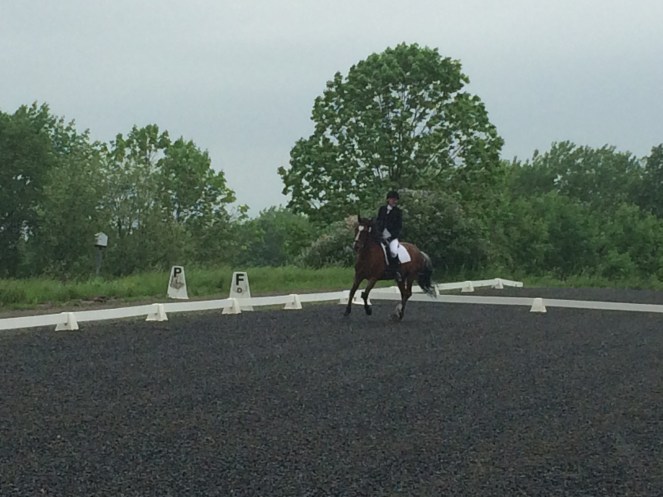
In the spirit of putting things out there and then working up to them: I’d like to enter Tristan at first level this fall in our barn schooling show.

To that end, we’ll be lessoning a lot, working on fitness, and I’ve already broached the idea with my barn manager (who teaches us right now). She thought it was definitely feasible provided we keep working hard at forward.

So I’ve been looking through first level tests with an eye to the specific things that we’ll need to do that are different from Training, and where we are on those.

Photo Jun 05, 9 09 39 AM

plus some photos from last year’s fall show because I think I never shared them?

1. 10m half-circle + full circle in the trot

Okay, we’ve got that! We definitely school it pretty regularly. The trick is keeping it together, of course: keeping up impulsion while not letting his outside shoulder bulge out.

2. 15m circle in canter

We’ve done it. It’s not always pretty. This will require me to really work on that outside shoulder.

Photo Jun 05, 9 10 27 AM

3. lengthening of stride in trot and canter

Ummmmmmmm. Nope. Never really done it. I’ve played with transitions within the gait but more as an aid to adding impulsion. I’ve asked for nice big trots across the diagonal just for fun but never with the kind of discipline that a true dressage lengthening wants. Plus, it’s Tristan, anything that’s even vaguely more energy will always be our sticking point.

4. leg yield

We have these down COLD, we do them basically every day, whew, finally something I feel good about. I mean, there’s still loads that can go wrong but I have done this horrifically and perfectly and every way in between so I know how to take them apart and fix them again.

Photo Jun 05, 9 11 20 AM

5. change of lead through trot

Yup, got this one too, it’s just a matter of polishing it. I am actually pretty militant about doing this on the diagonal when schooling because it really freshens him up to turn down the diagonal at the canter, drop to the trot at x, and ask for the other lead. We probably put more strides in the trot than they want, and I am often focusing more on GO GO GO than I am on light, prompt transitions, but we have the basic concept down.

6. counter canter

lolol we’re fucked. Well, okay, no, we need to work on it. How’s that for optimism? (you guys my horse actively tries to fall over in just a correct lead canter, he is going to mutiny when I ask him to try even harder to balance, sigh) The good news is that it’s First 3 and I can just…not. But I am nothing if not overambitious, so probably we’ll be tinkering with this a bit.

Any advice for me? What was the hardest thing for you to get right when you moved up to First Level? Is reading this making you want to just go gallop a cross-country course instead? Any videos or tips that you found particularly helpful to think about?

house post · Uncategorized

House Post: Terracing the Herb Garden

Finally some real, visible, substantial house progress!

Ever since we’ve moved in, a particular small hill underneath our deck has distressed me. It’s useless. It grows nothing but weeds. It’s a nightmare – even borderline dangerous – to mow. Now, that describes a good chunk of our yard, but this small, discrete piece was something I had a clear plan for from day 1.

img_3468

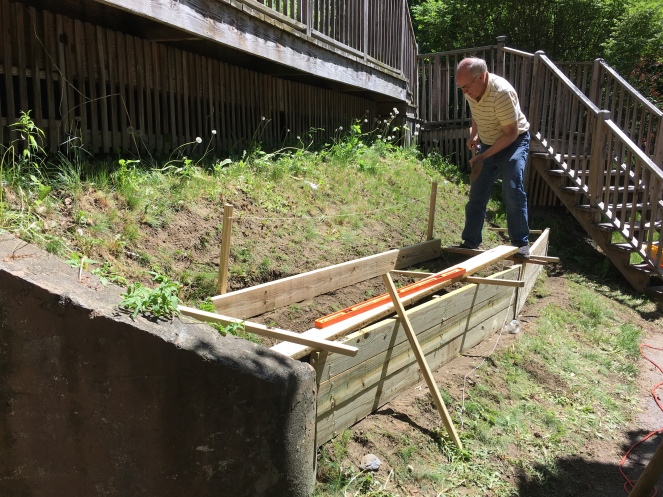
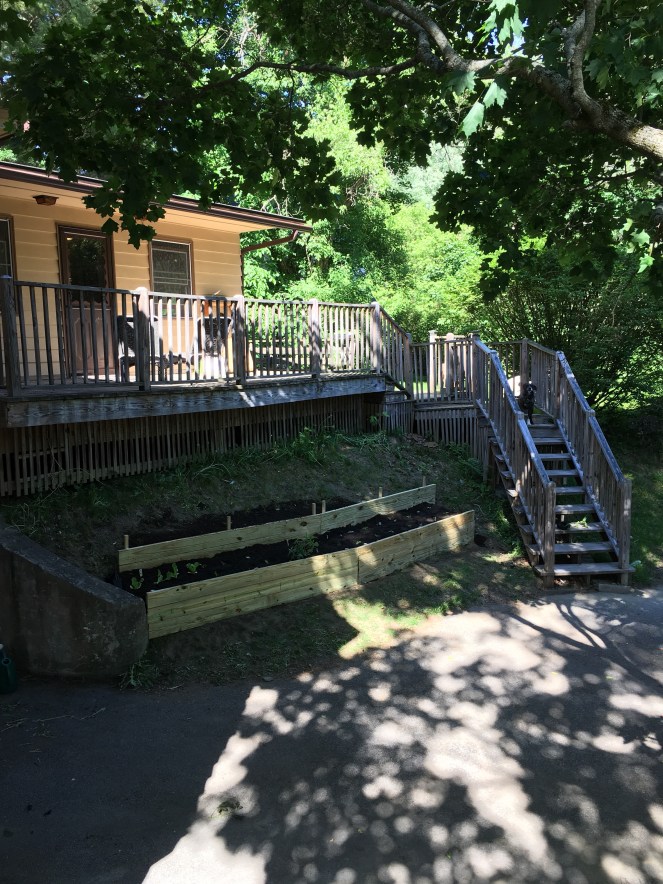
Last weekend, we finally did it! And WOW, I am so pleased. For an investment of about $250 (lumber, topsoil, plants) and 8-10 hours of time, I have a terraced kitchen herb garden!

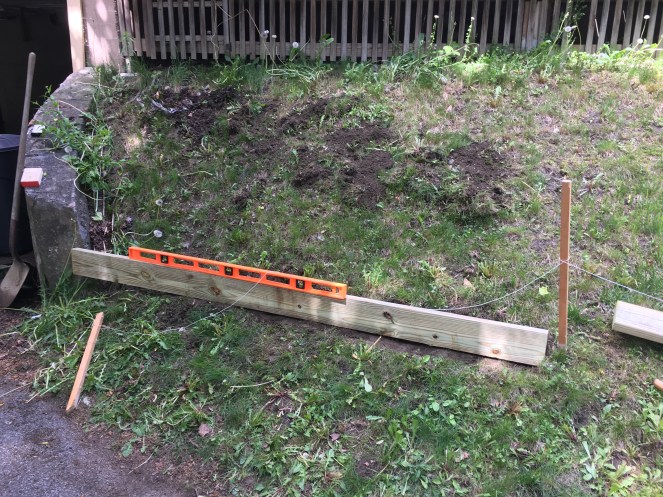
Step 1: we actually spent the most time working out our process. As you can see in the photo above, it involved some temporary stakes and strings to get a straight line.

img_3473img_3470

Along that line, we cut out a small-ish ledge with a shovel (not even that much, honestly; I purposefully didn’t want to do too much cutting into the hill to keep the integrity it had) and then leveled off the bottom board in it.

img_3472img_3476img_3480

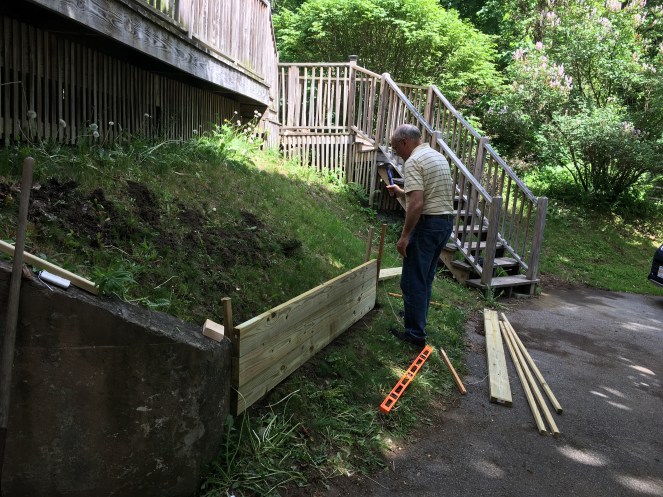
Then we drove in stakes – 36″ tall, so they’re in the ground to a depth of about 18″. We cut them out of lengths of pressure-treated 2×2″ balusters. We started doing this with a hammer on Day 1, and then that evening I texted around seeking a sledgehammer, and the next morning a friend dropped one off and WOW YOU GUYS I LOVE SLEDGEHAMMERS SO MUCH. It was a night and day improvement over the hammer.

So we screwed the boards into the stakes, which was actually the easiest part. The hardest stuff was making sure everything was level, lined up, secure, straight, you name it. That part was important because it needed to start level and straight, because over time it’s going to get pressure from the dirt behind it.

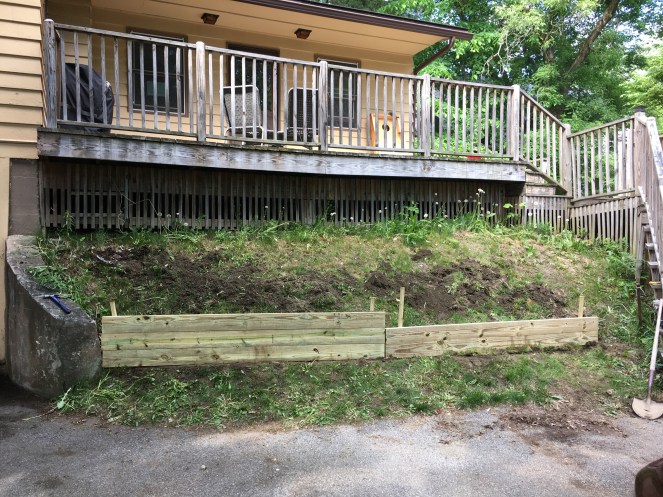
Then we went straight back for level 2! These are 6″ boards, btw, so that whole three layer front row is 18″ tall. Not huge, but plenty of room.

img_3481img_3483img_3484

Ta-da! The next day we added the last boards to the top of that second row. Then we added in the topsoil and the (local, organic, natch) herb seedlings.

img_3492img_3493img_3503

The finally tally: three kinds of lettuce, catnip, lavender, basil (SO MUCH BASIL), parsley, rosemary, thyme, oregano, dill, chives, scallions, and then I snuck in zucchini in the top row because I ran out of room in the raised bed. (This picture was taken very late afternoon; the spot gets 8-10 hours of sun a day, and we may also need to remove the branch that’s blocking the light in that photo, so they should do just fine.)

img_3501

We put in the raised bed the same day, and boy, did I restrain myself. I usually waaaaaaay overplant it, but this year I remembered my the tomato blight wars of years past and gave them more space. So two kinds of tomatoes and bell peppers only in the raised bed this year. Next year, I’ll do another raised bed, and be able to expand a bit.

Here’s hoping it all survives and thrives!

Uncategorized

Bel Joeor Metier: Next Steps?
I’m still testing out and adding new products to Bel Joeor Metier, my equestrian-themed Etsy shop.

Right now, I’m at a tiny bit of an impasse. I have three ideas for new products to develop and test next, and I want your opinion on which of them I should prioritize.

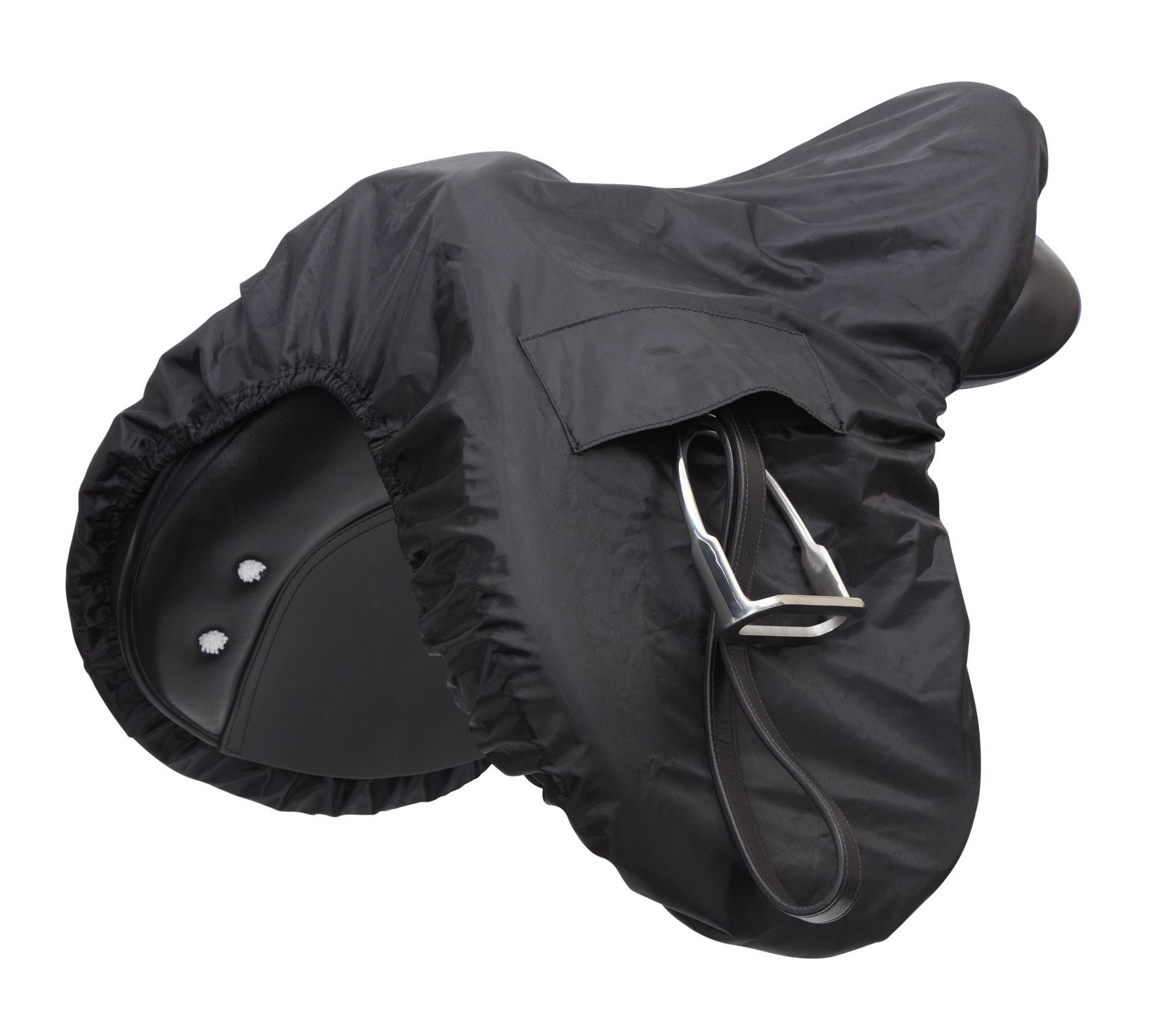
#1 is a modification to my existing saddle covers: adding ripstop water-resistant nylon fabric to the exterior, and swapping out the interior fleece for flannel instead. They wouldn’t be “ride all day in the rain” waterproof, but they would be a stylish way to cover a saddle, and if I can figure out the stirrups modification, you could conceivably ride in them in the rain for a short period of time. They’d probably end up retailing around $30 for the straight cover, and $35-$40 for the version with stirrup holes.

Image result for waterproof saddle cover

They might look a little bit like this, only in lots of colors.

#2 is a small but useful thing: bucket covers. These would be made out of ripstop nylon in a variety of colors, with customization (a monogram, a logo, or a particular design) possible. They’d probably end up retailing around $12.50.

Image result for horse bucket cover

#3 is a half-lanyard keychain. These would come with standard embroidered designs for a variety of disciplines, or they’d be personalized with monogram, name, etc. They’d probably end up retailing around $10.

Related image

This design, but not this ugly.

So, internet, which one should I tackle first?

stupid human tricks · Uncategorized

Bad Habit Theater: Rolling Feet in Stirrups

I got new tall boots for my birthday, and I’ve been riding in them consistently for about a month now. (Tredstep Medicis, for the curious; I’ll do a review after some further breaking-in.) They are generally pretty great, but they have highlighted one huge flaw in my riding position.

IMG_3516

Can you see it?

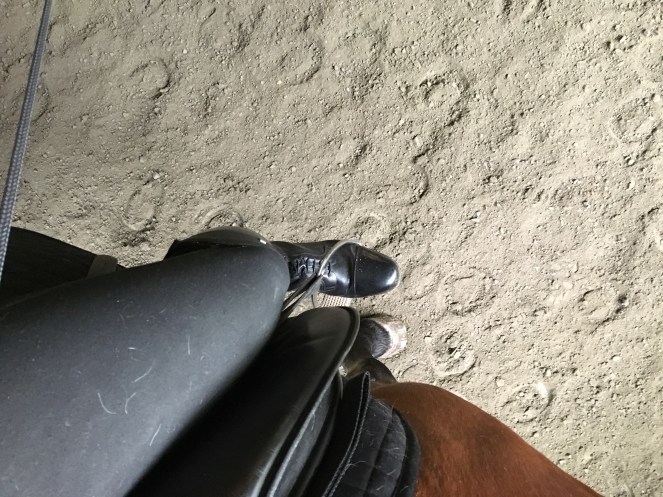
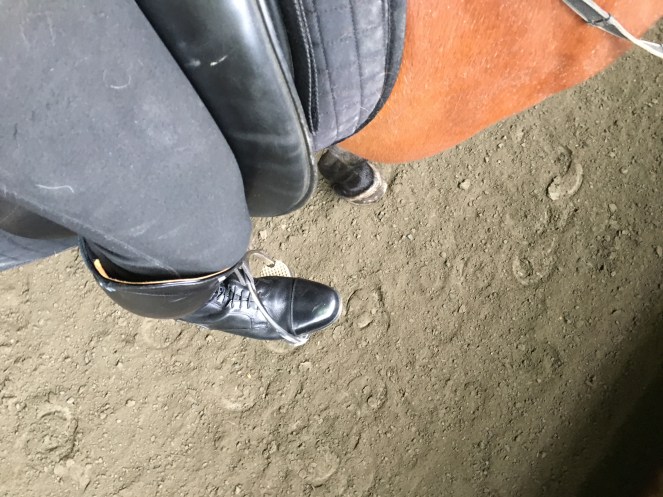
Apparently, I roll my feet to the outside in the stirrups. Something about the way these boots are holding my leg and ankle more stable means that rolling my foot to the outside compresses my little toe against the outside of the stirrup and after just a few minutes, starts to hurt like hell.

IMG_3510IMG_3512

It’s pretty subtle, but you can see it more clearly in my left leg here.

I think it’s a combination of a couple of things. I am generally on the tall side for Tristan, and I’ve ridden him in spurs for a long time, which means I’ve developed the bad habit of curling my leg up and in to cue driving aids. The way I’ve apparently accomplished that is to weight the outside of my foot, which causes my foot to slide to the outside of the stirrup, which means that posting puts pressure down in the bottom outside corner of the stirrup.

I’m also, admittedly, not as secure in the stirrup as I should be – really weighting my leg down into a dressage length of stirrup. Getting better at that would mean the stirrups move around less, and have less chance to move into that awkward position. There may also be some pinching with the knee mixed up in this whole thing, and I know that rolling my foot like this was also an old flaw with my jumping position – it felt more secure cross-country.

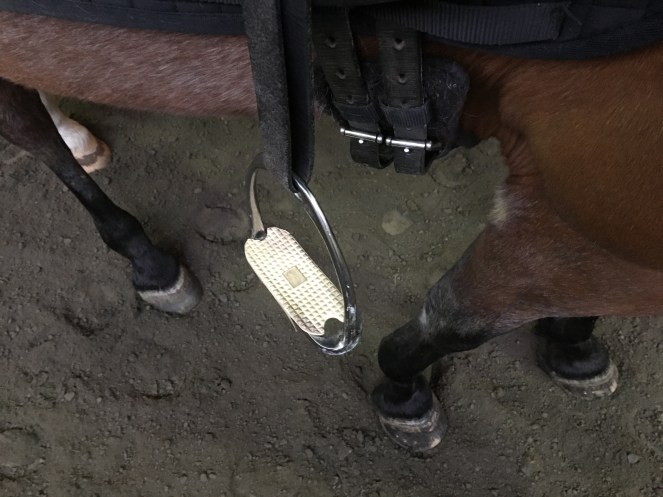
It doesn’t help that my stirrup treads were shot years ago, and are basically providing no grip to speak of.

IMG_3522IMG_3529

I’m a bit stumped on how to fix it. I have a few ideas, but would appreciate additional suggestions!

So far I’ve been trying:

  • Consciously working not to curl my leg and foot, which is hard, because it wasn’t something I realized I was doing in the first place. I’m trying to think about weighting the ball of my foot more, aligning my posting through the big toe instead of the little toe. I’m not at all sure that’s the right way to visualize it, though.
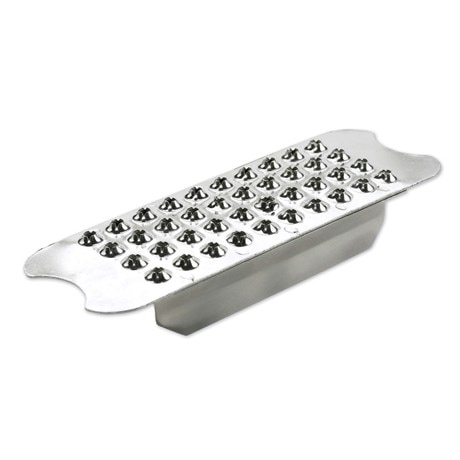
  • Looking into replacing my stirrup treads. Right now, I just have basic Fillis irons with rubber inserts that are basically flat. It looks like I can replace them with the same, or “upgrade” to something like this. I don’t love the idea of it, but I also reallllly don’t want to buy new stirrups. (Though, if buying new stirrups would substantially improve my life, try to convince me.)

  • Riding without stirrups. Which, okay, isn’t the worst temporary solution, but it’s not an actual fix for the problem.

Any ideas? Anyone else have this problem?