gear · product review · winter

Product Review: SSG 10 Below Riding Gloves

As I have mentioned, this is going to be my winter of figuring out my cold weather riding glove problem.

Whenever I Googled or asked around about riding gloves, the SSG 10 Below gloves came up. They’re the warmest things you can ride in! people said. They’re the only thing I’ll wear in the winter! people said.

Those people must not live in Vermont. Or actually ride in the actual winter. Or…I don’t know…use their fingers when they ride. Or their hands. Or their wrists.

But let me start at the beginning.

These gloves retail for $43.95, and I bought them from Riding Warehouse for $26.36. Which puts them among the most expensive riding gloves I have ever purchased. (Hi, have you met me? I’m cheap.)

As soon as I put them on, my heart sank. These gloves are huge. They give bulky a bad name. They are so thick I felt like each individual finger had tripled in size. They were so thick I could not really wiggle my fingers, let alone flex them.

Making a fist required actual exertion.

Holding the reins with them was an exercise in frustration. Not only could I not really feel the reins, I couldn’t get a good tight grip, either. The reins kept slipping out from my fingers, and I couldn’t tell it was slipping, and forget when Tristan tried to yank the reins out from my hands. When he coughed they fell out of my hands.

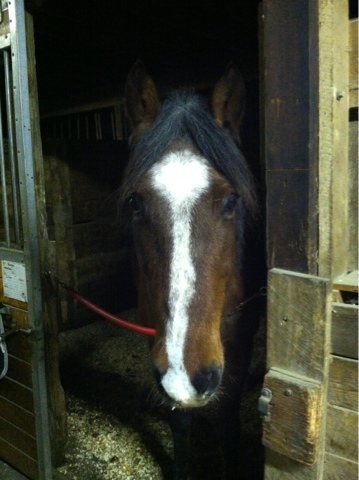
sorry someone was in a zippy mood and would not stand still for photography

Oh, and what’s more: they’re not warm. My fingers were cold and numb during the warmup until my actual body warmed up and then blood flow got to my fingers. Which, for those of you following along at home, is exactly what happened with the other SSG gloves I bought this year for 1/3 the price.

the below-mentioned elastic strap in action

I will give them this: they are well-made. The stitching is tight, the fabric is tough, and it’s got sticky stuff (like sprayed on neoprene or something?) in the right place. It does have a particularly clever design in which there are elastics inside the cuff that you attach before you put on the gloves, so you can pull off your glove but not lose it. Which is good, because there was no fucking way I was doing any buckles while wearing these gloves. Or even reaching into my coat pocket. Or…well, you get the idea.

In summary: seriously, whose hands do these gloves fit?!

Uncategorized

The Costs of Owning a Horse, Part 1: January 2016

in summary

In part inspired by Karen’s excellent series on her blog, Not So Speedy Dressage, but I have been thinking about putting this together for some time now.

Throughout 2016, I am going to track, monthly, every penny I spend on Tristan. It should give you an idea of what it costs to keep a horse in my specific circumstances.

So, for context, my circumstances are thusly: I keep one horse in central Vermont. He is boarded at what is for the area a higher-end facility. He has a stall and turnout during the day, hay and grain provided. The farm has an indoor, two outdoors, access to dirt roads and some trails, trailer storage, excellent full-time staff, and a choice of resident trainers that are all also excellent. I have access to a tack room and more or less unlimited storage (within reason, but I have two saddles, two bridle racks, a large tack trunk, etc.)

I am not charged extra for blanket changes, feeding supplements, giving basic medications, holding for the vet, holding for the farrier, etc. The barn schedules the farrier and routine vet appointments in conjunction with other horses who use those same professionals, but it’s very much my choice to use those specific ones (the barn works with other vets and other farriers in the same way).

I am charged extra for extra shavings (only used when Tris was on stall rest after his surgery), barn-supplied medication (like Previcox), or more involved medical care like soaking his foot.

In terms of the horse, we’ll describe Tristan as a senior horse in moderate work, with some health conditions that require ongoing medication, slightly more frequent than average veterinary care, and ongoing supplements that I’ve found do help him. He goes barefoot and is trimmed every 5 weeks.

In short, I totally and completely lucked out and have basically the best barn ever, because on top of all that, they’re all awesome people.

What does all that cost? Here’s January’s breakdown.

Board: $550, base price
Farrier: $45
Medication: –
$109 – 1 50ml bottle of Pentosan (8-9 month supply)
$96.00 – 1 200mg container of Pergolide (6 month supply)
$6.75 – shipping
Supplements: 
$69.95 – 1 8lb bucket of ReitHoof from Horsetech (60 day supply)
$125.95 – 1 25lb bucket of High Point Grass Pellets from HorseTech (60 day supply)

January 2016 total: $1,002.65
2016 total so far: $1,002.65

Uncategorized

Horses and Health Insurance

No, not health insurance for horses, but rather for people.

I feel extremely lucky that there has never been a time in my life when my health insurance has really been in doubt. There have been short periods when I have not had insurance, but always when transitioning between jobs. It was more a question of getting the paperwork in order than scrambling to find something else.

That said, I’m sorta-kinda in that place right now. On January 1, I transitioned to my husband’s insurance – which has opened up all these weird dependency anxieties like I am all of a sudden not my own person and a functioning, independent adult, THANKS A LOT BRAIN.

His 2016 insurance cards haven’t arrived yet, and I’m off my own plans, so I am in a weird place where if I had to go to the emergency room and they said “what insurance do you have?” I’d have to say “ummmmmm…” The answer is out there, somewhere, but it would require calling around to find.

All that is by way of a possibly TMI and almost definitely boring intro to my main question.

If you have gone without health insurance in your life, has that impacted your horseback riding?

On those occasions when I have been sort of in-between coverage for two weeks, or once a full month, I did not ride. Maybe I was being overly cautious. I have a much, much higher degree of risk-aversion than the normal person, I know. But my feeling is that riding is a genuinely dangerous activity, and that I cannot predict with certainty that I won’t be injured while doing so. If I were to take a bad fall and needed to go to the emergency room, it would cause real problems, especially if the paperwork hadn’t cleared yet or whatever. Like I said, really risk-averse.

That said, I’m riding a lot right now, even though my insurance card is floating out there somewhere. Maybe I’ve become slightly less risk-averse. Maybe I’m feeling more confident that all is settled since technically my husband has last year’s insurance info and it’s more easily figured out than if we were on something totally new.

Either way, now that I’ve typed all this out I’m going to nag him again to call his insurance company and figure out what happened to those cards.

So – what about you? Have there been times when you’ve been between health insurance? Have you chosen not to ride, or ridden anyway? Has it ever caused you problems?

adventures with the vet

Joint Support Verdict

the actual cutest.

Previously, I mentioned that Tristan has been stiff behind, and that the barn manager mentioned that something called OsPhos, which other horses in the barn were getting, might be a solution for him. I was a bit wary, based on my research in the COTH forums.

Then, I read Austen’s excellent overview of her use of Estrone for Guinness’s stifles.

That spurred me into action, so I emailed my vet and asked her about both OsPhos and Estrone for Tristan.

Being the sensible and clear-headed person that she is, she said she’d want to take a look at how he’s actually moving first before prescribing things. (grumble, grumble, stymied once again by the intelligent professionals around me) She wasn’t wild about either of the things I suggested, though.

I tried to describe as best I could how Tristan was traveling, and what my concerns were. I told her that bute hadn’t made a huge difference, nor had our Previcox trial. He was actually overall going really well and looking great, but I just wasn’t thrilled with the way he was using his hind end, and the stiffness starting off.

A few emails back and forth later and we had a surprisingly simple solution that I was really happy with.

It turns out that many vets often recommend doing a loading dose of Pentosan annually. So in addition to the monthly injections that he’s already getting, once a year Tris could do a month of weekly injections.

Pentosan works out to be about $12 a dose, and I already knew it works well for Tristan. SOLD.

So, this past Tuesday, Tristan was due for his monthly injection, and that will be the first of four weeks of regular injections. I re-upped his prescription at Wedgewood to make absolutely sure he had enough (though he still had probably 5 doses left in his old bottle). We’ll see where we go, but I’m really optimistic. In the past I’ve been able to feel pretty clearly when he was getting ready for some help, and the idea that we could get back to a great baseline makes me really optimistic!

blog roundup

Weekly Blog Roundup

First, a note to self, in keeping with the whole blog-to-remember thing: last night, an exercise that worked really well to get Tris more into the bridle & in front of my leg. I didn’t want to canter too much, since my focus was on conditioning & trot sets. He was not moving easily off the leg in response to my usual escalation techniques, so I tried something new: asking for the canter when going into the first corner of a short side, keeping the canter through the short side and the next corner, a few strides down the long side, then focusing hard on the transition back to trot, keeping it active, uphill, and collected. It worked beautifully, both during the warmup and after a walk break, to get a nice, steady, forward trot. I did it until he maintained that trot down the entire long side.

So, continuing: Saturday blog roundup. Small this week because I was going great blazes at work and riding in the evenings instead of at home on my computer. #sorrynotsorry

DIY: Recovering an Old Saddle Pad from Wyvern Oaks
Love this. Seriously pondering putting some cooler fabric on my oldest pads…

Horse-related volunteering: therapeutic riding from Hand Gallop
Really, really good overview of an important volunteer position.

Teach Me Tuesday: Joint Injections from Sprinkler Bandit
Always a good conversation in the comments.

To flex or not to flex? from Breeches & Boat Shoes
I’ve wondered about flexible stirrups myself over the years, and this was a good review.

Uncategorized

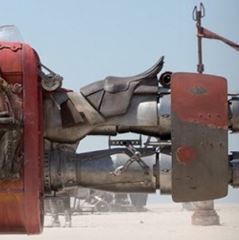
When you are equally obsessed with Star Wars and horses…

…you start to notice things like this.

You probably don’t see it yet. It took me quite a while of looking at it every day, sans Rey in the driver’s seat, because it’s the background to my Gmail right now. (I opted into the Google Star Wars experience, which also means that my figurine in my Google Maps iPhone app is Poe Dameron’s X-Wing.)
That’s my current Gmail background. See it yet?
How about now?
Seriously forward flap, there, Rey!
Also, I’m just going to leave this here.

longeing

Always have a plan when you longe!

Here are a couple of things I have heard people say or I have read on horse blogs:

“I never longe, it just gets them more fit for no reason.” 

“If I don’t longe him first, he’s completely wild!” 

“I’ll throw him on the longe line first for a while and let him take the edge off.” 

“Longeing is boring, I’d rather be in the saddle!”

“Longeing is just an excuse to throw a bunch of gadgets on a horse, and all gadgets are evil.”

All of these statements have one thing in common: a fundamental misunderstanding of the powerful tool that longeing can be.

There are tons and tons of articles and passages in books that can give you specific exercises, but here’s my takeaway for the day:

Never longe your horse without a plan.

What do I mean by that?

First, ask the question: why am I longeing my horse?

Possible answers: he’s too lazy, he’s too energetic, he’s cold-backed, I don’t want to ride, I want to see him go, I want to work on something specific.

The difference among the answers there is that some of them are actual specific reasons and some of them are general. If he’s too energetic, why? Is it because he’s generally an “up” horse? Is it because he’s been in for a week? Is it because there are distractions around, like at a show? Is it because longeing makes him nervous? Is it because you’ve taught him that being longed means he can fly around like a kite for twenty minutes?

Dig deeper, and look at what you are actually addressing. Brain? Fitness? Focus?

Then, have a goal in mind. Know what your horse will look like at the end of a longeing session, and what you can do to get him there. Know what the intermediate steps will look like. Know how you’ll handle yourself, what you’ll ask of him, and how to shape his behavior and his movement to get to that end goal.

If all that sounds familiar, it’s because longeing, when done well, is basically the exact same thing as riding. You’re using aids to shape a horse’s behavior and movement.

Example 1: When I first backed Tristan, we did a lot of longeing. Anytime I introduced anything new to him, for months and months, I did it on the longe line. Saddle? Bridle? Boots? Different saddle? Different girth? Different bit? You name it, if it was going to be strange to him, I put it on, then put him on the longe line. For these sessions, I was looking for him to start off a little startled, but to get him focused back on me and doing productive work. I didn’t just let him tear around until he got over it; I asked for transitions, spiraled him in and out, and basically did things that would test his focus on me.

crappy photo, but productive longeing session.

Example 2: The more high strung horse. Your horse won’t focus on you at a show? He comes out of his stall in mid-air? Ok, sure, put him on the longe line. But have a plan. For a horse like that, I would do transitions, starting low and going up as he proved to me he was going to keep his brain. Lots of transitions within gaits, primarily looking for a response to “easy” as a calming and slowing method. I’m ok with energy, as long as it’s controlled and directed. Are the transitions sharp and clean? Can you shorten the time between them? For this type, I’m going to keep a close eye on body language: where are his ears? What does his overall musculature look like – tense and bunched, or loose and relaxed? Is he tipping like a motorcycle, ready to take off again at any second? Is he hauling on the longe line or maintaining a steady tension? By the end I want a horse that will transition off of voice command the second I finish saying the word, who has an overall “loose” look even if he’s moving forward, whose inside ear is kept on me, who is not testing the longe line.

Example 3: The specific goal session. I do this one a lot with Tristan still, as a regular part of his conditioning program. I’ll think about what is lacking in his under saddle work, because I’m not a great rider or because something about the under saddle work is impeding him. Most often, this is quality of gait or a specific type of strengthening (back, hind end, etc.).

Last night, it was about strengthening his hind end. So I warmed him up, looking for him to release tension and focus on me. Say that took 10 minutes total, walk and trot both ways. He started off a bit lazy, and sharpened up and loosened up, dropping his head, stepping under more in his walk, and on a relatively steady circle. Then I went back to the mounting block and added my butt bungee thing because I wanted the resistance for his hind end.

I knew that a successful session for this would look like him moving normally or even a bit better than he does without the resistance band: tracking up underneath, using his back (one reason I like to longe with just a surcingle or without tack is that I can really see his back muscles work), keeping his head low and relaxed, and keeping his own rhythm without me remind him with the whip constantly. That took about 15 minutes, and each thing I did was with that end goal in mind. Sometimes that meant asking for a few strides of canter, to loosen his back. Sometimes that meant nagging him a bit with the whip to really use his hind end. Sometimes that meant an “eeeeeeeeasy” to get him to go from short quick frustrated strides to longer and looser strides.

After I got what I wanted, I took off the resistance band and handwalked him around the edge of the arena for another 10 minutes to cool him down and get him off the tight circle. Total elapsed time 35 minutes, with a tired but focused pony at the end.

So, really, all I’m trying to say is: have a plan. Have an end goal in mind, take steps to get there, and don’t just flail and say that you hate longeing and it’s useless. It’s a tool, like so many of the other things we do with horses. Giving it up is your loss.

blog hop · organizing

Viva Carlos Blog Hop: Planner Post

I love this blog hop, because I love my planner. Here’s the original post.

I use a very, very specific kind of planner made by a company called Quo Vadis. It’s a style of planner I first fell in love with 12 year ago (eek) when I studied abroad in France in college.

Basically, you buy the outside cover and then keep buying refills for it. This cover is going on 5 years now, and is a bit beat up but for something that is handled basically constantly it’s doing greate. The stitching at the binding is worn and the cover is a bit ink-stained but other than that pretty good.
Size wise, it’s 5″ wide by 6 3/4″ tall. I measured. That makes it roughly the size of a paperback book; a bit wider and a bit shorter. It’s a great size to fit into my purse. 
Right when you open it up it has a good space for stashing things. When I took this picture, it was a pile of receipts I needed to file for work reimbursement. Underneath are my grocery list for the week, my financial planning for the year (using the 30 day system, I book out any purchases over say $15 so I don’t go on spending sprees), other notes, and a sticky note with my monthly budget as a reminder.
The inside, though, is what makes me really love this planner. 
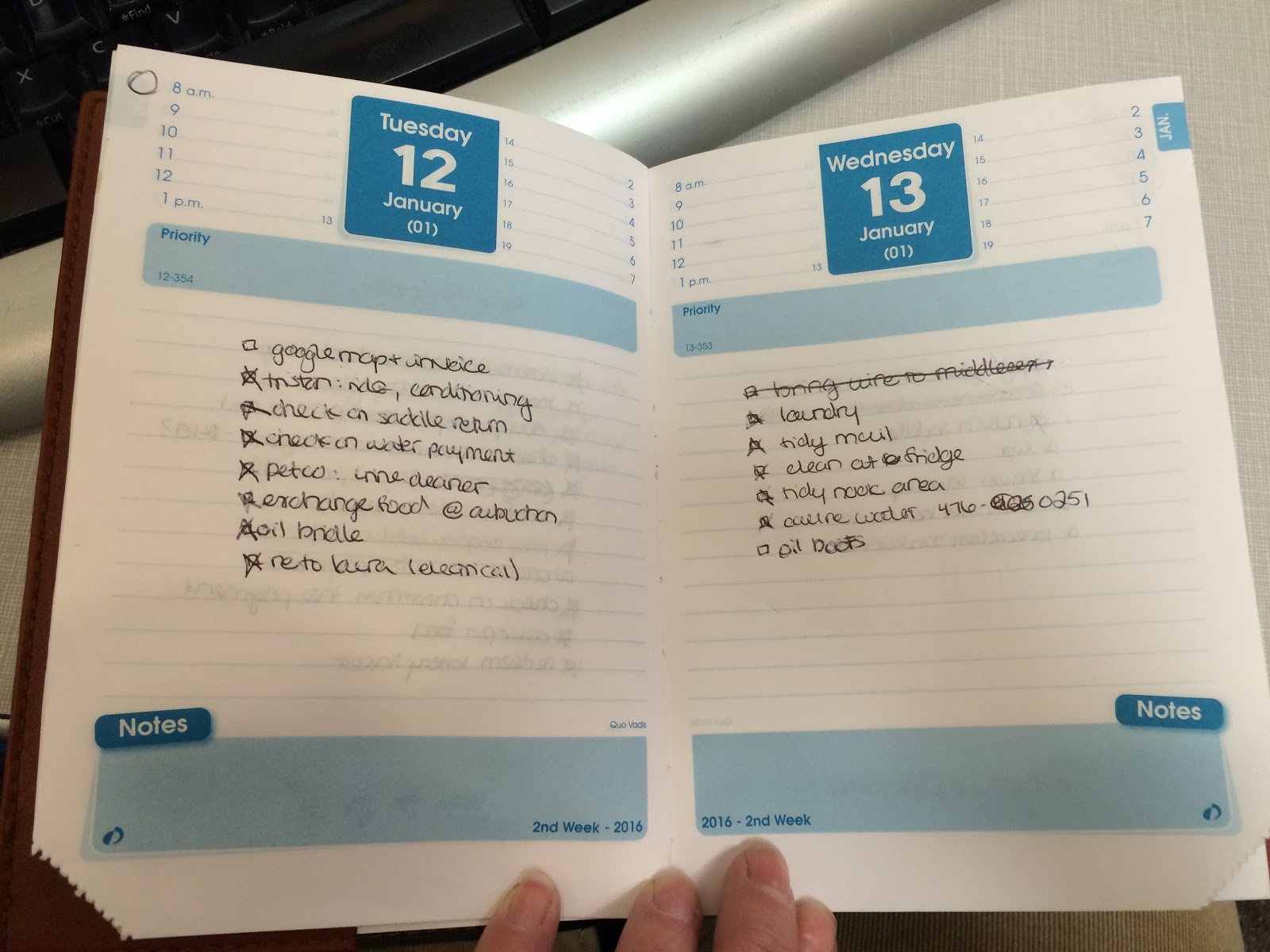
Each page is one day. I have a to do list in the main text, with a box next to each item. X means it’s accomplished. X with a line to the right that ends in —> means it’s been forwarded to the future. X with a —| means it’s been canceled all together. As you can see, due to the empty squares, I’m not always perfect with this. Sometimes I’ll leave them on the days they’re originally scheduled for and flip back to catch up on previous lists.
The scheduling function above is mostly to keep track of personal appointments; work gets managed through a different system. The Priority box on the top is big overall stuff, like visitors coming, a big event day at work, something else that I need to remember for that day. The Notes section at the top keeps any number of things – books I want to read, plans for dinner, you name it. 
These are fairly light days because they’re weekdays. Days off get the whole page filled. I have learned that once I fill up the lines, I can’t make myself put anything more on the list for that day. I have to relax. Type A problems, I guess. I usually try to make items actionable steps; I’ll give myself a number of blog posts to write, or a specific task to accomplish, or in some cases a length of time, so something like “laundry 1 hour” or “email 1 hour” or “tidy bedroom 20 minutes” or “unpack 1 box books” so that I can check it off and move on.
One of my favorite parts of this planner is the bottom outside corner. You can see it on these pages. The corner tears off, so that you can just flip right to the current day. At the end of the year, it’s all torn off.
I’ve used this planner system consistently for about 8 years now. When the year is done, I write the year on the binding and file the old one. Since I keep so much on these pages, it can be fun to look back and track when I did things, or what I was doing. I try to take time in December to do a year in review; I skim back through, copy over any books that I’d noted or general things, and add them to my GoodReads list or other bigger lists or just ditch them.