house post

House Post: New Front Porch Lighting

When we re-wired the house, we discovered that the previous front porch lights were DONE.

you can sort of see them here, to either side of the front door.

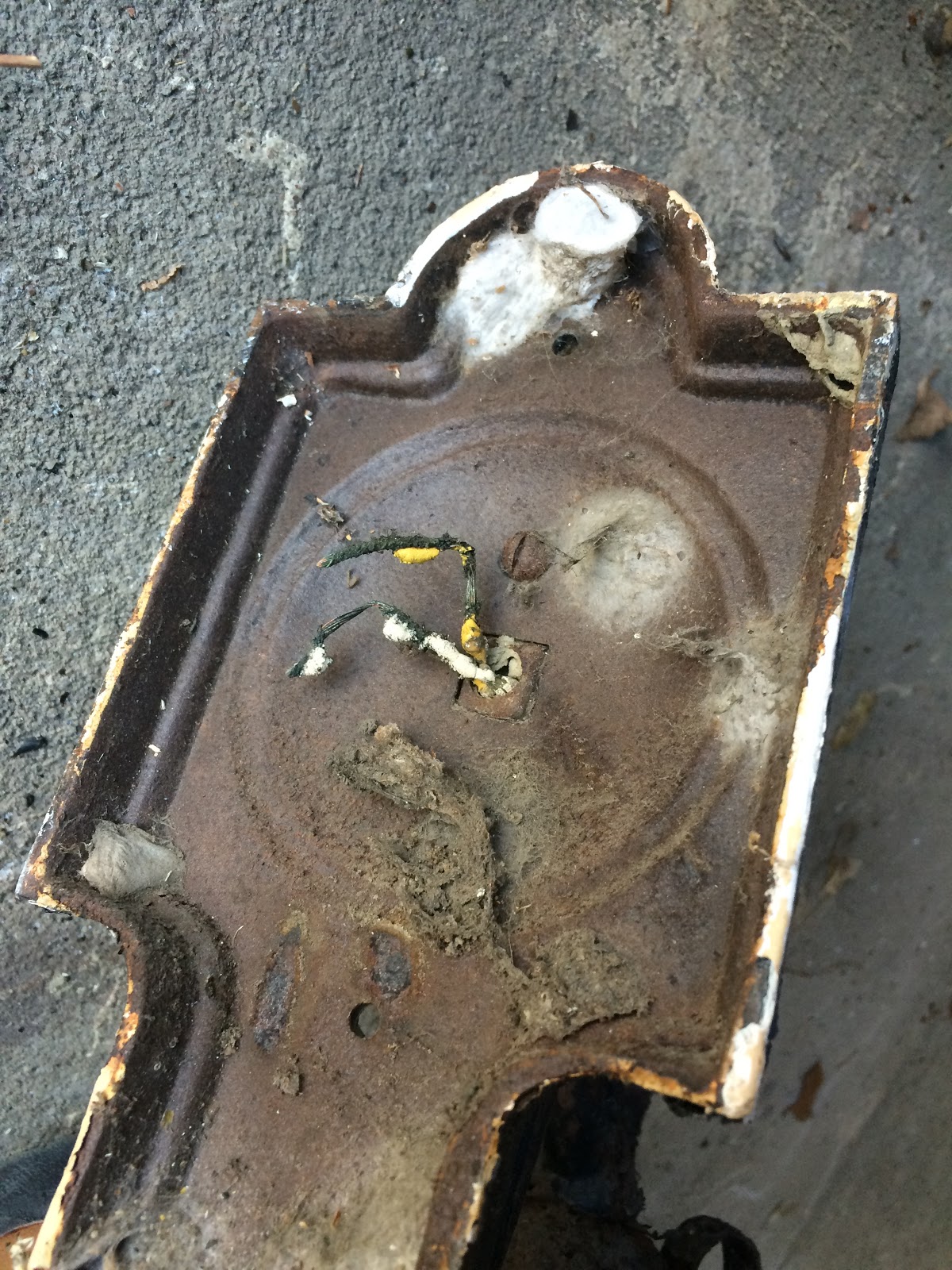
They were probably original to the house, c. 1928, and the insulation on the wiring had melted off. The metal of the lights themselves was done. Kaput. Unsalvageable. How they had not simply disintegrated off the front of the house or caused a fire is a mystery to me.

YEAH.

I found new front porch lights that I loved in, of all places, HGTV Magazine (I KNOW), but they were hundreds of dollars apiece. I showed them to my in-laws when they were visiting and my father-in-law, who loves a challenge, emailed me a link a few weeks later to some very similar lights for $120 each. Sold!

Then the project kept languishing. See, the previous lights had simply been screwed on to the front of the house without regard for the slant of the siding. That was reasonable because they were dangling – they would right themselves via gravity. That was not the case for our new lights.

We hemmed and hawed and debated and bought 2 different versions of mounting blocks that seemed like they might fit over the siding but were the wrong size and I tried to hire our handyman guy to do it but a) he was booked months and months out and b) he really thought I could do it myself. I guess I gave him way too high an opinion of my competence during the ceiling fan project?

In the meantime…basically we had bare bulbs hanging on their wires off the front of our house. For a long time. They were under eaves so it wasn’t a huge problem but it was still Not Good.

Finally, FINALLY, I put it to the top of the list for my parents’ next visit, and my magical father brought all his tools and put up our new lights.

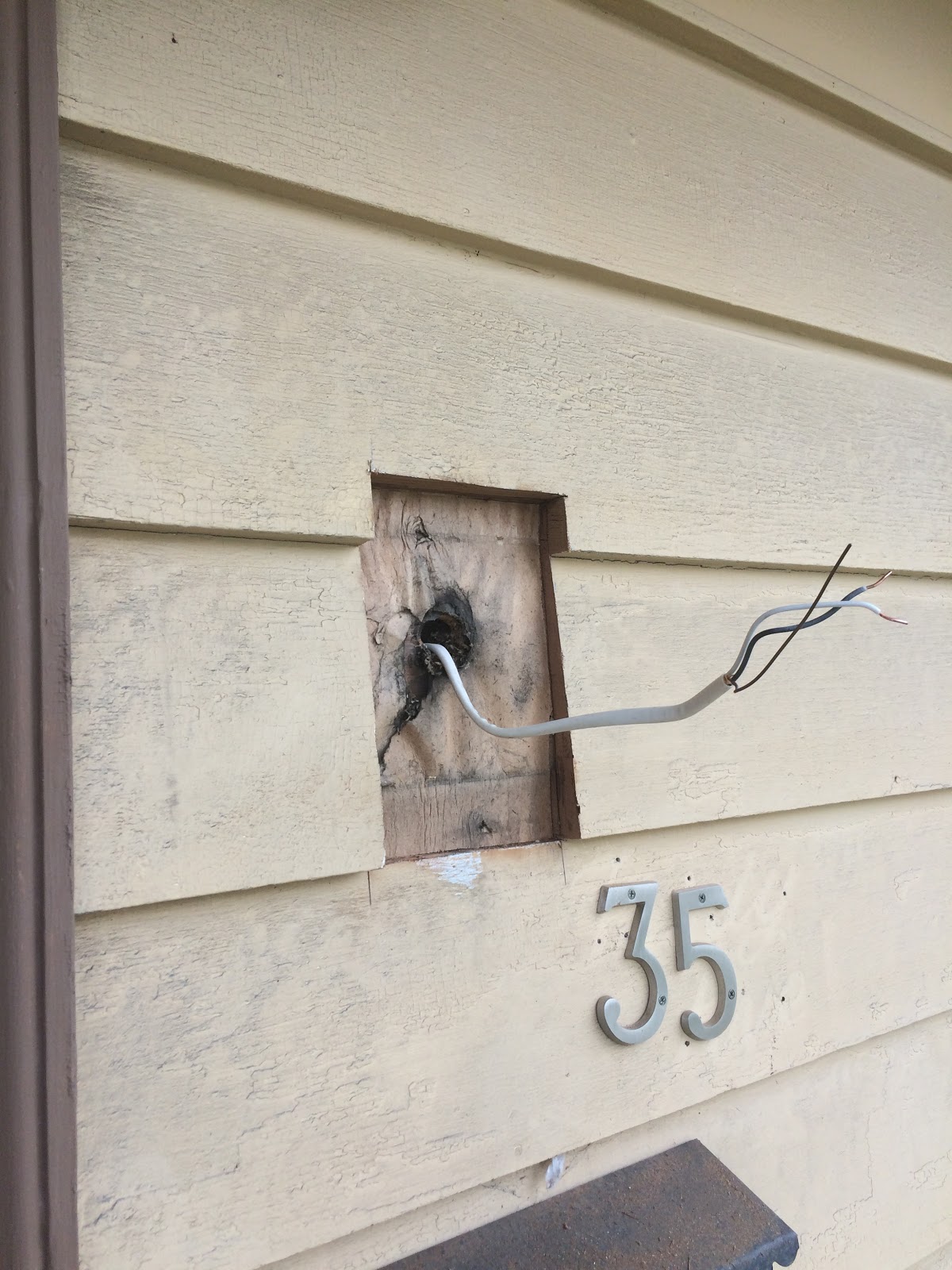
Step 1: Cut out the siding down to the actual wall of the house.

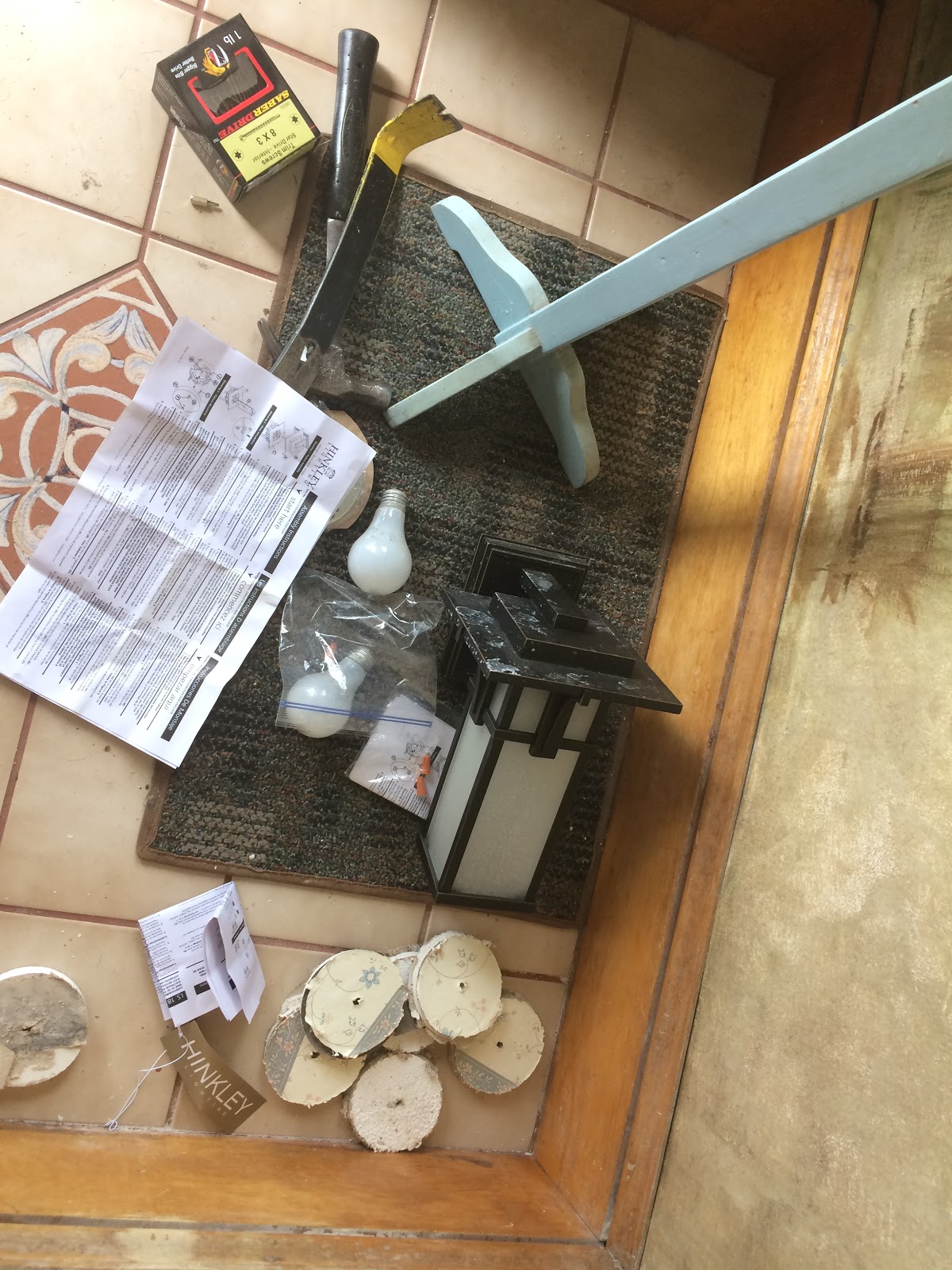
Yeah the lights have been sitting there since we bought them 10 months ago apparently I have no shame.

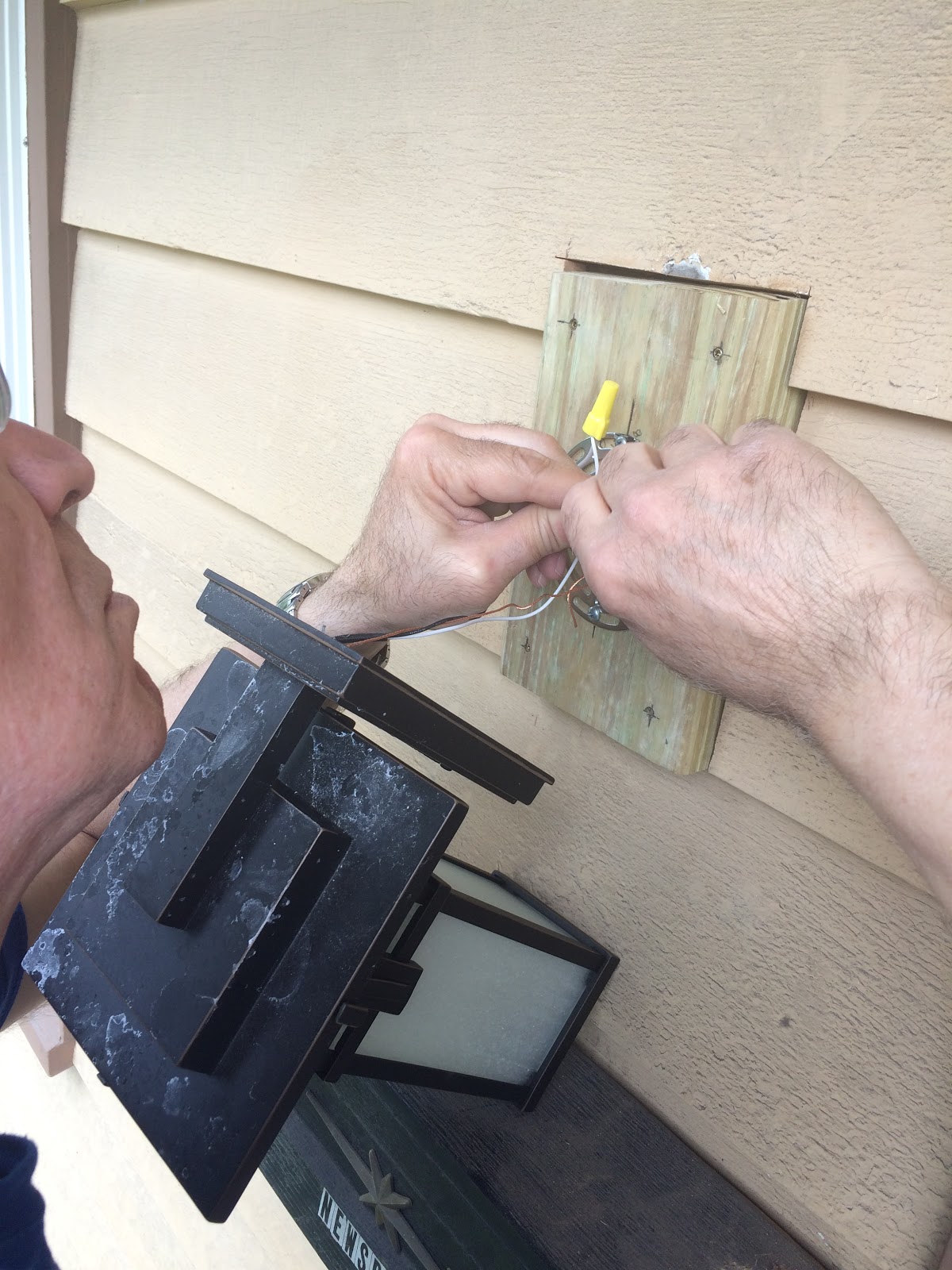
Step 2: Devise a complicated mounting system with pressure treated blocks and carefully measured pre-drilled holes. Swear a lot. Ok, that might just be my dad’s step 2.

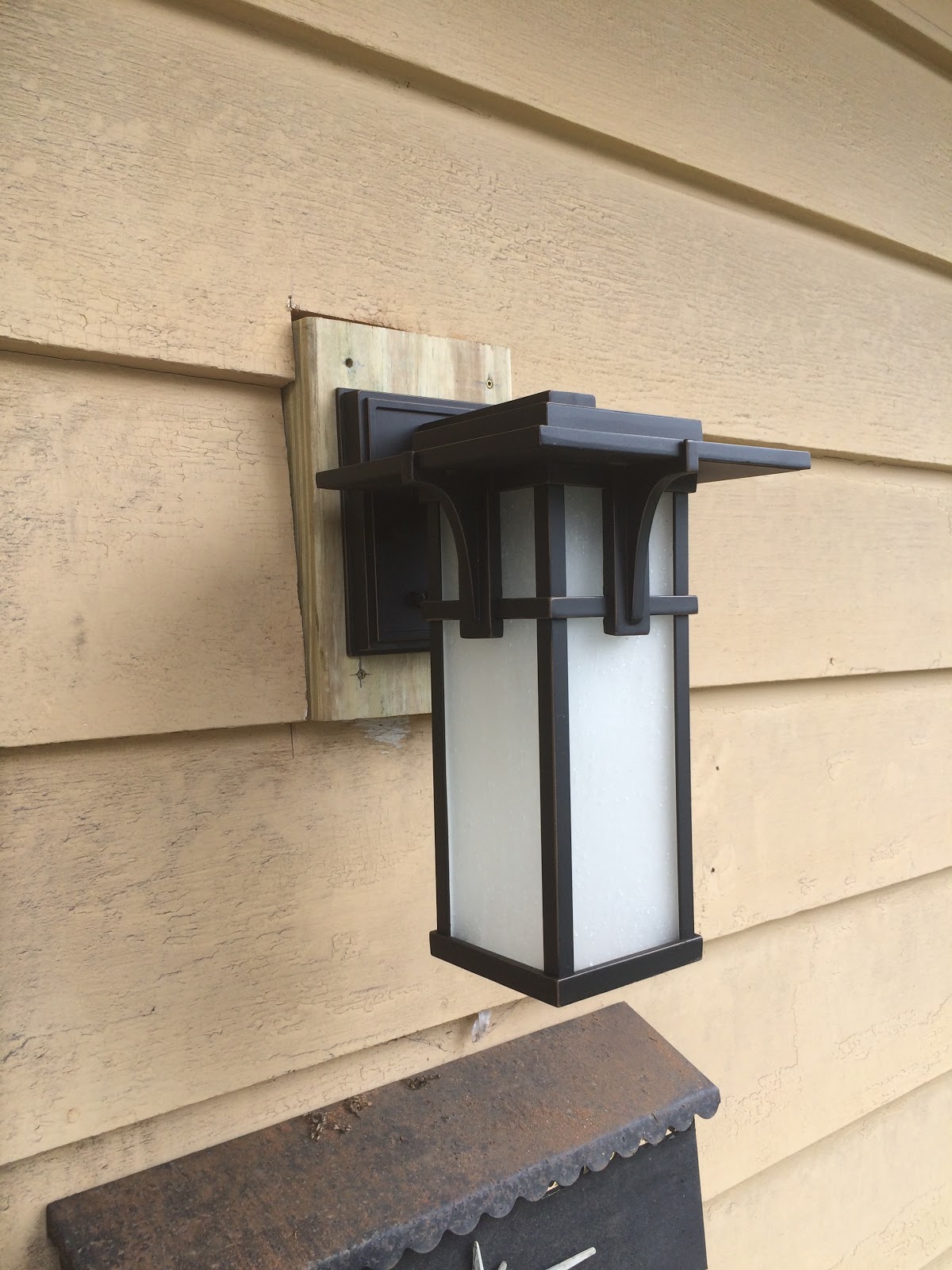
Step 3: Put up the block itself!

Step 4: Wire in the lights.

Step 5: Ooooh and aaaah over how pretty they are.
Step 6, apparently not pictured: Caulk around the edges of the new mounting block just to be safe about moisture getting under the siding.

Step 6: Realize there’s zero reason for the old mail & newspaper boxes to be there since we put in a new mailbox down on the street. Remove them. Vow to pressure wash the house at some point this summer, gross.
In short: I love them!
Uncategorized

Maternal Instincts

Some people look at babies and feel a hormonal kick. I look at babies and think “Jesus Christ that looks like a lot of work for no actual reward.”

On the other hand, I look at puppies and want to bring them home immediately for snuggles.
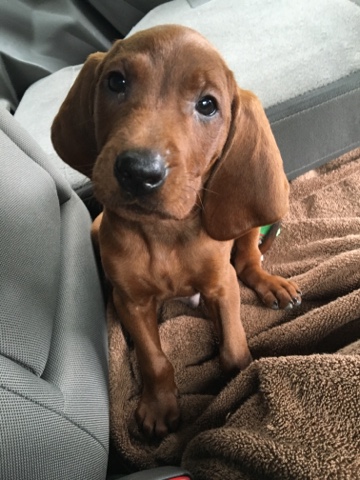
Which is to say: meet my new nephew, a redbone coonhound named Rufus! I am counting the days until I get to meet him in person.

2016 show season · dressage · fashion · show planning

One step forward, two steps back

First, the good news: show clothes still fit! Including the white breeches!

The coat is just a smidge tight, but not in the “doesn’t fit” way, in the “cut to be restrictive and make you sit up straight” way, and it’s always tended that way.
My stock tie has vanished, but as of late last night I have another one on the way from a friend which is a fun story I will blog about later.
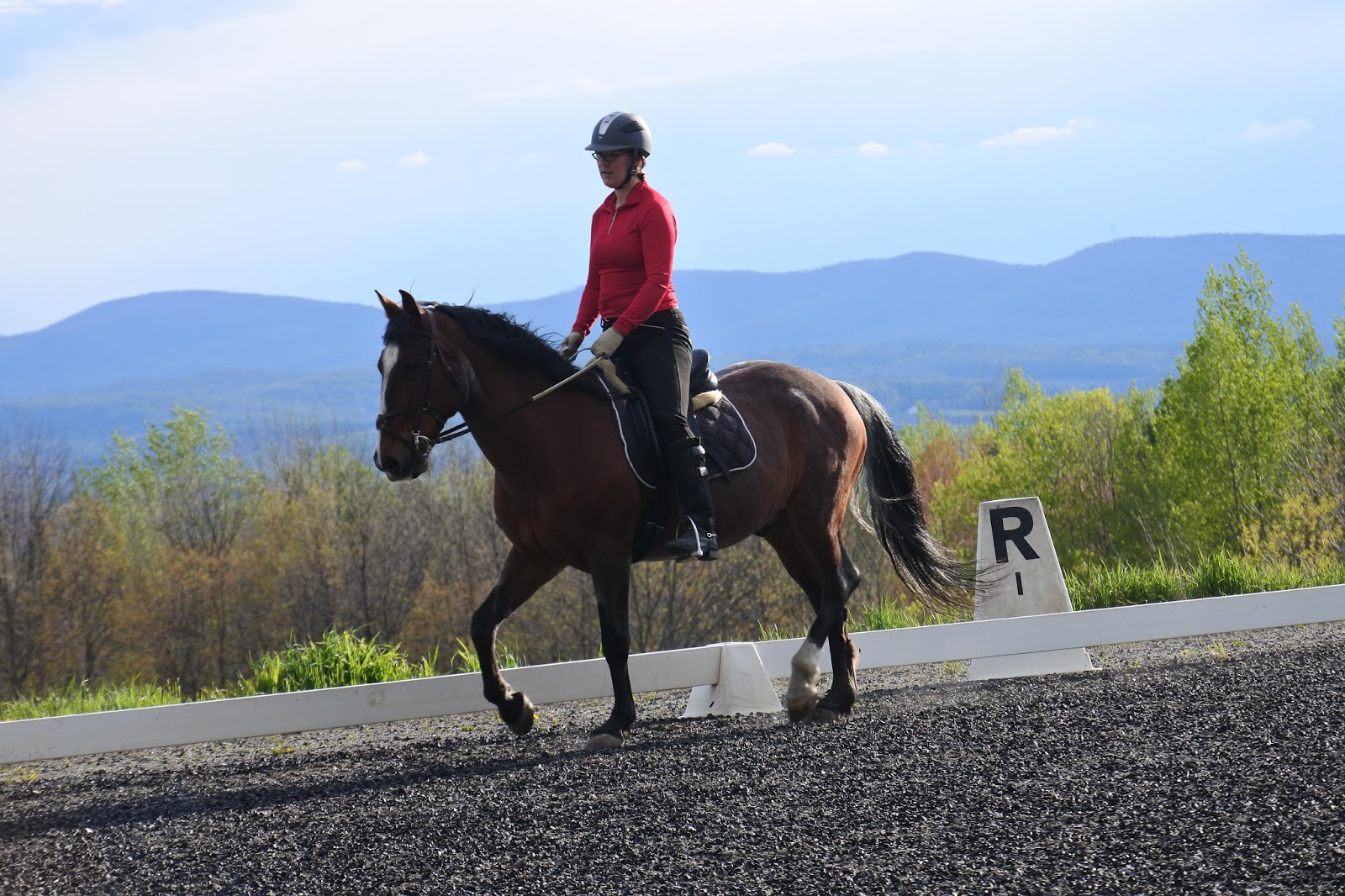
I also located my show helmet, hairnet, show gloves, stock pin without difficulty, remembered that I had actually bought a brand new white show shirt out of some technical wizard fabric like all the kids are wearing these days (my old show shirt was a polyester short sleeved thing that worked for IHSA classes in college but was the actual pits of fashion). I had never worn said shirt but a wearing it in the picture above!
I had also (yay past me!) washed and neatly packed away all my white/show saddle pads. So those are good to go too.
Now the bad news: I tried to start Tristan in his snaffle in the dressage ring last night and it was kind of a disaster. He bolted repeatedly, never relaxed, never softened, would not listen to me and as a result our circles were weird half-square half-oval blobs. In fairness, it was ludicrously windy, so that may have keyed him up, but it was still absolutely awful.
I brought him back down to the indoor and schooled the everloving shit out of him. We ran both tests. We ran every movement in both tests. We ran transitions, We cantered. I put on spurs and a whip and forced him forward into a hand gallop. He was tiiiiiired but finally cooperative at the end.
Then we went up to the outdoor jumping arena, and we repeated that, making sure I had brakes and that he was listening to leg and hand in the walk, trot, and canter. Then we went back up to the dressage ring and trotted and cantered around the outside, politely. He was ever so very tired, but cooperative.
So, today: we’ll see. I’ll start in his snaffle but bring his kimberwicke up. Depending on how the ride goes I’ll decide whether to warm him up in his kimberwicke and switch to the snaffle for the actual rides.
Semi-related gripe: I didn’t read Training 2 through thoroughly enough, what the hell. How many times can you cross the diagonal in one goddamn test?!

2016 show season · dressage · show planning

Baby Steps & Show Prep

First things first: on Tuesday night, I started my ride in the kimberwicke, and let’s just say there was not enough pony kicking in the world. So I hopped off and swapped bridles – I had brought his dressage bridle up – and Tristan was a ROCK STAR.

We ran through Training 1, and my geometry was the absolute suck, but Tristan took a half halt, gave me some bending, and even softened up quite nicely in the canter. It was nowhere near a world-beating ride but there were moments of respectable dressage. Which is really all we’ve ever aspired to.

So, we might actually pull this off!

Things left to do:
– pull out my show clothes you guys I haven’t even unzipped my coat bag since we moved to Vermont and literally the last time I put on my white breeches was July 2012 THIS CAN ONLY END IN TEARS
– give Tristan a bath
– clean tack
– actually read Training 2 and maybe think about memorizing it
– think through some kind of warmup plan? who am I kidding, I’m going to wing this on Sunday morning

Realistically: I have this evening to do one last major ride and pull out my show clothes, and then tomorrow afternoon – maybe? – to do a quick tune-up, give Tristan a bath, and clean tack.

Also last night I pulled out a calendar and counted and for a stretch that started this past Tuesday, this coming Sunday is my only complete day off for 21 days. So of course I’m horse showing, then volunteering afterwards. What is it about horses that encourages so many bad life decisions?

Oh, and it’s going to rain. All day. Yup.

dressage

Progress!

Last night, I got on about 7:30 pm after we returned from the weekend away with my husband’s family.

My goal was solely to confirm that Tristan was going to continue to cooperate in the outdoor ring while wearing his kimberwicke.

Victory!

I got obedient 20m circles each way, and while they weren’t pretty, he at least let me tinker with them a little bit.

Tonight, I’ll start him in his kimberwicke and then swap to the snaffle, and we’ll see if we can’t get an actual schooling ride in. Who knows, I might even do something crazy like try and practice my test. Probably I should memorize the test first. sigh.

yup, that’s the view from the dressage arena

stupid human tricks

Horse Instincts

One of the best things about horses, for me, is how they force me to develop certain qualities.

For one thing, horses do not cope well with equivocation. They want clear, firm direction. They want steady commitment. They don’t do that whole “well, I dunno, what do you want to do?” conversation well at all.

I think that’s something that so many people who have those “that one time I rode a horse, he bolted/bit me/flipped out for no reason!” stories just don’t get. Horses are generally very clear in their communication. You just have to pay attention. Learn to read them, and you can see something coming from a mile away. (Which, ok, is not to say that sometimes they don’t flip for no reason – but that is the definite minority of instances.)

see, for example, a horse that is unhappy with literally everything in his life in that moment.

So in order to become a person who works well with horses, I have had to develop those qualities: be clear, be decisive, be firm. I’m not great at them yet, but I am lightyears better than I was. I think it’s one of the reasons that horse people are often difficult (from society’s point of view) to get along with. People who are in deep with horses, and who relate really well to horses, are often blunt, straightforward people who don’t always have patience for the you-first-no-wait-what-now dance that society values. Oftentimes, they’re women, for whom being blunt, clear, and not wholly sympathetic is considered a negative.

Here’s another thing: horses teach you to be still and to wait.

I suck at this. I am a person who wants to practice frenetic energy in all that I do. I multitask, cubed. I need a million projects. I need to fidget. I need to constantly poke at things.

But I’m learning. For me, the epitome of this feeling lies in the perfect half-halt: that quiet, still, gathering, that moment when you communicate a complicated idea to a horse that you should hold, wait, be still. I think of a good half-halt as a spot deep in my stomach, in my core, that for one split instant contains everything and makes everything possible as a next step.

The more obvious, outward example of this is the ability to stay the calm center of the storm, to hold your body and your mind still when shit is going down. You can do it from the saddle, riding a buck or a bad moment. You can do it on the ground when you’re dealing with or approaching a horse that’s frightened or cartwheeling around on a longe line. Horses need that. They can read us way better than we can read them. They see our tension, they see our fear, and they feed off of it. But they can do the reverse, too. They can see a person who has let tension drain from their body, who is holding still, who is waiting quietly, and they respond to like with like.

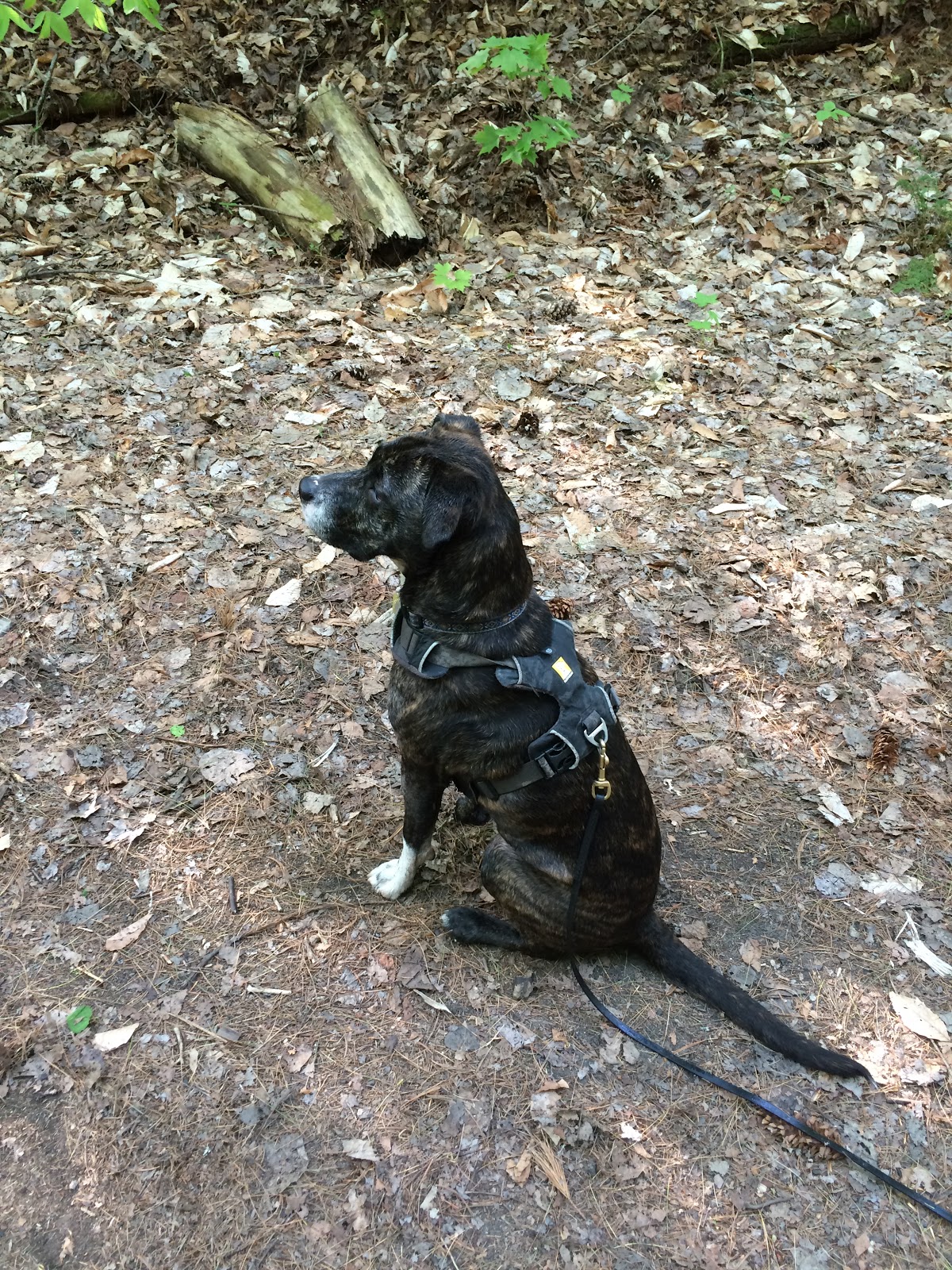
Last week, I took the dog for a short hike down a rail trail near our house.

alerting very hard to something I never did see

I love my dog, but she is not always easy. She is fast, strong, and very tricky to keep focused. She is not great on a leash, but she is absolutely forbidden to be off leash except in enclosed areas. She bolts, instantly. Her recall is not good; she simply doesn’t have the self-discipline to have it nailed down yet.

So on this beautiful, sunny day, we went about three miles, and on our return, when we were about half a mile away from the trail head, which was on a very busy road, she took a flying leap off the trail into a muddy ditch. She loves splashing in mud puddles. She was flailing around, sprinting back and forth, and then all of a sudden she was no longer on her leash.

There was no tug, no warning; she wasn’t even at the end of her 30′ lead. One second she was frolicking, the next she was a brindled blur and the next second she had vanished into the trees.

I ran forward down the trail, yelling for her. She reappeared out of the woods about twenty yards down the trail, crossed the trail, and then disappeared into the woods on the other side of the trail.

Between the moment when she first got loose and I panicked and the moment she crossed the trail again, I fell back on those horse instincts. I could feel my body grow still and quiet, and time slowed down. I saw that when she had crossed the road again she was actually angling in my direction. I saw how amped up she was, and knew that she loves being chased.

I jogged a little bit further in an unhurried way, watching the brush where she’d disappeared, making noise so she knew I was there, and then paused, waiting, called her one more time – and she exploded out of the brush right toward me and flung herself down at my feet.

I grabbed her harness instantly with a shaking hand, twisted my hand around a few times so she’d have to pull it off to get away again, and praised her to the skies, fed her half the treats I had with me.

The harness (her ususal Ruffwear) was in perfect shape. The leash was in perfect shape. The hardware wasn’t twisted in any way. There were no tears or loose spots. There was no earthly reason for the leash to have separated from the harness, but it did.

If I had panicked, she would’ve thought it was a game, and kept running. In fact, she did that once before, two years ago, the first time she slipped her leash (and her collar; it’s why she only goes in a harness now). But because Tristan – and the other horses I’ve learned from – has drummed into me that need to be still and wait, I caught her less than two minutes after she bolted.

Hopefully, I’ll keep working on those lessons. They’ve served me well.

house post

House Post: Kitchen Painting

So, previously I shared the project that was re-plastering the walls of the kitchen to cover holes large and small.

Once that was complete, it was time to paint!

Most of the reason for repainting the kitchen was to freshen it up. First, the wallpaper removal had left a sort of ugly bit around the top edges of the walls – either the scrapes from the removal or the tacky discoloration left over after the glue. Second: it’s a kitchen! The walls were spattered and stained after 30 years of use, even with regular washing.

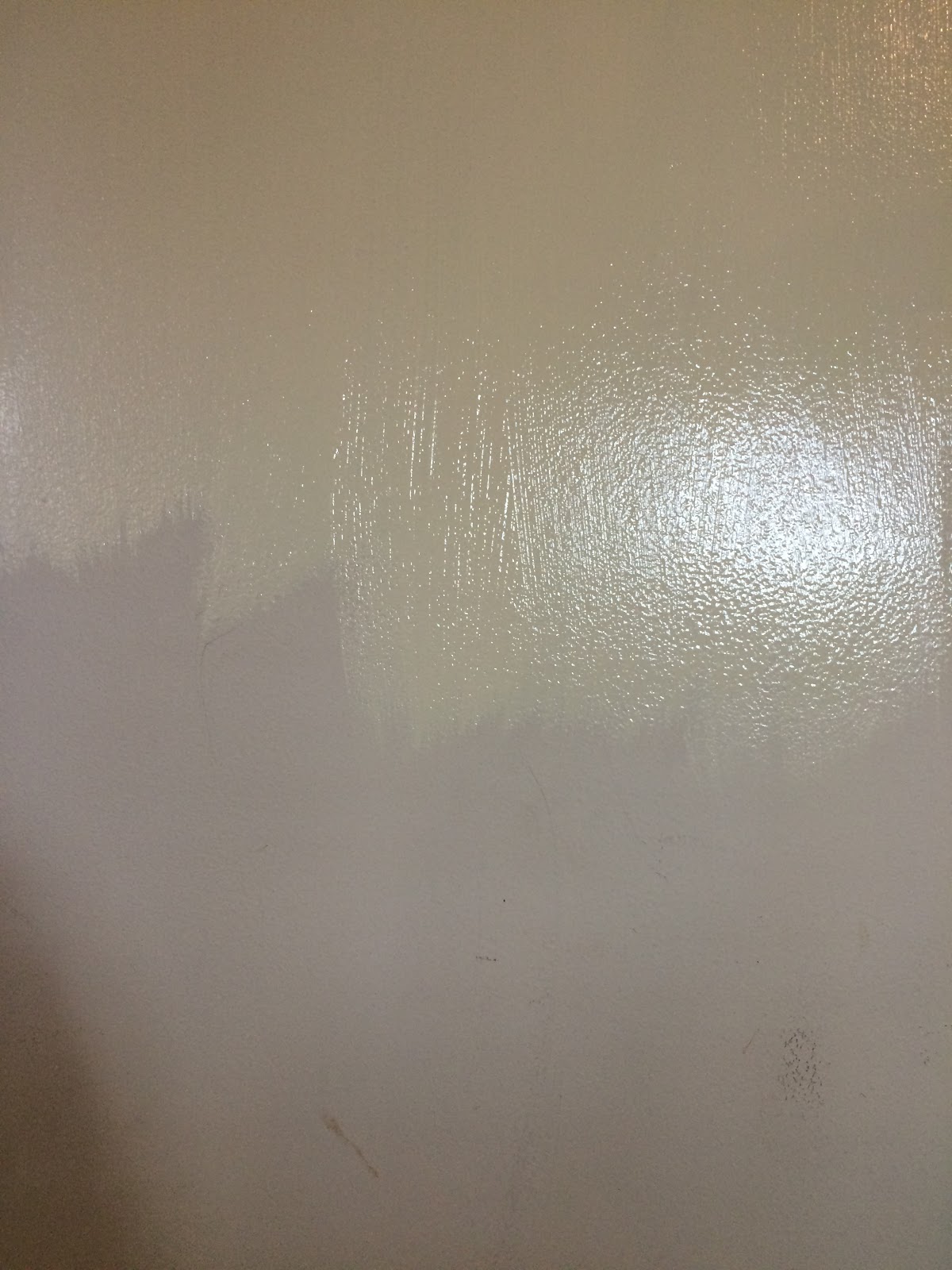
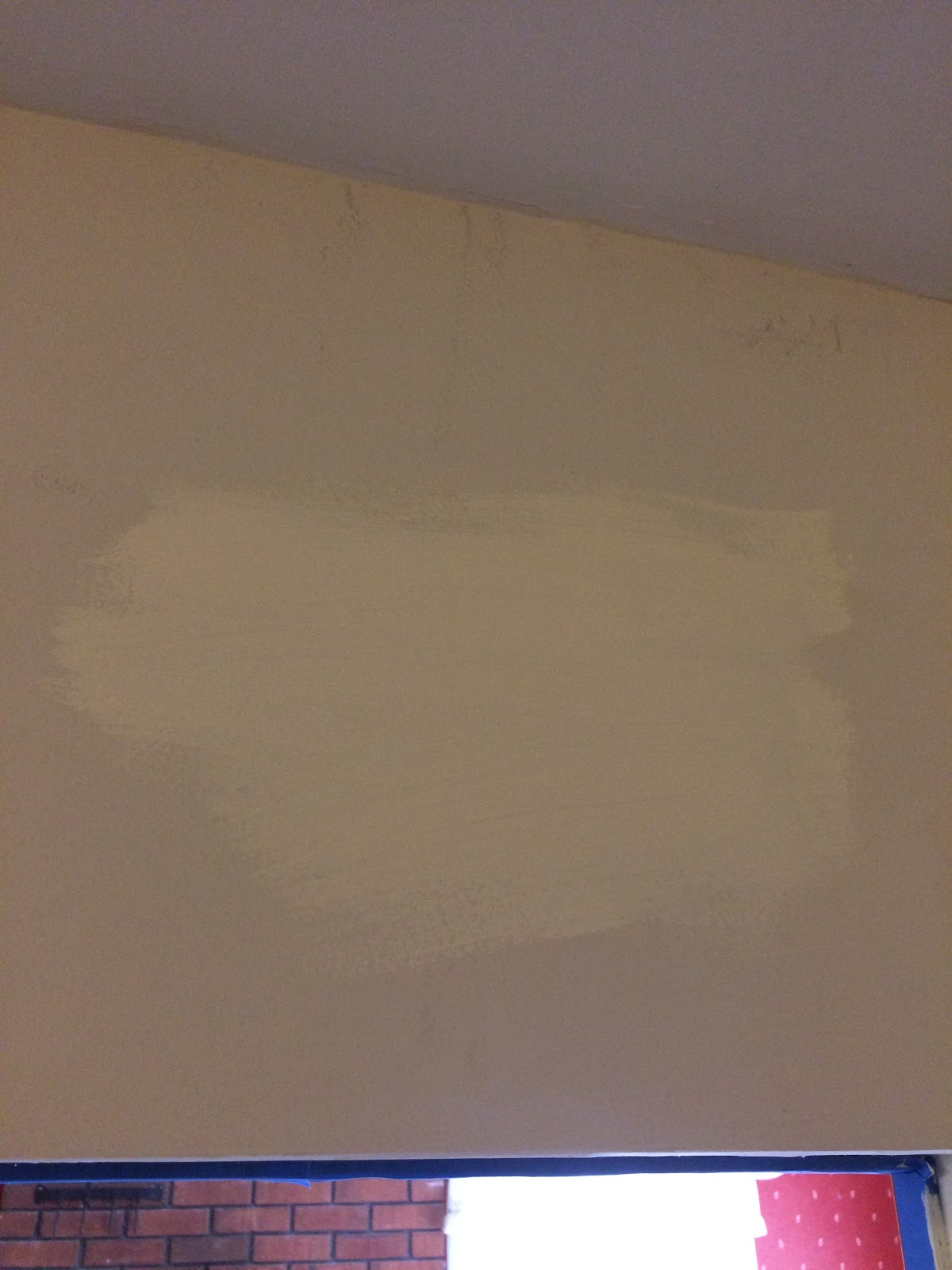
Color #1, a very pale creamy yellow, was not a success. It was a lovely color but did not work next to the cabinets or next to the almond formica. The formica will not live forever, but it was bad enough that I didn’t want to be pushed into replacing it out of sheer desperation.

Color #2 was much better, if much more bland! A very pale cream that mostly left the walls feeling fresh and, bonus, made me realize how dated the previous wall color was – it, too, was a variation on almond.
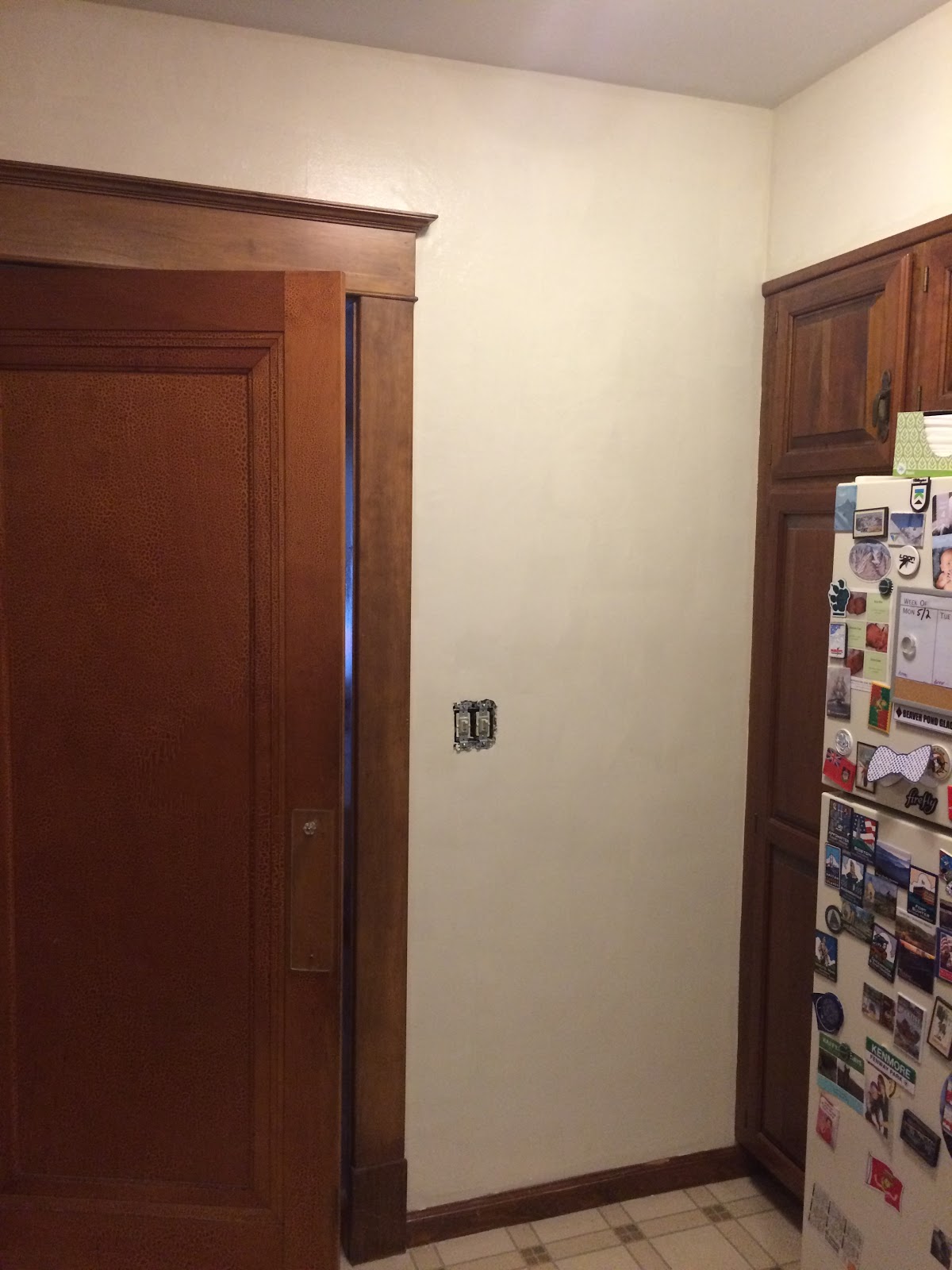
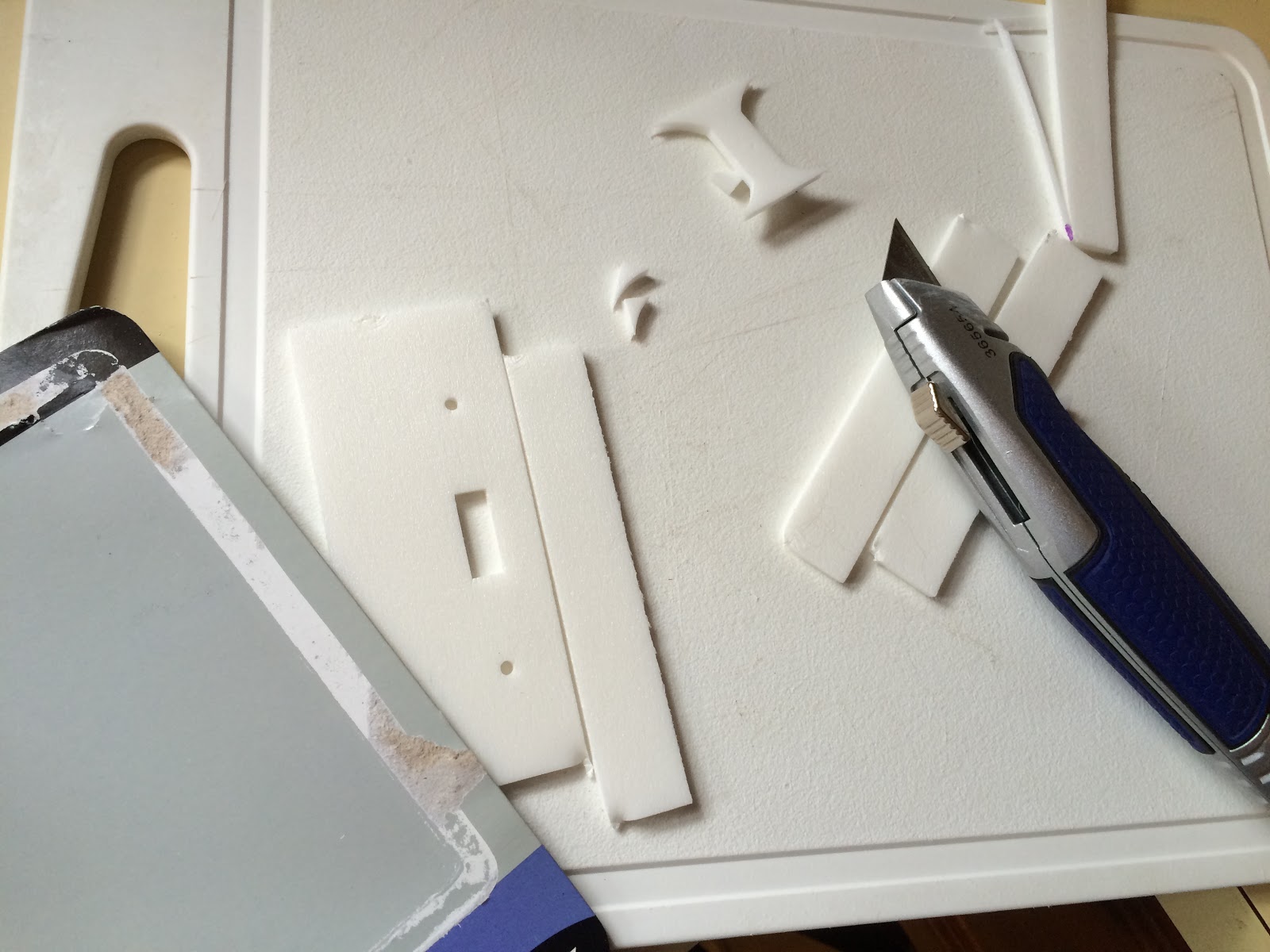
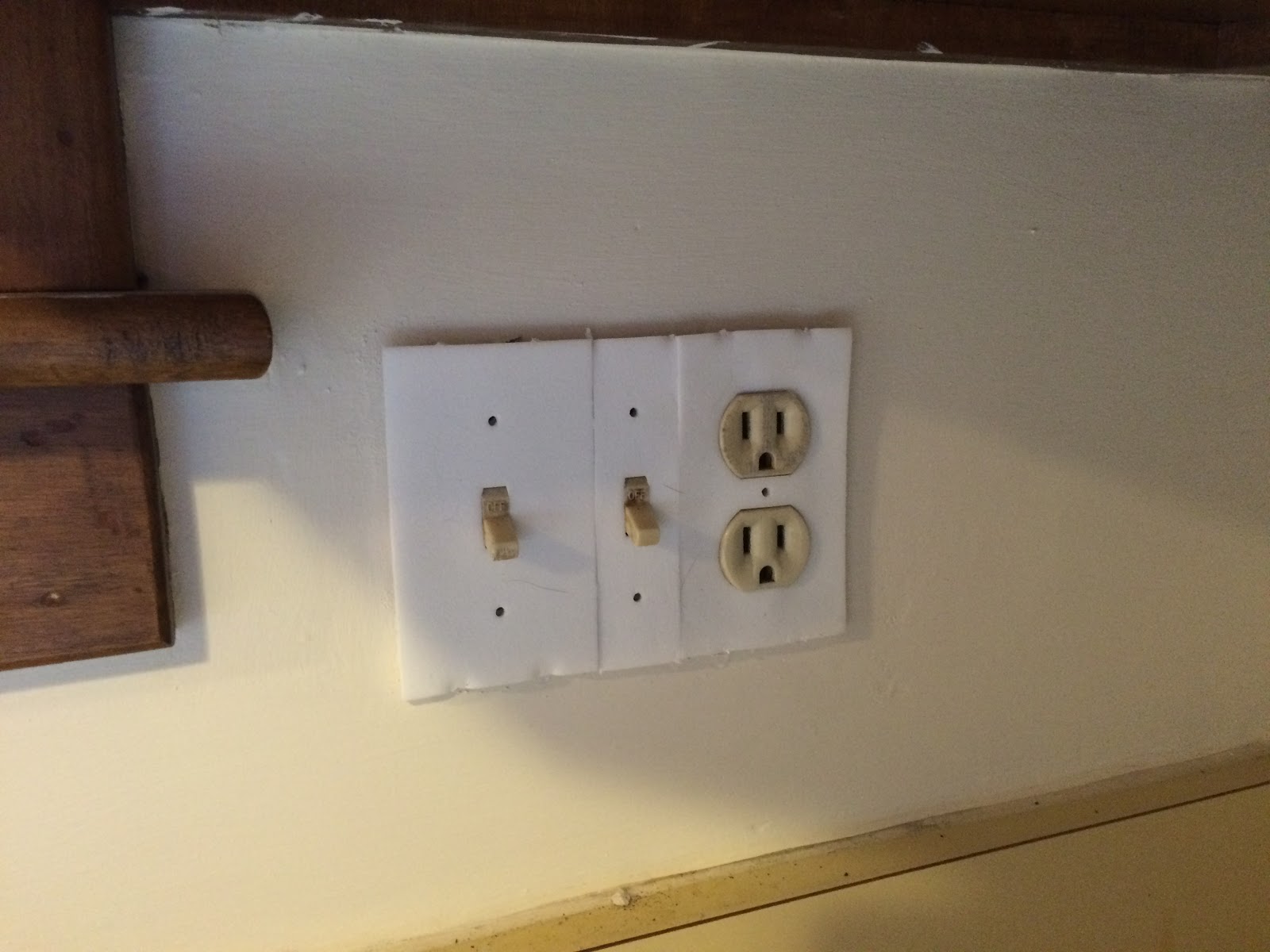
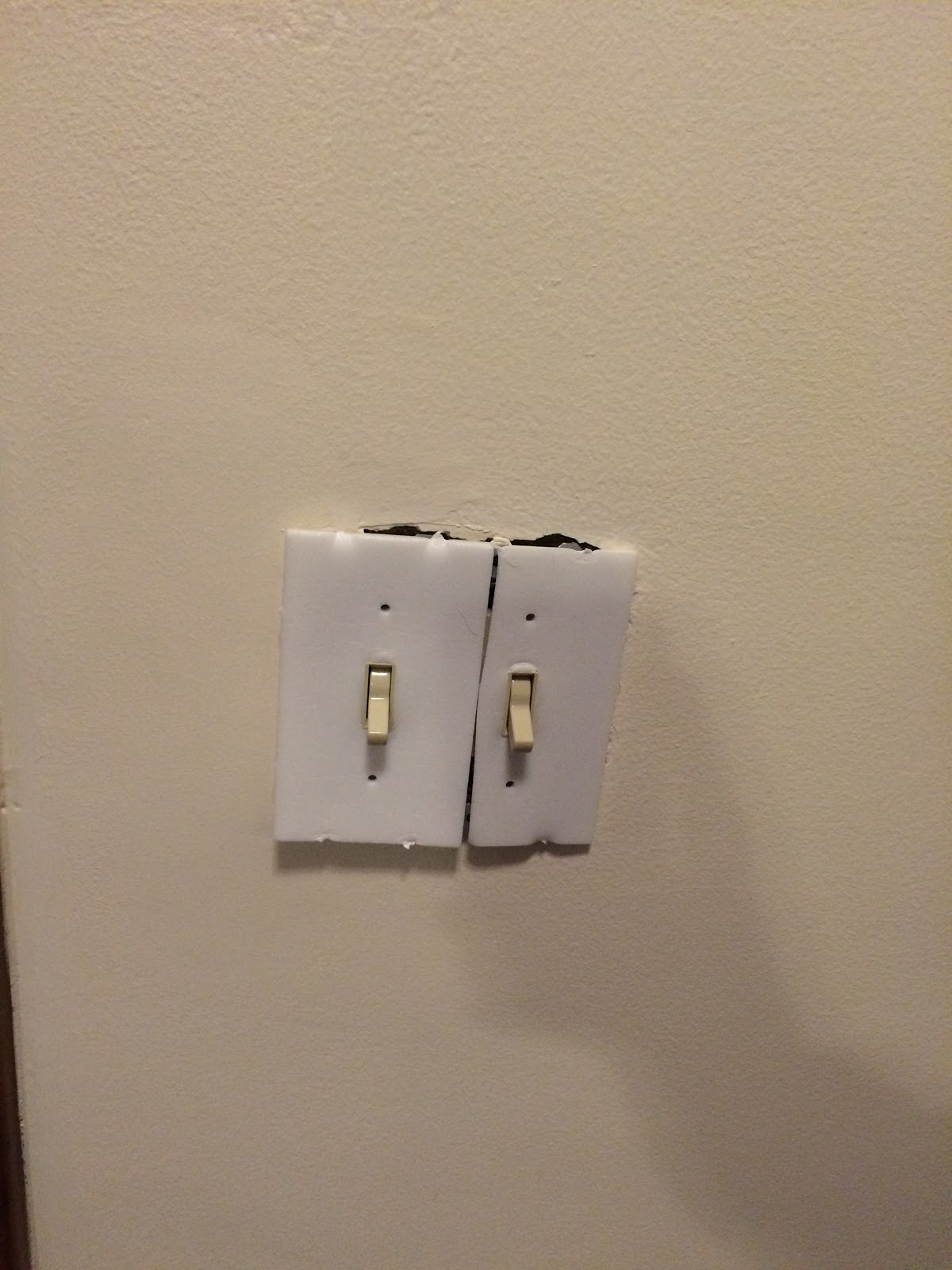
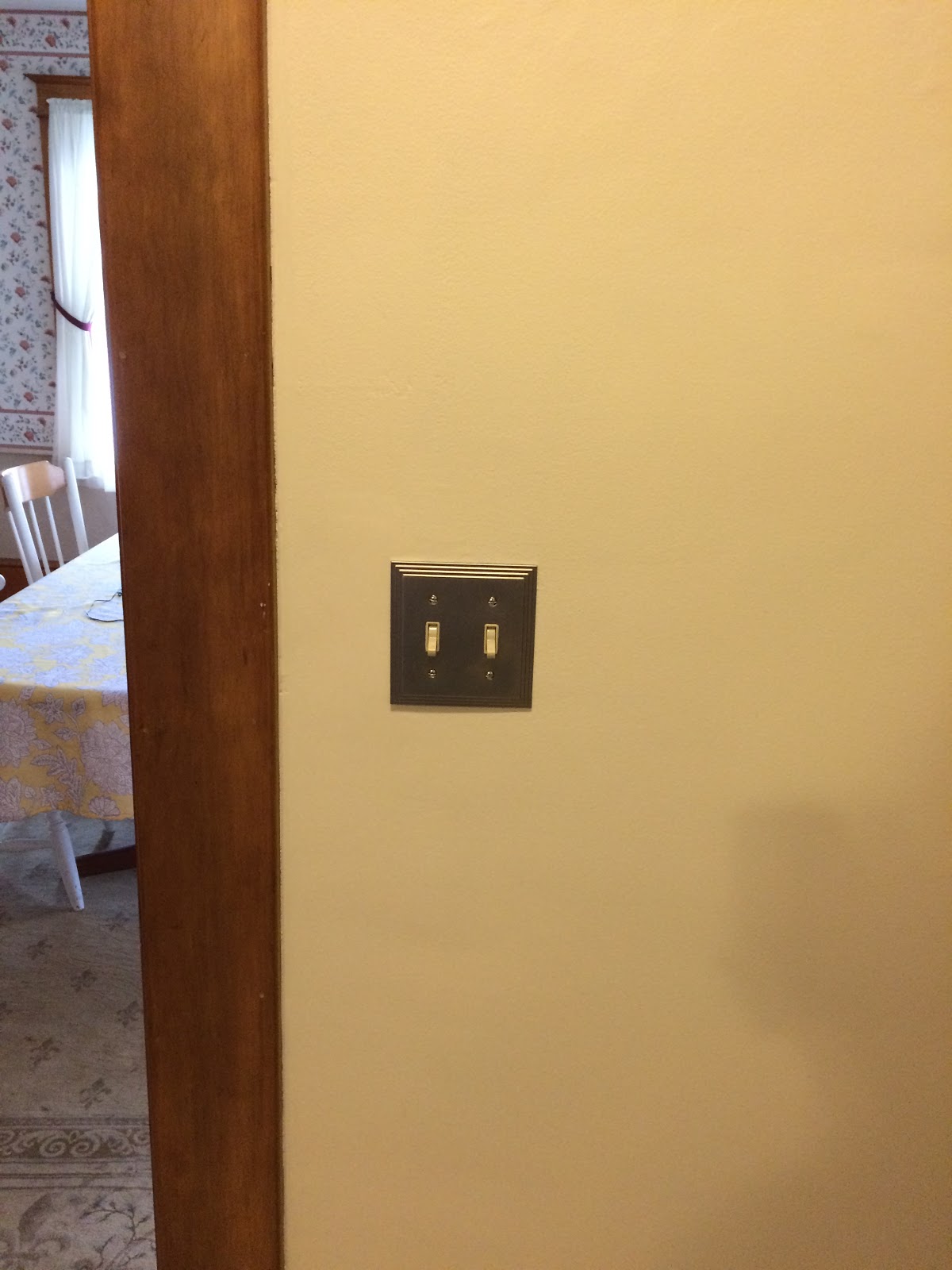
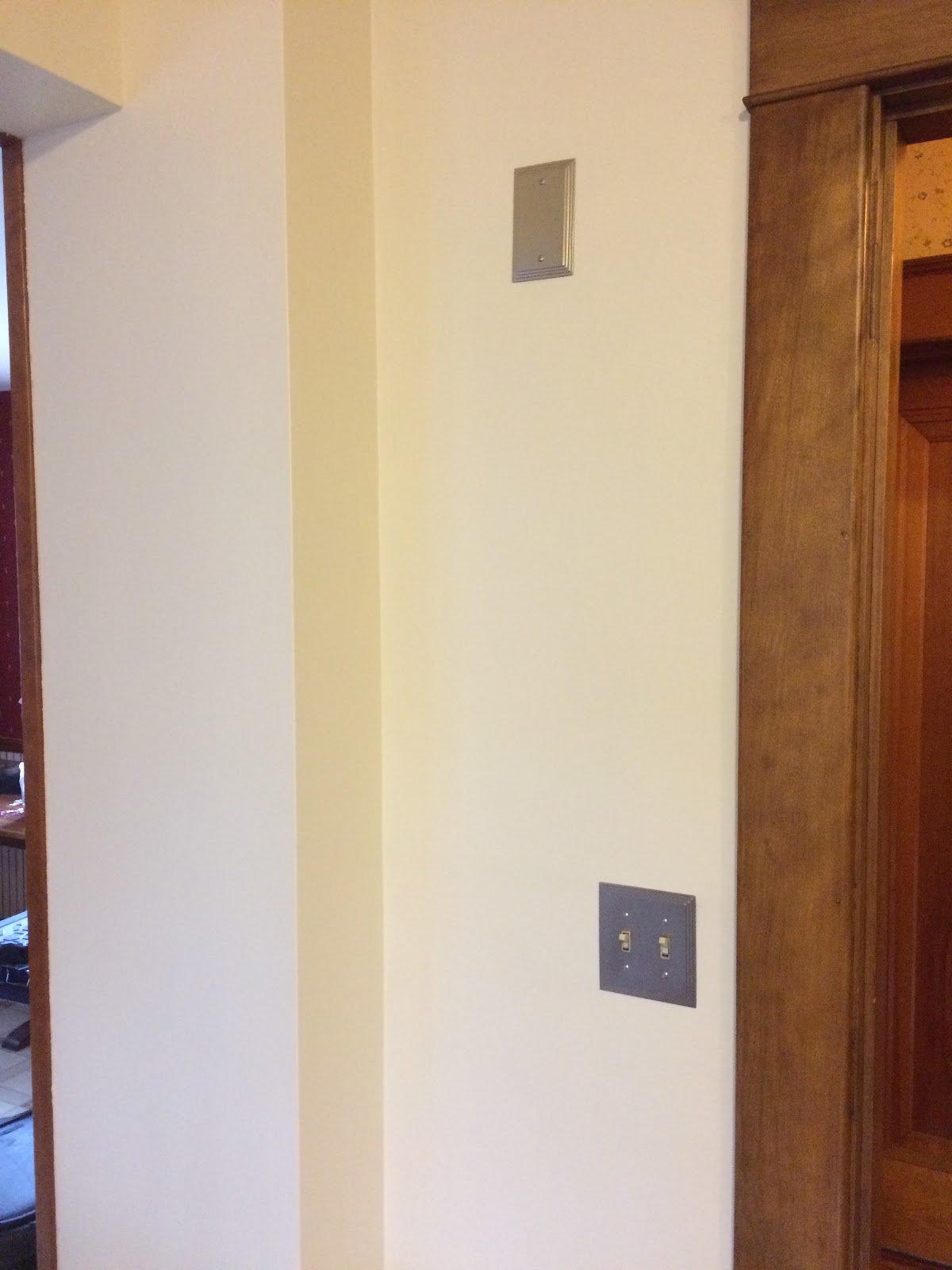
After repainting, I also updated all of the switchplates, and put in foam insulating things behind them to cut down on drafts.

I could not be more pleased with the upgrade. It was a relatively quick and easy project, despite how long I dragged my feet in between stages, and the difference in the feel of the kitchen is huge.
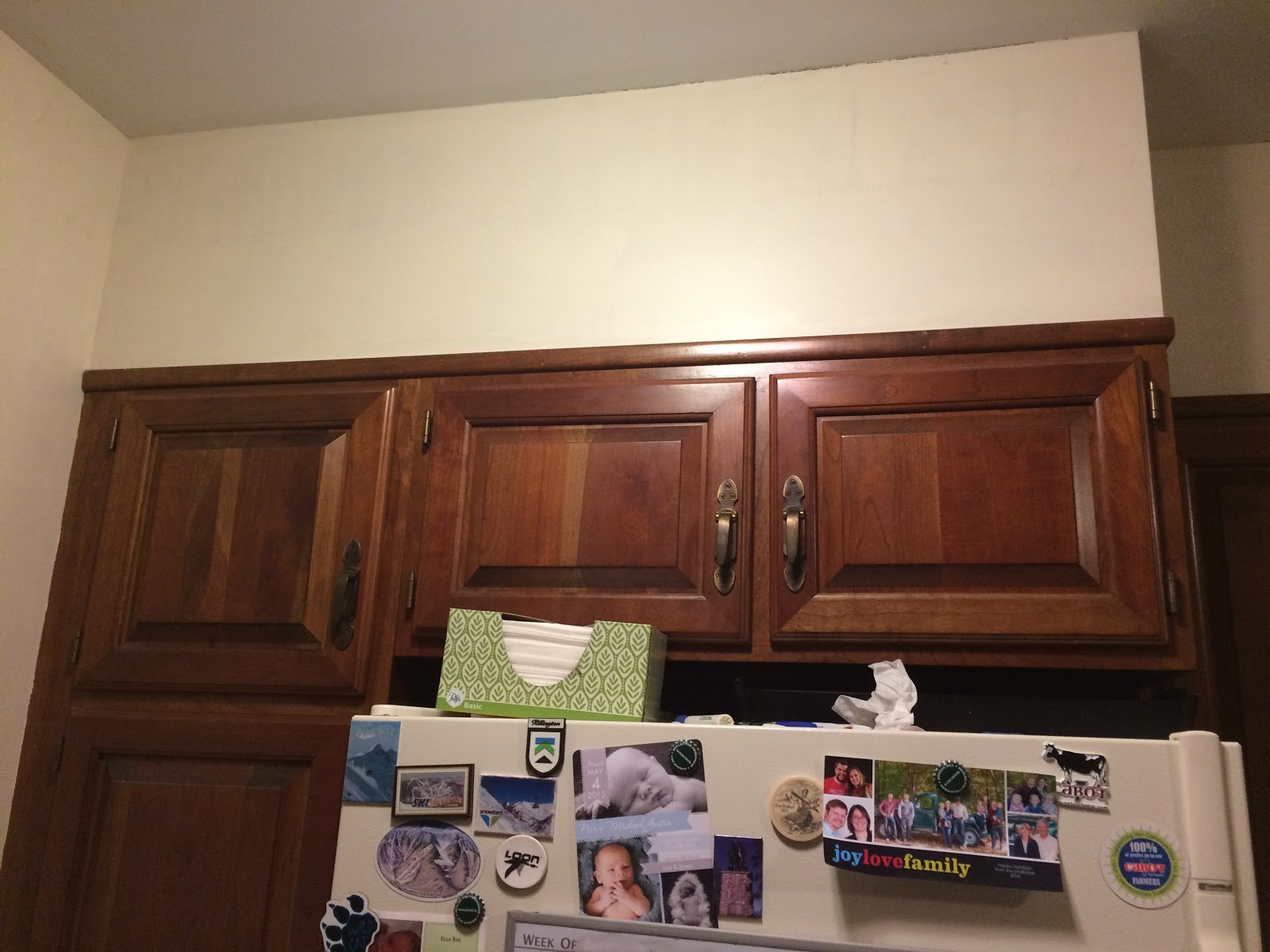
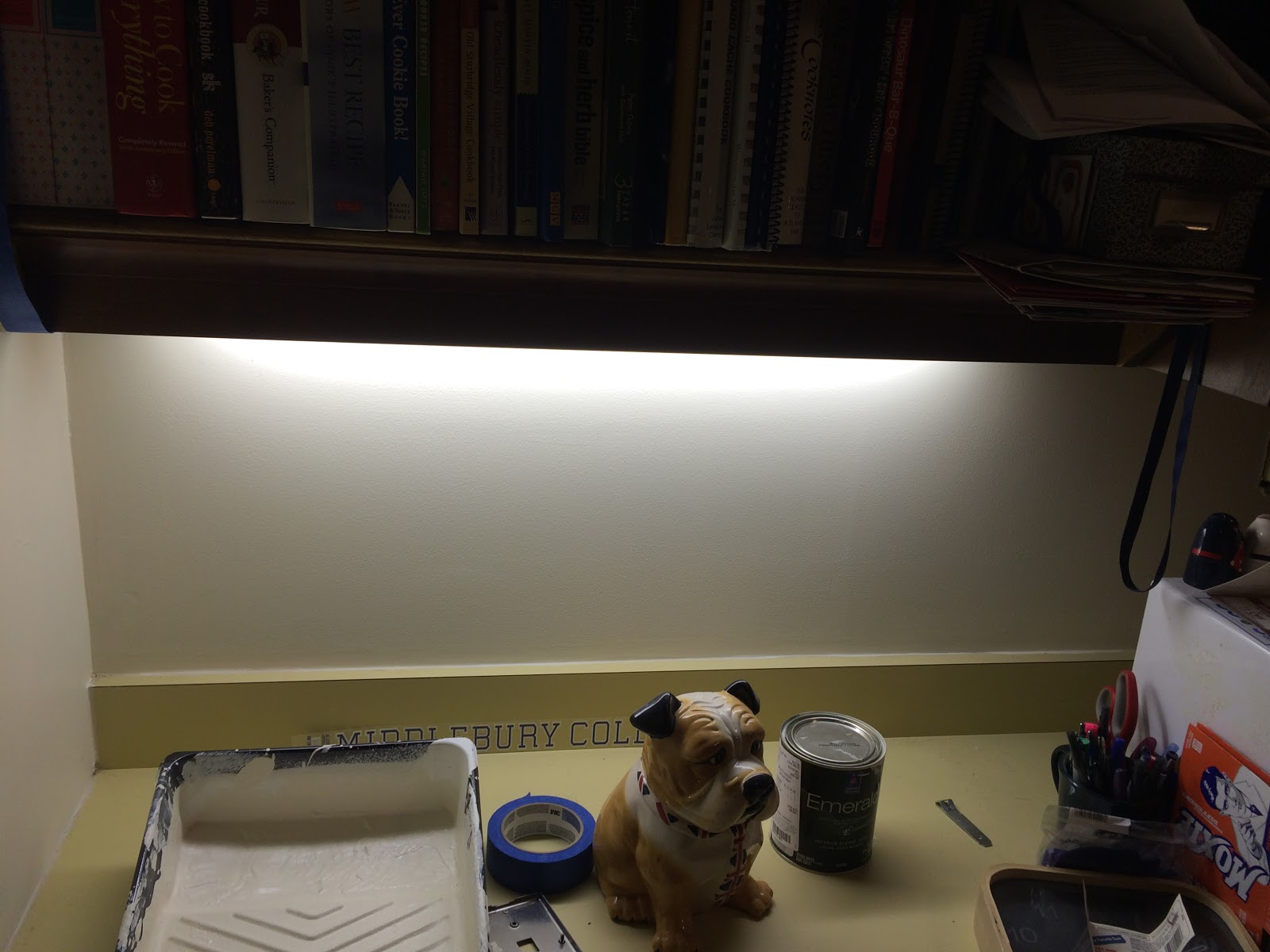
Next up for the kitchen: new curtains and new under counter lighting. Longer term, a new exhaust hood for over the stove.
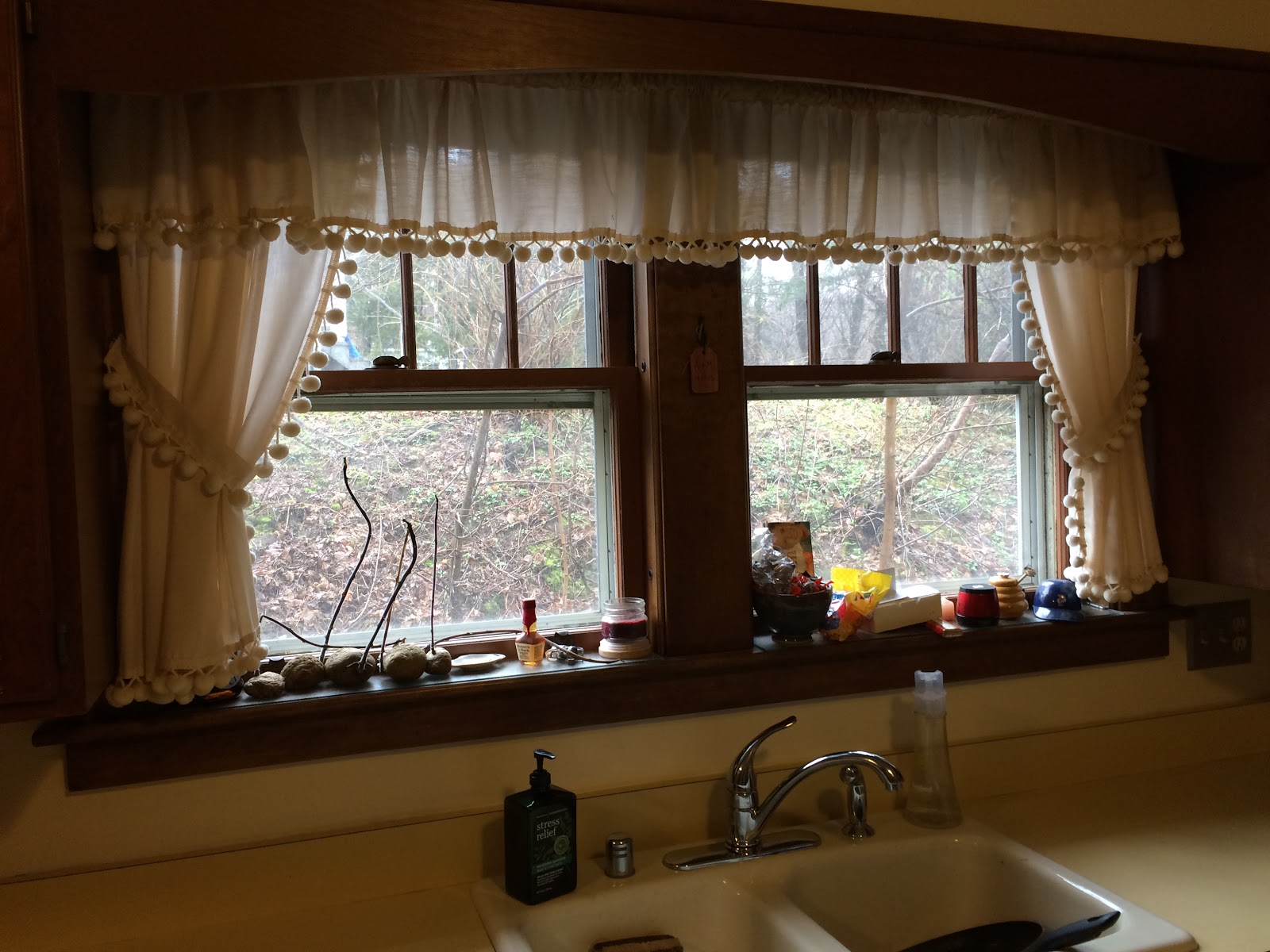
POM POMS YEAH.

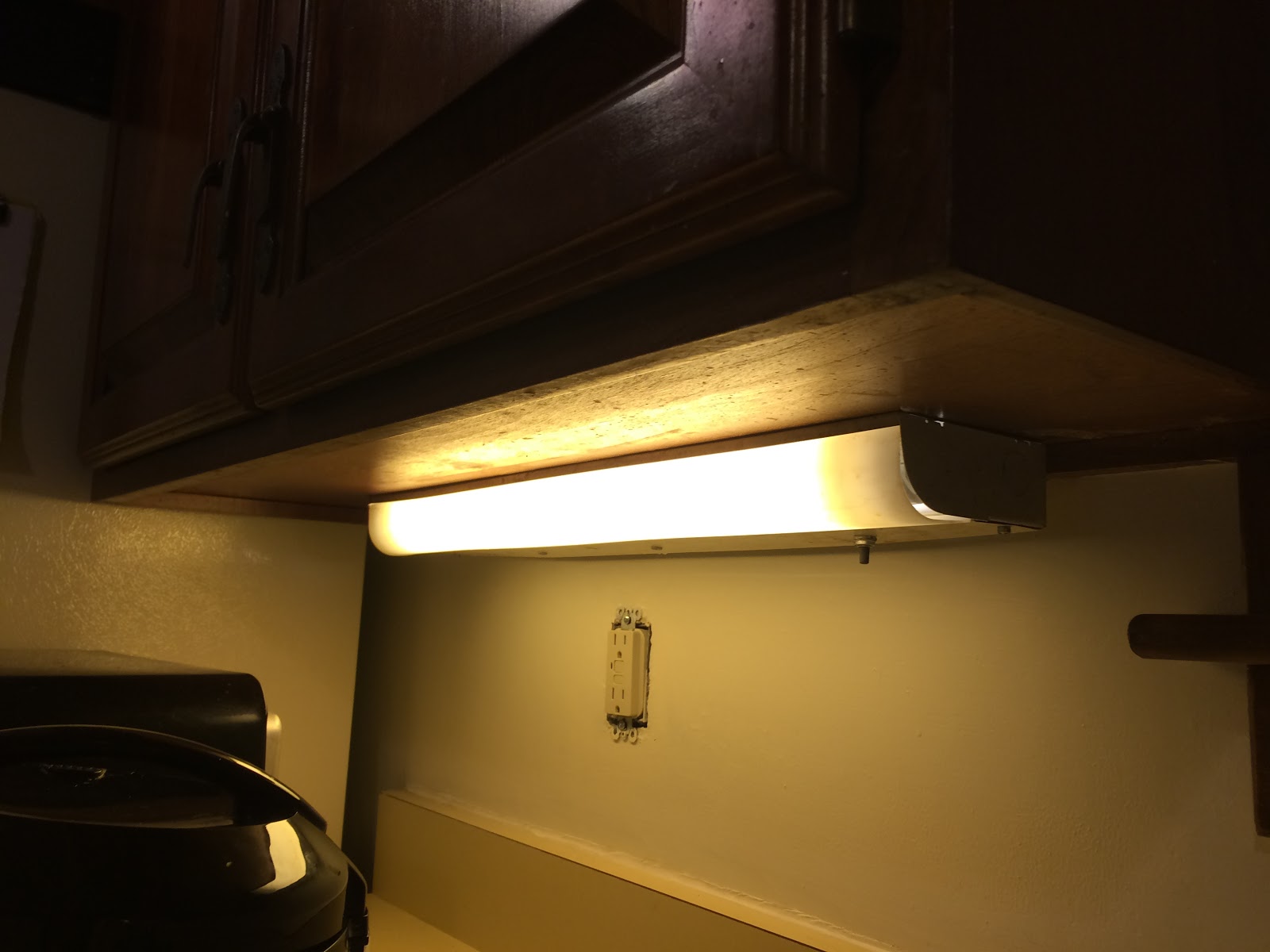
Let us not discuss how ugly and disgusting those lights are.

bits · dressage

The new love of my life

As in, I almost certainly love this thing more than my husband right now. (Though probably not more than the dog.)

Tristan has been a challenging ride this spring. Probably not in the grand scheme of things, and not for a rider with actual physical fitness and skills, but he has for me. He’s been throwing bucking fits on simple hill walks. He’s been bolting for home. He’s been jigging constantly and fretting himself into a frenzy.

I pulled out the big guns. This behavior is not new. It simply has not occurred in many, many years – seven or eight, to be precise.

See, when Tristan was first learning about riding in the open, he was equally awful (worse, in some ways). I was not nearly as good a rider but I had a certain stickability. He never dumped me, but it wasn’t a lot of fun either.

Enter our savior.

That, ladies and gentlemen, is a mullen-mouth uxeter kimberwicke. 
Mullen mouth = straight across, no joint. Uxeter = the slots on the side of the bit, which allow for two types of leverage, straight or torqued. Kimberwicke = this particular style of bit, which features the separated bit hangers and the curb chain. Kimberwicke bits can also come jointed or without the leverage slots on the side.
Here’s what it looks like by itself.
You can see that the mouthpiece itself also has a low port.
Let me be clear: this is not a subtle bit. This is a bit that says WHOA THE FUCK DOWN RIGHT FUCKING NOW when it is applied firmly. 
It is also, however, a relatively stable bit. Depending on how you adjust the curb chain, it never kicks in. If you attach the reins as I have above, it – and the port on the mouthpiece – only kick in when you really need them to.
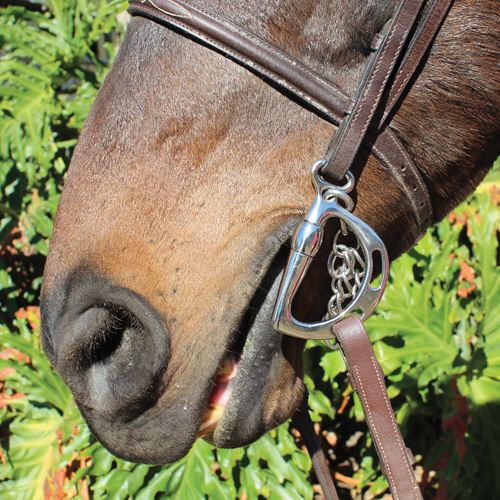
Here’s what the lower attachment looks like, putting this bit closer to a pelham in action (not on Tristan, random internet horse):
All of that together means that this is a bit that is relatively inert and stable until it is not. Which means that you can ride in it with quiet, steady hands and have a simple, straightforward go. If you have a horse that likes a mullen mouth bit, you can use it for some dressage work – softening, etc.
Tristan tends to prefer double-jointed bits, so I never had much hope that this would really lead to quality dressage work. What I wanted was to regain some of his respect for me when riding outdoors.
I still remember, with perfect clarity, the first time this bit kicked in. I had taken Tristan out to a field behind an old barn and we were simply walking around a bit. He reared, spun, bucked a few times, and bolted for home. He had done the exact same thing the previous day, and I had not been able to stop him; he jumped two ditches, I lost both stirrups, it sucked an awful lot. (I hadn’t yet learned an effective one rein stop, that’s how inexperienced I was with that sort of thing. I learned later.)
But on that day, three strides into the bolt, I hauled on the reins – not with any sort of tact or subtlety. I just hauled. He stopped cold. Mid-stride. Stock still. He was utterly and completely horrified. He walked politely home, completely mystified as to what had happened to him. It was a truly glorious moment. 
From that day on, he went in his kimberwicke for all outside endeavours, for about two more years. Eventually, it started backing him off too much – he didn’t need it. We moved to a full cheek snaffle for jumping and cross-country, and hacked in his regular loose ring.
When I was casting about for ways to work with Tristan on his new misbehavior, I resisted pulling out the kimberwicke; it felt a little bit like failure, or regression. Eventually, I accepted that feeling and pulled it out.
The first day I rode in it was the day of my photo session with Emilie. It was also his first ride in the outdoor dressage arena. He was not thrilled at the walk, and picked up an uneasy trot, and then when we turned to the short stride at the far end, as soon as we passed A, he was OFF.
I simply sat deep, put my hands down firmly, and let him run into the bit himself. I was perfectly quiet and calm. He did not stop mid-stride, but he did immediately drop to a polite walk, tossed his head once or twice, and then licked and chewed.
For the next few minutes, he was a little unhappy, but he was at least polite. I kept steady, quiet hands, asking him simply to trot without flailing. Then I pushed him a little bit, asking him for some actual softening – but not expecting it. And he gave it to me!
Two days ago, we went back up to the outdoor ring, again in the kimberwicke. He never even thought about bolting in the trot. I asked for a canter. He completely exploded – for a stride and a half. Then the same thing happened. Back to a polite walk, a few minutes of disgruntlement, and then we had an actual productive ride, working on geometry and putting together pieces of the test.
At about the 40 minute mark, I asked for a canter to the left, our trickier direction, and he gave me a polite, obedient, and straightforward – if very backed off – 20m circle in the canter. I brought him back to a walk, dropped the reins, and praised him to the skies.
Now, to figure out whether to a) technically bend the rules and ride in the kimberwicke for our schooling show or b) somehow make the transition to the snaffle again and hope that he behaves even in a show atmosphere…