gratitude

The Internet: An Appreciation

This is just to say thank you. Thank you all for existing, and being awesome, and supportive, and clever, and kind.

I’ve so appreciated every comment I’ve gotten about Tristan, all the encouragement and sympathy and helpful advice. I treasure every one. I’m sorry if I’m perpetually behind in responding to them!

I was thinking about what an amazing thing the internet is, that it would connect all these people from different places and different backgrounds, and I thought about the friends I’ve made. All those late nights typing and laughing and reading and watching things together. I came up in fandom before I ever horse blogged, and it’s so wonderful to have those bonds over the horse part of my life, not just the geek part.

So, thank you – yes, you – for being you.

figuring history

Announcing: New Equine History Project

I am an historian by training, preference, and profession. I’ve been looking for a good research project for a little while – something with the right mix of potential and possibility, something I can accomplish and remain interested in.

The longer I’ve lived in Vermont, the more amazed I am that no one has researched and written a good history of the first Morgan horse, Figure.

So, here we go. If you’d like to follow along on my research and writing adventures, follow the new blog: Figuring History. I’ll talk about American history, equine history, politics, genetics, exceptionalism, the horse-human relationship, economics, early print, and so much more.

I will only occasionally update on the project on this blog, so if it’s something you’d like to follow I encourage you to check out the other blog.

blog hop · dressage · hitching post farm

(In)formal Blog Hop: Transformations

Inquiring minds want to know when a blog hop moves from informal to formal? Is there a tipping point number? Regardless, Niamh at Life of Riley proposed we show transformation photos.

Alas, we are not much further along than we were a few years ago, nor do I have all that many photographs showing when we did make progress. I do have something that promises to be hilarious, though.

Behold, the first dressage test I ever did with Tristan. August 2006. He had been under saddle for about 4 months.

Here is a BN dressage test we did at Hitching Post Farm in May 2012.

So not huge improvements in self-carriage, etc., but hooray for staying in the ring!
Uncategorized

Pergolide, Day 1

This is just to say that this morning, Tristan got his first dose of pergolide. I’d been reading a lot about the “pergolide veil,” and the nasty side effects horses can have when starting the drug, so I designed a very careful tapering system for him based on the advice from the ECIR group. Today, he starts with 0.25 mg, and he’ll be up to the standard 1mg per day in about 10 days.

I’ll longe him tonight. Last night, I dropped the pergolide off and gave him a thorough grooming and couldn’t stop looking at his topline and neck and getting teary. He does not look good right now, and I can’t believe it happened so quickly. Here’s hoping that he’ll pick right up soon.

book review · horse racing · marguerite henry

Book Review: Black Gold by Marguerite Henry

Black Gold
by Marguerite Henry

Otherwise known as, god damn you anyway, I wasn’t doing anything with that heart, you go ahead and shatter it into a million pieces.

So for various reasons that I will talk about in a little while, I found myself at the town library seeking out Marguerite Henry books. I had zero intention of re-reading Black Gold, but there it was on the shelf, in the big hardcover edition, with Wesley Dennis illustrations. I couldn’t not. (There oughta be a law about publishing Marguerite Henry books without Wesley Dennis illustrations: I’m looking at you, current crappy paperback editions.)

Black Gold is one of Henry’s YA re-tellings of a true historical story, which actually sums up most of her canon, now that I think about it. It has the requisite boy who falls in love with the young horse, clever personalities, quirky details, and really wonderful writing. The real Black Gold was maybe not so mythical or personable, but in many essentials, the story is the same.

In summary: Black Gold is the son of the sprint mare U-See-It, owned by Al and Rosa Hoots and trained by Hanley Webb. U-See-It was banned from the track after Hoots refused to give her up in a claiming race, and so the decision was made to breed her to Black Toney.

Black Gold proved to be an excellent racer himself, and won the 1924 Kentucky Derby, among other stakes races. He was groomed and ridden by J.D. Mooney, who went on to be a celebrated jockey on other horses. Black Gold was retired for soundness issues, but proved to be a dud in the breeder’s shed, so he went back to the track at age six. He broke down in a race in New Orleans: “on three legs and a heart, he finished the race.”

Of all the things I had forgotten about Marguerite Henry – and it’s been quite a while since I re-read her books – her writing was what surprised me the most on this re-read. It’s not an easy story; while there is charm and sweetness in the early pages, the last third of the book is a heartwrenching story as Jaydee (Henry tells the story primarily through the lens of a young J.D. Mooney) recognizes Black Gold’s soundness issues and has to make the painfully adult decision of stepping away from the horse. Hanley Webb is determined to race him and Jaydee can only watch as the horse is basically run into the ground.

In many ways, the final chapters of this book are incredibly adult for the audience. Hanley Webb’s very real weaknesses and foibles take center stage and Black Gold’s story becomes, clearly, a canvas for human frailty. His is not the story of the superhorse who retired to pasture, but rather the hard campaigner who tried and tried until he finally couldn’t. In a softer story, Jaydee would have gotten through to Webb, and Black Gold would not have run that final race. Henry certainly pulls her punches in other historical stories (Justin Morgan Had a Horse stands out in particular) but not this one. The horse dies as a direct result of obviously poor decisions by people who should’ve been looking out for him.

As I said: not an easy read. But a really, really beautiful one. For example, here’s Jaydee thinking about going back for Black Gold at the end of the book:

His eyes were set far off. He was thinking that all he’d be able to do for Black Gold would not be enough. He could sit bird-light on the little horse’s neck. he could cluck to him with heart and soul. He could threaten him with the whip. But two things he knew – it would not be enough and it would not be fair.

In short: recommended, but have tissues handy.

endomondo · long slow distance · road hacking

Scientific Trail Riding

Last night, I saddled up and we went for a longish hack. I’m working on three operating theories;

– I need to ride more, for my sanity and health and for Tristan’s health;
– All the reading I do indicates that metabolic horses need regular, consistent exercise;
– Long slow distance is the right kind of work for Tristan right now: low-impact, muscle-building, and when it’s done outside, good for his brain.

All those three things pointed to long hacks as our new standard ride, with occasional short ringwork 1-2 days a week.

So last night was the launch of some new metrics for our rides. I’ve used Endomondo before to track our rides, but last night I paid particular attention to distance and speed. I wanted to know how far it is all the way around the big hay field, and what Tristan’s speed would look like if I rode him on the buckle the whole time.

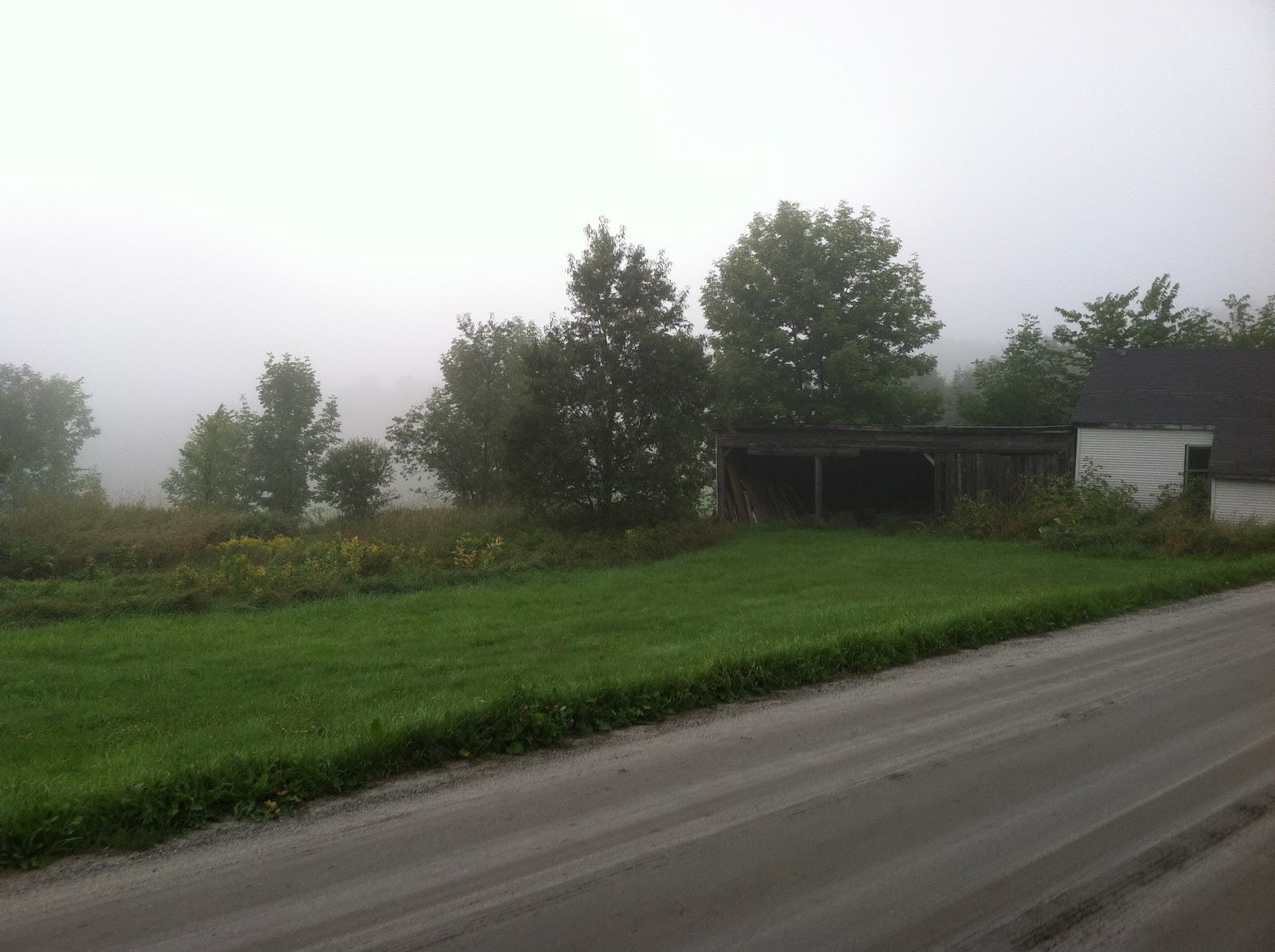
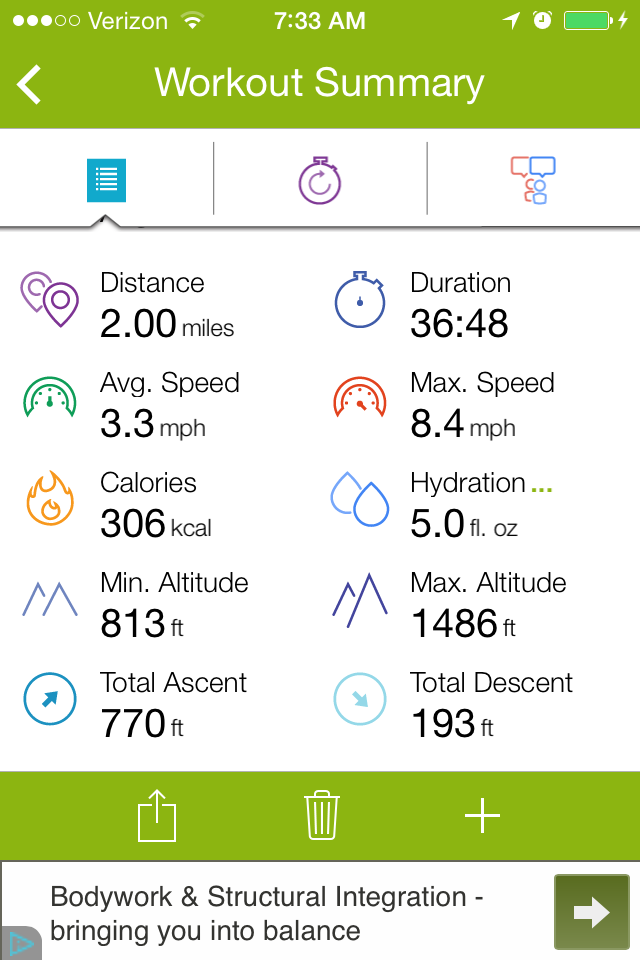
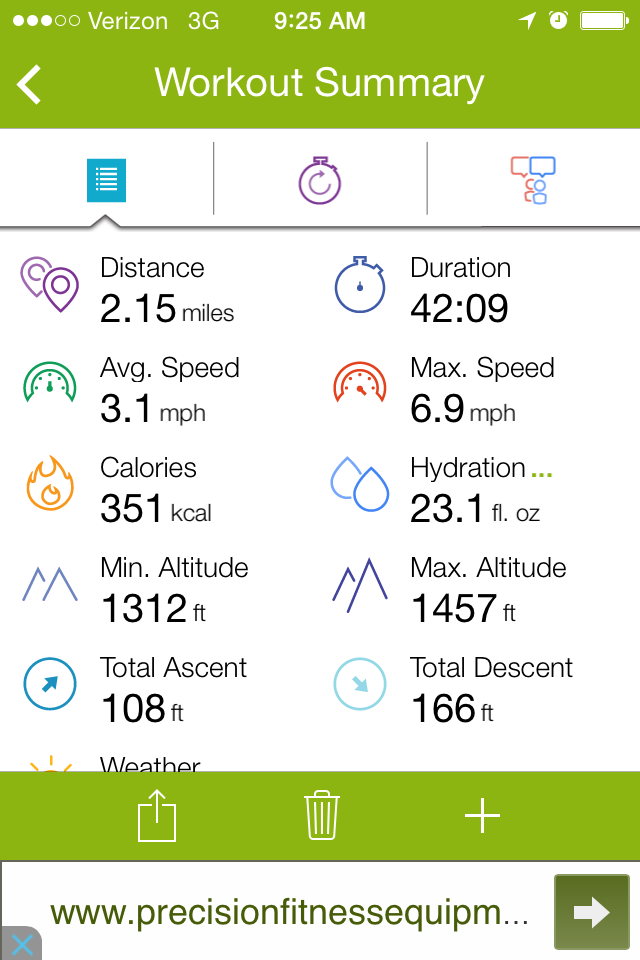
So there’s the answer. The big hay field is just about exactly 1 mile around. It’s about a quarter mile away from the barn. Last night, I cut off part of the field because I wanted to hold him closer to 2 miles, but now I know we can go 2.5 miles just by leaving the barn and walking around the big field twice. (It also occurred to me we could do a 50 miler by trotting the big field 50 times, and then I thought about how unutterably boring that would be.)
Tristan was spot-on 3mph, or a 20 minute mile, for our first mile, in a really pretty lazy meandering kind of walk. At almost exactly one mile in, he blew out, farted, and eased into the work quite nicely, picking up the pace ever so slightly, still of his own choice. Our second mile was just under 19 minute, still at the walk.
Keep in mind that practically every single inch of this ride was on a hill of some kind: up, down, laterally. The only flat surface at our barn is in the ring. So he worked reasonably hard, in a good way. He was ever-so-slightly warm, and had about a 1″ square spot of sweat directly under the girth. That speaks jointly to the technicality of the ride and to his muscle loss right now. I know it’s nothing like the miles and pace some of you log while conditioning for endurance, but we all have to start somewhere, right?
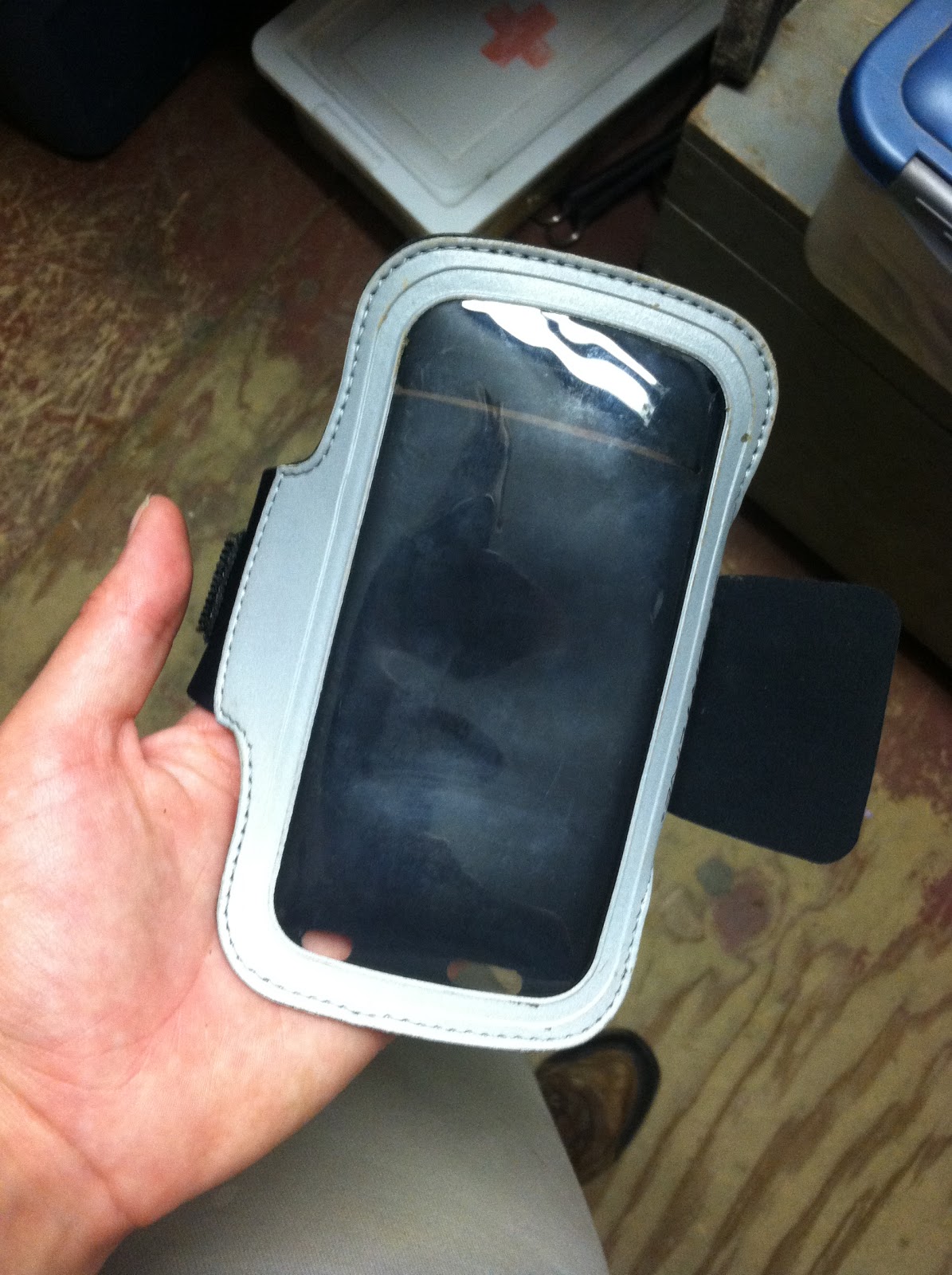
On an impulse, I stopped by Walmart on the way to the barn and found myself an iPhone armband on clearance for $10. Score! None of my breeches have pockets, and my old cell phone holder is sized for a flip phone and doesn’t work for the iPhone. So I’ll be able to track his rides going forward more easily. I hope to build some statistics as he continues this work and as he starts on the pergolide.
On a personal fitness note, the last quarter mile, up the big long galloping hill, I did entirely in two point. 1/3 of the way I started to feel it. Halfway there was definite burn. The last 100 feet or so were agony. Good for the soul.

show planning · showing

The Grieving Process

So, Tristan has Cushing’s. I’m reading, and reading, and reading as much as humanly possible.

Today, I came across a new piece of information that I hadn’t had before.

Pergolide is listed as a banned substance on the USEF medications list. It can be considered a “therapeutic” drug, which means that it can be used under certain conditions:

– it must be used for a legitimate therapeutic use only, ie directly for treatment of a diagnosed illness;
– it must be withdrawn within 24 hours of competition;
– it must be stated with a report documenting therapeutic usage.

As best I can understand, this is because pergolide mimics dopamine in the equine system, which is what horses with Cushing’s are missing. Here’s an excellent COTH article outlining the biology at work.

I know that my chances of making it to a USEF/recognized show with Tristan were slim, but this dashes them entirely. I’m not willing to withdraw him from the medication in order to compete. There is an outside chance that I can rig the medication so that he gets it say 25 hours before a class and then immediately afterwards, or I can just show on it and keep my fingers crossed that he’s tested, but neither of those options is a good one.

I’m sort of unexpectedly heartbroken, all over again. I’d been slowly accepting that my hopes to show him were fading with age, opportunity, and my own funds, but it was nice to have that out there, to think that someday I might take him to a USDF show for the heck of it.

polls · tack

Half chaps or tall boots?

I mentioned in a recent post that I have been riding in half chaps occasionally.

The half chaps were a gift from the same person who gave me the breastplate for free, and they are a very snug fit. They’re older Ariats. I mostly took them because she was trying to get rid of her stuff and I thought “why not?” My previous experience with half chaps hasn’t been great; for the past 6-8 years I have been a 100% tall boots rider.

I’m really, really liking these, though. I pair them with my Ariat Terrains, which I have long loved for trail rides, and they’re light and yet still a bit grippy. They’re ideal for the hill walking we’re doing right now.

After a few people commented that they love half chaps, I decided to investigate my options for polling and it turns out that Blogger has a gadget for that now!

SO! Visit the blog page, look on the right-hand side, and cast your vote. Do you prefer half chaps, tall boots, a little bit of both, or neither? Comment on this post if you have some specific additional feedback to give.

Uncategorized

New Challenges: Cushing’s Diagnosis

I feel like this blog could just become a neverending round of “hey so here’s another vet visit!”

I’ve been sitting on this announcement for about a week, because while it does help me with some answers, it’s also kind of heartbreaking and difficult for me to process.

Two weeks ago, when the vet was out to take x-rays of Tristan’s RF, she took one look at him and wanted to draw blood for a Cushing’s test. More accurately, she wanted to test ACTH levels, which are indicative of a malfunctioning pituitary gland, which is the cause of Cushing’s Syndrome.

Bloodwork came back last Tuesday. Normal ACTH levels are 9-35; Tristan is at 47.8. Definite positive.

I’ve been swinging wildly back and forth since then. On the one hand, it’s a low positive, and he only has some mild symptoms that are very recent. He’s still relatively young at 19, and he has a very good chance of responding positively to medication and being eminently manageable. Right now is typically considered a “high” time of year for ACTH levels, and they’re usually more elevated than is typical, so even a low positive will be lower over the winter.

On the other hand, he’s 19. Cushing’s is typically an old horse disease. The very idea of Tristan as an old horse sends me into a horrible tailspin of anxiety, depression, and terror. I can’t even touch briefly on the idea that maybe someday my life won’t include him. My brain shuts down.

I’ve taken the first steps at management, emailing back and forth with the vet. We’ve switched his grain to Blue Seal’s Carb Guard. For now, he’s on limited grass and we’ve made no changes to his hay. His pergolide is on order, though it is delayed.

His biggest outward symptom is muscle wasting. With that in mind, I’ve been rethinking my riding program. I need to ride more often, and I need to focus more on long slow muscle building. I’m pushing to get out and walk the big hay field almost every day, which is about 40 minutes of hills, either up or down. Hopefully a balance of that with some longeing and dressage mixed in will keep him mentally with me (usually he burns out pretty quickly on a more intense schedule) and will let him build muscle. Once he gets on the pergolide, I hope we can give him the support he needs to really get it back.