adventures with the vet · blanketing · colic · winter

The New (New, New) Normal

Yesterday was not the best day ever.

I forced myself out of bed early to ride, and I was mounted by 7:10 am. It was 32 degrees, foggy, a crisp and damp morning. I had to be at work by 8:00 am (5 minutes away), so I only intended to do a mile. Tristan had already had his grain maybe 15 minutes previously; he was nibbling on his hay when I got there. He hadn’t finished his grain, but had left the scrids of it mixed in with his supplements. Not totally out of the ordinary for him.
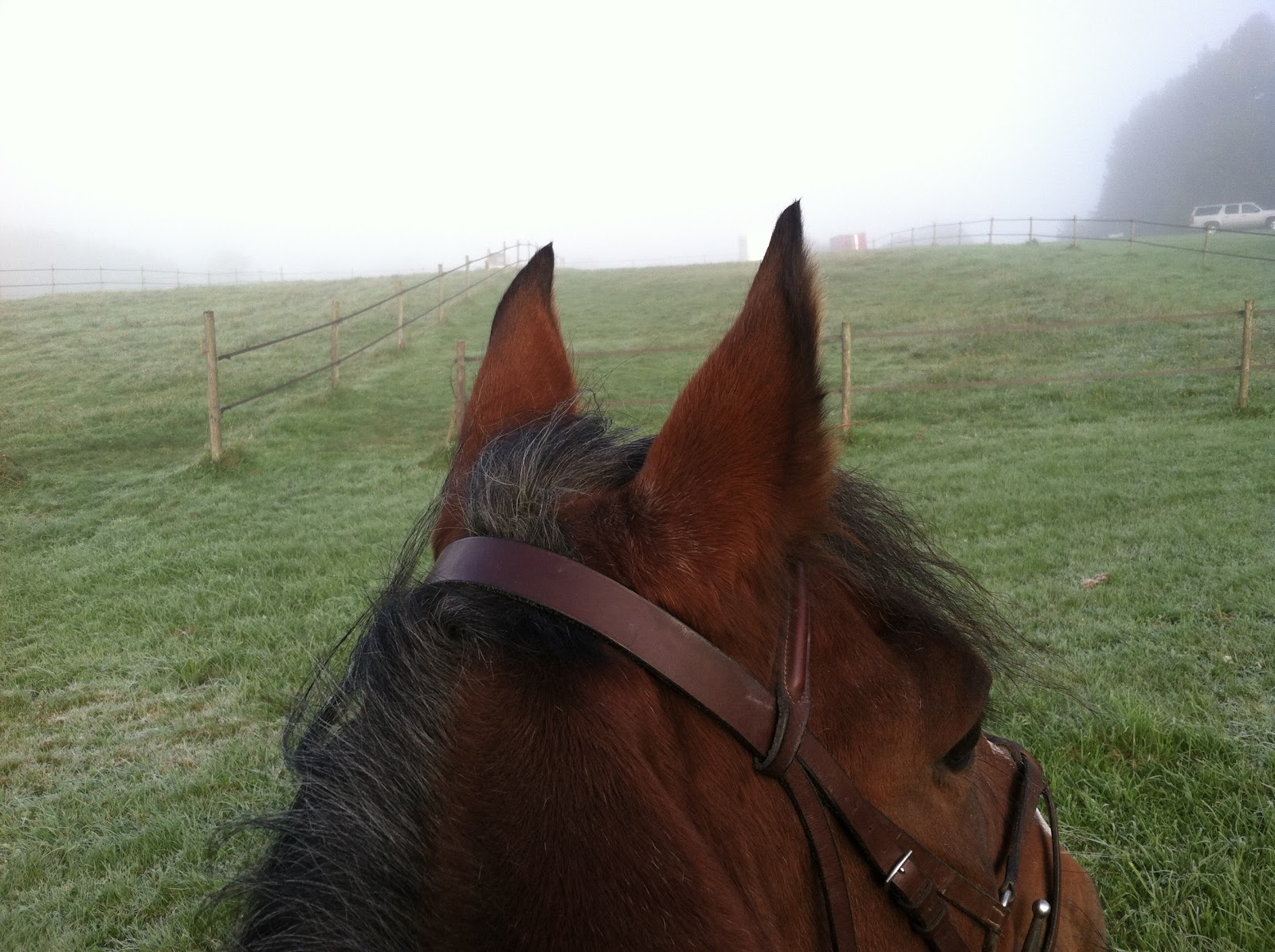
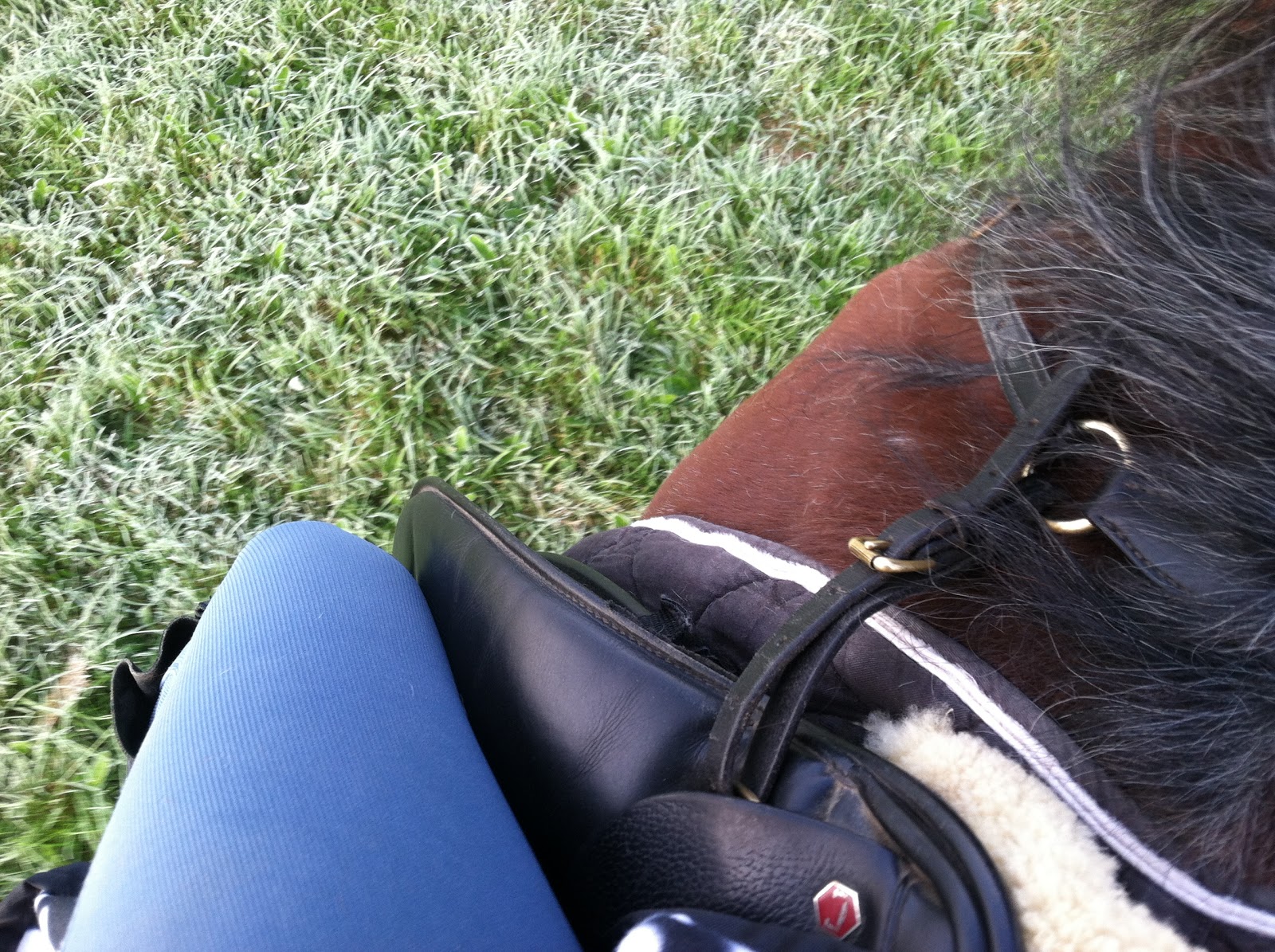
There was a thick frost on the grass and I wore my winter tall boots. We went a mile in 19 minutes, just on the flattest of dirt roads and then on a loop up and around the outdoor. My goal right now is to just keep him moving for 20 minutes a day as my bare minimum. Most days we do far more than that, but today I just wanted to sneak in a quick ride before morning meetings and then have the afternoon at home to do some much needed cleaning & relaxing.
I put him back in his stall and pulled his saddle, He nosed his hay, and then pawed at it, and I could feel my stomach start to knot up. He pawed again. He circled his stall. Then he kicked at his belly with a hind leg, then the other hind leg, then he circled his stall. The bottom dropped out of my stomach.
I listened for gut sounds – quiet, but present. Under my hands as I was listening, I could actually feel him start to tuck up, feel those hard stomach muscles clench, and when I stepped back he had clamped his tail down tightly. I went to the other barn and found the trainer’s barn manager, M., and asked her to come look at him when she got back from turning out the horse she was holding.
When I got back to his stall, his flanks had started shivering. This was maybe 10 minutes elapsed time after I’d put him back in his stall. I pulled him out and brought him in to the aisle and started pulling blankets off shelves. He ended up with an Irish knit, a wool cooler, and then a midweight on top of that, none of which were his or even close to his size. Under the blankets, he started full body shivering, and I reached for my phone.
The barn manager got back just as I started dialing for the vet, and while on the phone with her we took his temp – 97.9 – and tried to get a pulse. He’s tricky to pulse at the best of times, and I fumbled the stethoscope repeatedly before handing it over to the barn manager, who couldn’t get a good read either. I would get 3-4 beats and then lose it. It was clearly a little fast, but I couldn’t put a number on it.
Vet and I decided to go ahead with IV banamine, and I told her I’d check in in 30 minutes. While I was on the phone with her he started visibly relaxing and his shivering slowed, even before he’d had the banamine. It eased up even more, and then he got 8ccs of banamine IV. I started walking him – he’d never shown any real inclination to go down, but it gave me something to do.
In another 5 minutes, he had totally stopped his shivering and was looking around and considerably perked up. I walked him for another 5 minutes, and then brought him back to his stall. He attacked his hay and cleaned up his grain, and then I removed his hay from his stall. He was pretty ticked about that, but then took a good long drink and peed up a storm. He hunted around for the last little scraps of hay and started kicking his door to be let out.
I went into storage and dug out his fleece cooler and turnout sheet, and pulled the borrowed blankets off him to swap for his own. He looked and acted 100% normal at that point, barely 45 minutes after the whole thing started. I went into the tack room to brief our barn manager (main barn and trainer’s barn have different BMs; sounds confusing but actually works just fine, since trainer’s BM goes south with her for winter). 
A few minutes of conversation and we had fleshed out what the vet and I had thought: he got too cold. Many Cushings horses lose the ability to regulate their own body temperature. I knew this, and was watching him like a hawk in the summer, but he handled the really hot days just fine. It did not for a single second occur to me that cold might affect him more than heat. In any case, it wasn’t really all that cold – it must have been high 20s at the barn overnight. That’s chilly, but it’s not downright cold, not relative to what it will be in January and February.
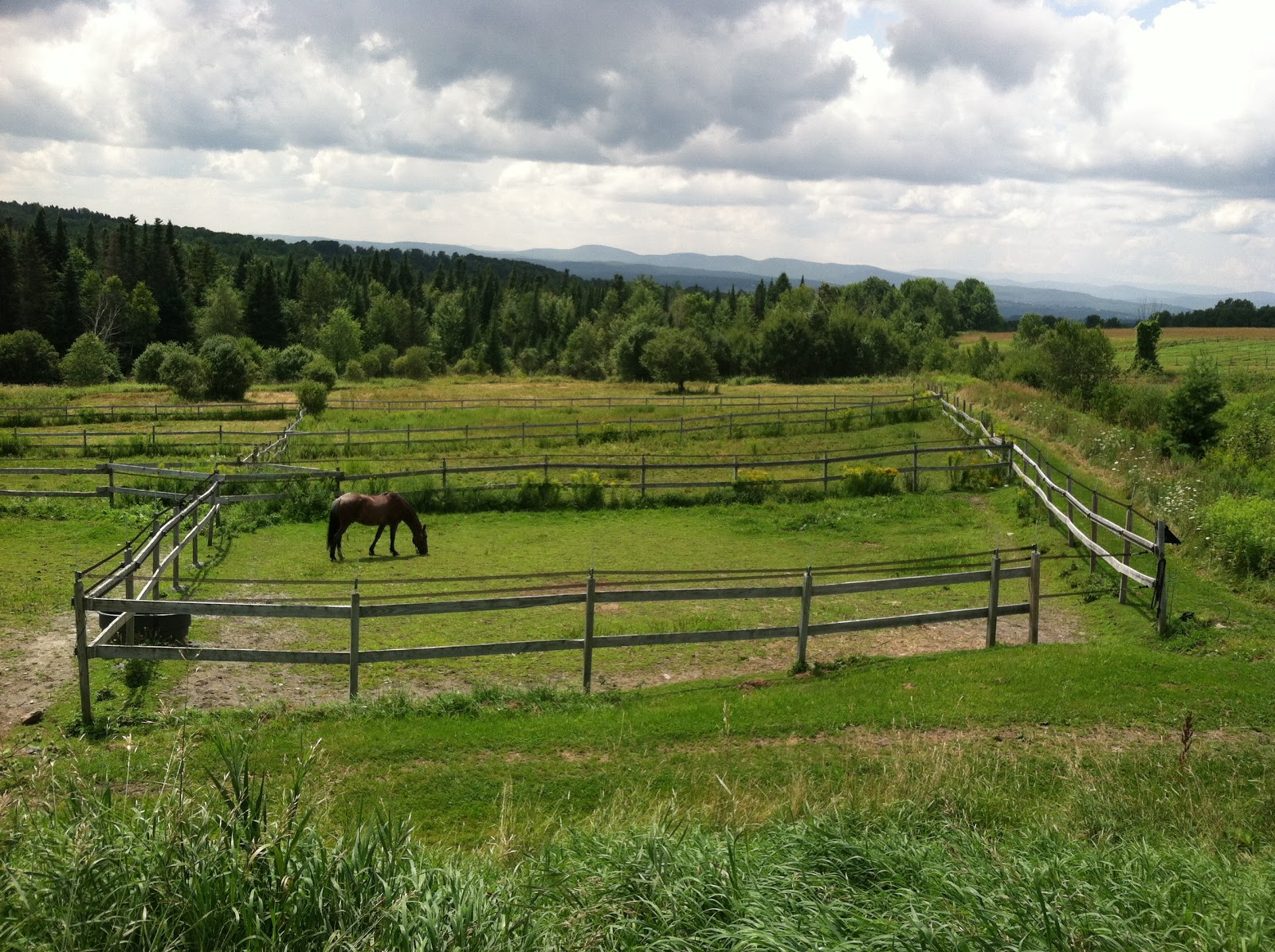
I left him to go to staff meeting, and when I got back he had been turned out in one of the round pens, which functions as a dry lot.
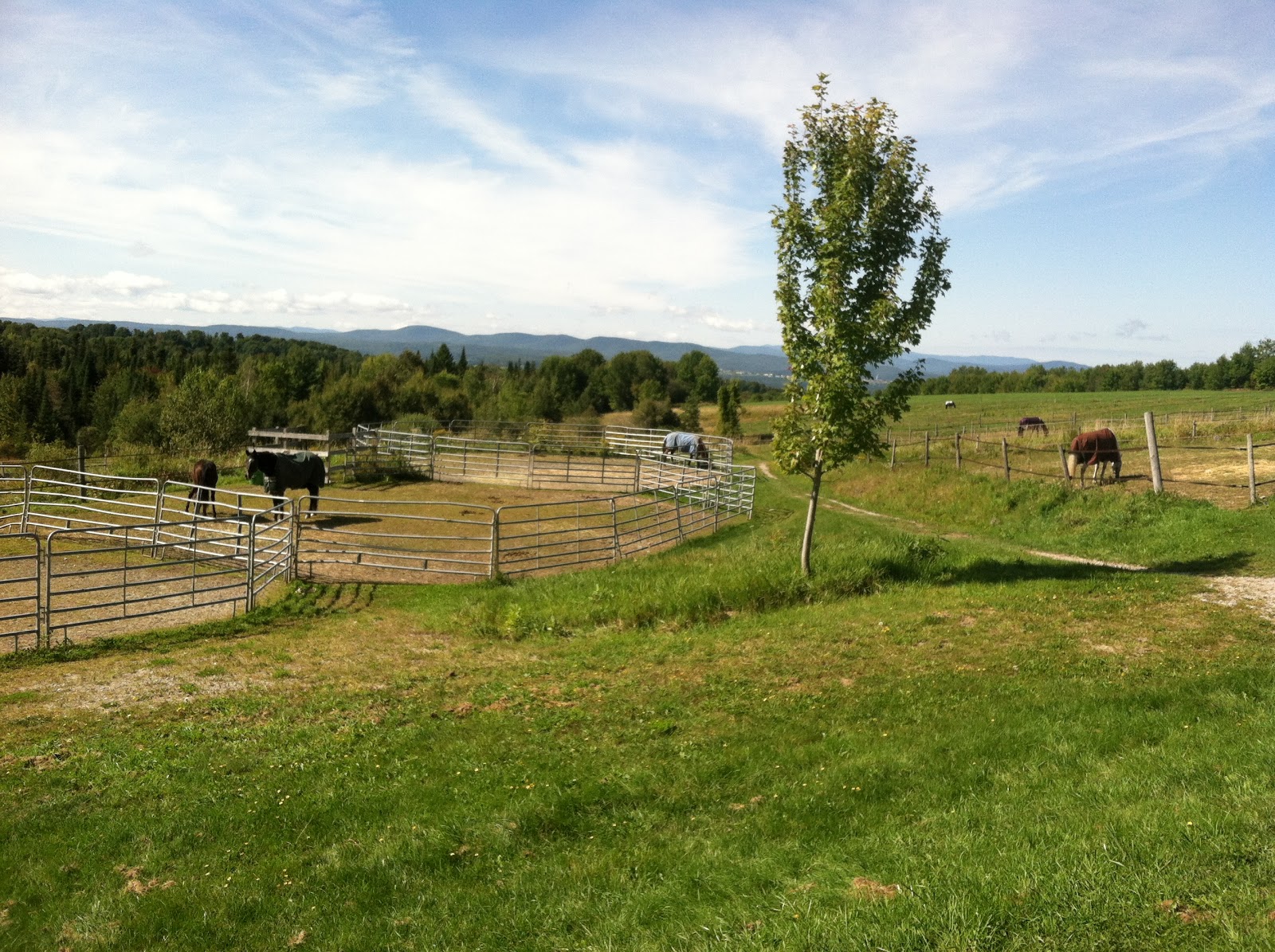
He’s just to the left of the tree, in the light blue sheet. I checked in with him and he was happy and relaxed and just fine, nibbling on the hay bits on the ground. He was wearing the fleece cooler + turnout sheet (no lining) and it was about 45 degrees and sunny. I felt underneath the blanket and he felt cozy and warm – not too warm. If you’d told me this time last year that my horse would be wearing layers in 45 degree weather, and not sweating up a storm, I would’ve said you were crazy.
I put out a call on Facebook for some blankets, and as it turns out a good friend of mine – who was already planning on coming to give Tristan a massage tonight – has some that she’ll bring. We’ll go through what she has, and I’ll see what gaps I still need to fill. I had a long conversation with the Smartpak customer service rep this morning and picked out a range of blankets that I will order tonight after seeing what J. brings.
sigh.
adventures with the vet · eye problems

Tristan’s Eye Problems

As I’ve posted before, it’s not unusual for Tristan’s eyes to get weepy and itchy during the summer. He’s had that challenge for as long as I’ve owned him.

This summer, however, we just can’t keep on top of it. Our most recent bout meant a vet call; he got his tear ducts flushed, went on oral antihistamines, got steroid ointment in both eyes, and had an initial dose of banamine to get the swelling down.

About 10 days after that vet visit, his left eye started getting goopy and a little swollen again. Back on the oral antihistamines he went, and we started up regular flushing with saline solution. That was last Tuesday. Then he ran out of the oral antihistamines and the vet is having some trouble getting him more, so he went on a lower-powered one that the barn had around as a stop-gap.

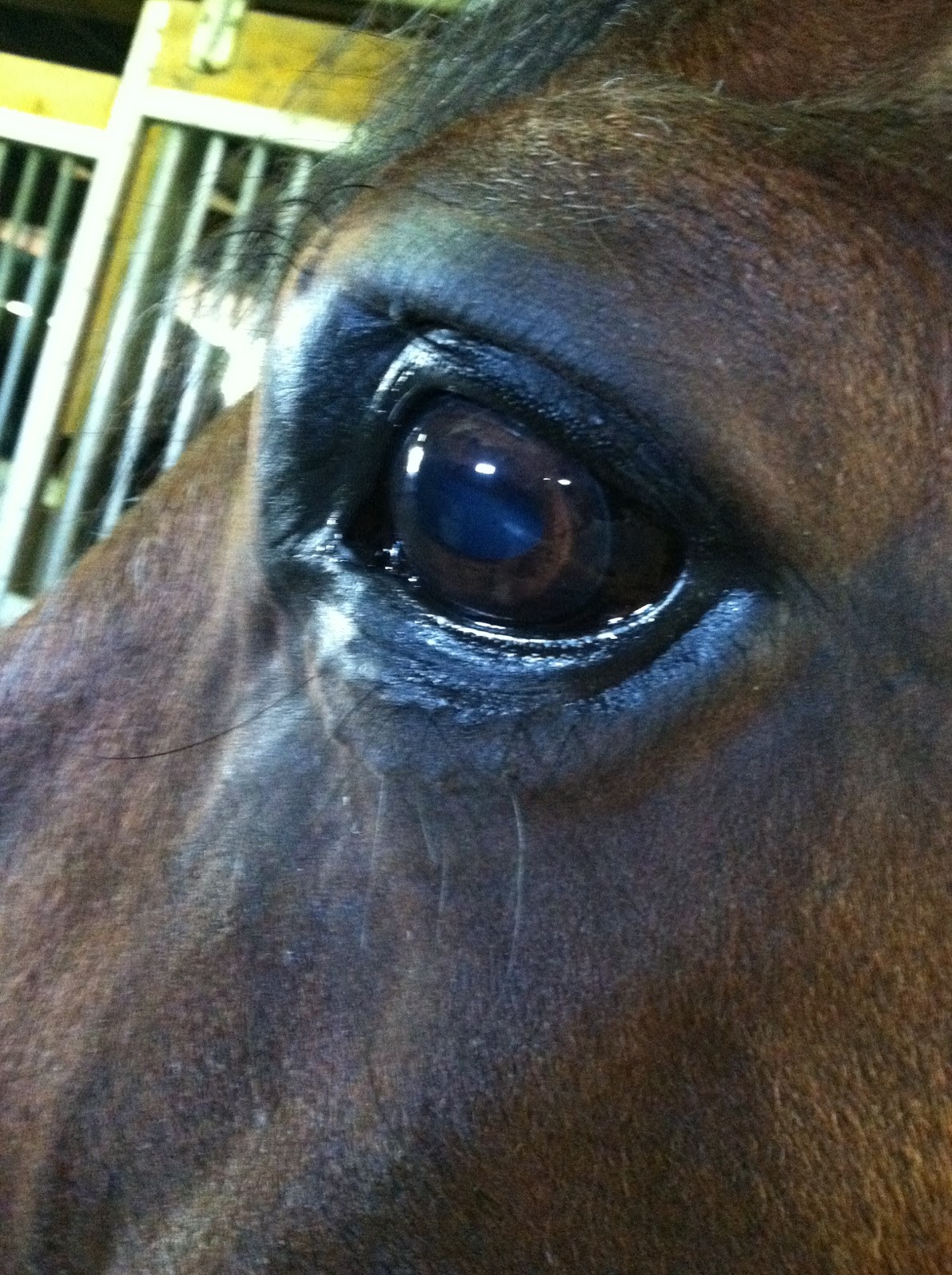
Here’s about what it looks like right now; photo taken on Thursday after flushing.
He’s now wearing his fly mask 24/7, and has been switched back to the last few bales of the old hay. He actually seems to be making some progress on that regimen. The swelling is down slightly, as is the discharge. We’ve actually eased off on the regular saline flushes, which is happier for all concerned as he is a jackass about them. (I can’t really blame him, honestly.) I’m examining the eye closely on a regular basis and the red irritation is easing. There’s never been the slightest sign of cloudiness or any problems with the eye itself, both per the vet and my own continued monitoring.
The only thing I can think is that the Cushing’s is depressing his immune system and leaving him more susceptible to eye problems. Probably he gets them slightly irritated from his normal allergies, and then rubs and rubs to itch them, and then escalates the problem. Hopefully as he settles in with the medication his own body will start to fight back a little better.

adventures with the vet

The Eyes Have It

What do the the eyes have? My bank account, for starters.

I posted about how Tristan’s eyes went from drippy to swollen and goopy.
I called the vet on Saturday afternoon, and she talked me through initial treatment: dose of banamine, flushing them out, cold compresses, and aspirin in his grain for a few days.
Banamine + aspirin + flushing + compresses helped on Saturday but everything was right back on Sunday, so I texted the vet an she agreed to squeeze him into her schedule on Monday. (LOVE a vet that texts!)
PSA time: This is a known pattern with Tristan. I was in touch with the vet quickly and monitored his eyes constantly. If your horse comes in with a swollen and goopy eye overnight and those symptoms are out of the ordinary for him CALL THE VET IMMEDIATELY. Do not pass go, do not collect $200. I can’t stress this enough. Do not mess with eyes. Suck it up and pay the emergency call fee.
So: Monday rolls around. I am traveling for work an can’t be there, but chatted with the vet after she saw him.
1) Both tear ducts were almost completely blocked. Vet suspects his allergies kicked it up a notch, he started rubbing his head, and created a cascade effect of swelling and irritation. So she flushed his tear ducts, which he was not a fan of.
2) She gave him another dose of banamine and left steroid/antibiotic ointment for his eyes, which both have a bit of conjunctivitis, the left more than the right. He will get that once daily for a week.
3) She also left an oral antihistamine for him, which he will also get all week.
That screaming you hear is my bank account.
HORSES.
adventures with the vet

Raining, Pouring, FFS, can I catch a break?

Tristan has had issues with his eyes for as long as I’ve known them. They get irritated very easily; they swell up a bit, they drip tears, and they seem to always be itchy. He wears a fly mask to keep him from blowing them up too badly on a regular basis. I’ve had his tear ducts flushed and it makes no difference.

Part of it is the way he rolls: he always griiiiinds his head into the ground, and isn’t allowed on sand or arena turnout because he will immediately come up from a roll blinking and dripping tears after he’s worked something into his eye.

This week, his eyes have been a little drippy and irritated, but nothing to the level of concern. Starting Thursday, we flushed his eyes with saline. Friday again. Today, barn manager reports that they are swollen and goopy and did not go down after flushing last night and turnout today.

So, vet call it is. GRRRRRRRR.

abscess · adventures with the vet · farrier · surgery

What the Vet Found

You may remember that about three weeks ago, my farrier raised some concerns about the way Tristan’s RF was growing out and healing. Based on his experience, he felt very strongly that Tristan had a keratoma growing within his hoof.

Yesterday, I arranged for my vet to meet my farrier at the barn, and we did a full workup on Tristan. I also had a list of other concerns; I was worried that his topline wasn’t building the way it should, and wanted to ask about supplementing with alfalfa cubes, and had a few other miscellaneous questions. (The most important answer: yes, you can add bute while a horse is on Pentosan.)

Waiting for the vet.

We started by longeing him, and I explained that I felt he was actually moving pretty well: lazy, but evenly and without obvious hitch. Slightly stiff, and tracking ever so slightly behind on the RH, but nothing that would even rise to the level of concern. We walked, trotted, and cantered, and then tested the trot/canter transitions. Then the vet took him in hand and spun his hind end to watch how he crossed over.

We did not flex. I can practically guarantee that Tristan would not flex clean, and to be strictly honest? I don’t need him to. He is functionally sound and comfortable in the level of work he does. I’m still not sure if he’ll jump again, and he certainly won’t ever get to the level of dressage work that would require the carrying and thrust that would start to trouble him.

The vet agreed with me that he looked pretty darn good in his movement. Certainly he was just fine on that RF.

What’s the catch? Well, when I asked about his topline, and we brought him out into the sunlight, the vet was immediately concerned. Keep in mind she saw him in March for spring shots, and before that in the fall, and then the previous summer and spring every 2-3 weeks for surgery follow up. She knows him pretty darn well, and she’s a brilliant vet with an excellent diagnostic eye.

She didn’t even hesitate. “I’m pulling blood right now, and we’re going to test for Cushings. Even if he doesn’t test positive, I’d like to start him on Pergolide. He looks terrible.”

Keeping in mind that my vet is very blunt! Tris does not look like the picture of your typical Cushings horse, but he is 19 and he has a distinct lack of muscling on the topline. When we tossed the idea back and forth, other things fit with the picture. He’s been urinating much more than usual over the last 6 months. He’s been coughing more often in warmup over the last 2 months.

It’s very early days yet, and Cushings is a very manageable condition. We should have results back next week. If his levels come back totally normal, the vet wants to pull more blood for general CBC panel and make sure everything else is adding up for him.

PSA moment: yesterday was a perfect example of why you should have a vet take a look at your horse once or even twice a year. I had a vague, pit-of-my-stomach feeling that things were not trending well with Tristan, but it took the vet who hadn’t seen him in 4 months to immediately recognize the changes that had occurred in those 4 months. She had passed him with flying colors in March – even making a point of saying he looked terrific – and was able to clearly compare the horse in front of her with Tristan from March.

I admit, I was reeling a bit from her immediate diagnosis and all the research I was going to have to do to start managing him, and then we moved into part 2 of the day’s fun and games.

The farrier and vet first conferred about why the farrier suspected a keratoma: the bulge in Tristan’s hoof, and drainage holes at the toe. Farrier pulled the shoe, and we set down to work to take some x-rays.

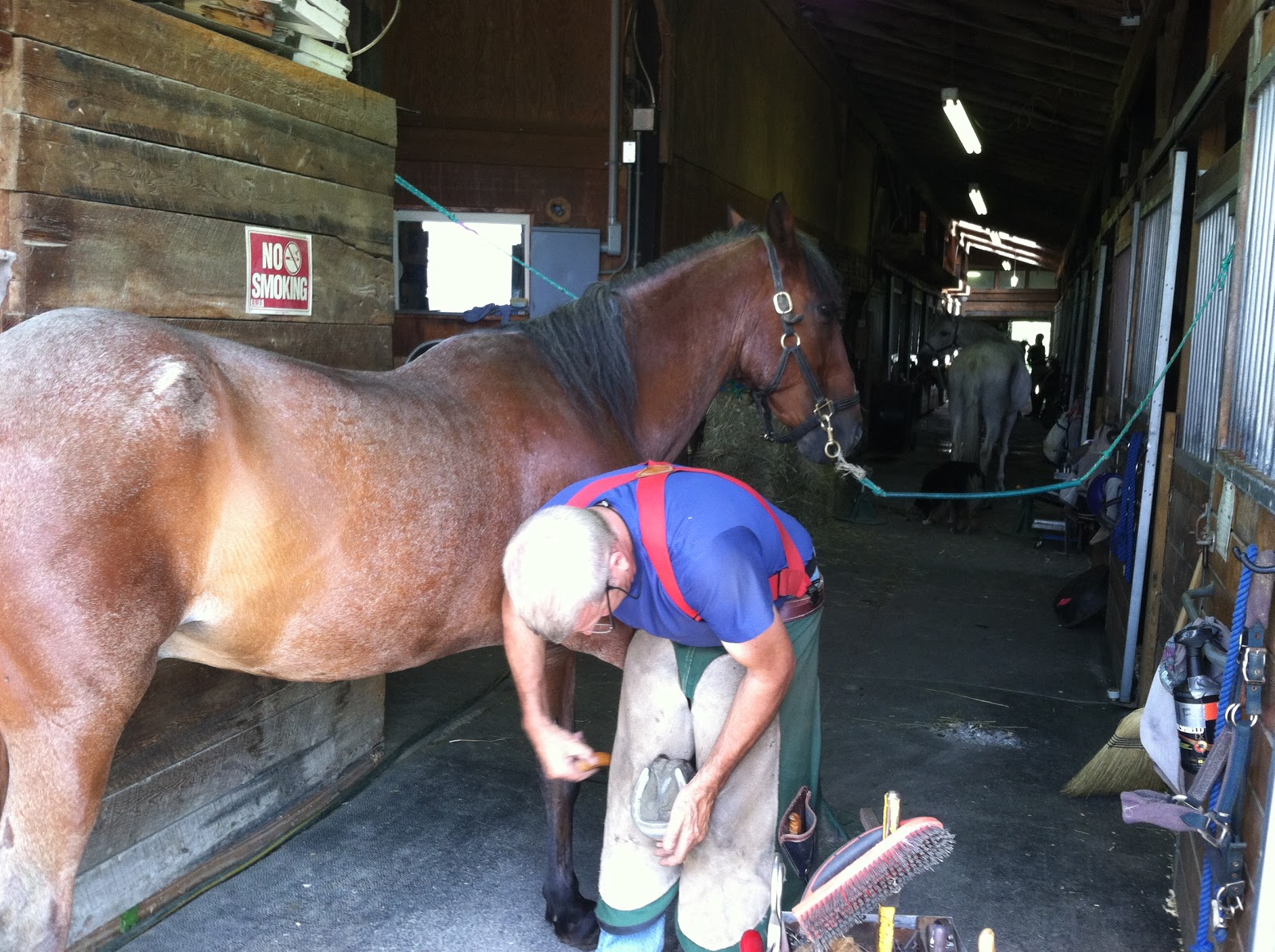
Farrier had these super-nifty lifts rather than the vet’s blocks!
We spent a good 20-30 minutes taking shots, looking at them closely, and then taking more shots from different angles. Vet needs to take a good long look at the x-rays at home, but on initial examination, everything looks clean.
Here’s the neat thing: the farrier was 100% correct in what he detected. What he did not realize (or did not remember – since I had sent him the surgery x-rays before) was that Tristan’s coffin bone was already compromised, that it had been carved up quite a bit during the surgery. The farrier was absolutely spot on in recognizing the subtle changes that came in Tristan’s hoof once he was missing a piece of his coffin bone. I already knew I really liked the farrier, but I am HUGELY impressed.
What we’ll have to do is compare the x-rays the vet took with the immediate post-surgery x-rays to make sure there is no additional bone resorption or remodeling. Vet and farrier both agreed, however, that if a keratoma really had formed at the coronet band and traveled down to the dark spot on the x-ray, Tristan would be very lame, and he’s just not. 
VERY good pony getting his shoe back on.
The one remaining question mark is the drainage holes in Tristan’s toe. They definitely shouldn’t be there. They are tiny, but they are there. I offered to soak, and vet and farrier thought that wouldn’t do much good. The farrier ended up packing the toe with Magic Cushion and putting the shoe back on. Vet said that if Tristan does come back positive for Cushings, that would explain why the drainage holes aren’t closing – his immune system is compromised. 
So here’s the takeaway:
  • his foot is almost certainly fine, whew
  • he almost certainly has Cushings, in the very early stages
    • bloodwork will come back next week, and then we will start him on a low dose of pergolide
    • I’ll take an in-depth look at his diet and most likely switch his grain. Right now he’s on Blue Seal Sentinel Senior, which I mostly like – but which according to some internet sources is fairly high in NSC, which he’ll have to stay away from. Look for research posts about this in the future.
adventures with the vet · colic

They do make us worry…

Running late from work last night, I got to the barn with the intention of longeing briefly and then heading out to meet the boyfriend for a movie date.

Got to the barn, kissed Tris on the nose on my way past his stall, and went into the tack room to grab the longe line. When I got back to his stall, he was lying down.

My brain went into immediate overdrive. I watched him for a minute or two, and he was alert and looking at me. He stayed lying down when I got into his stall, but that’s not unusual for him – when I catch him napping, he’s happy to have me come in and sit with him.

I put a halter on him and asked him to get up, and he did so immediately. Three piles of manure in the stall, half a bucket of water gone, and the hay he’d gotten ~2 hours ago was eaten to every last scrap. He was interested in me but perhaps a bit quieter than normal. Good gut sounds – but perhaps slower on his left side?

I put him on the cross ties and grabbed his antacids; he ate them a bit more slowly, less enthusiastically than he usually does. He dropped two of them out of his mouth, and at that moment the barn owner came in and I explained to her what I was seeing. I offered him the antacids again and he ate them happily. Usually when I feed them to him before I ride, he mugs me for more, and he was just a little too quiet this time.

I put him on the longe line for about 20 minutes of WTC. He was perhaps a bit lazy again, but he moved out easily enough and did some stretching. I did some belly lifts with him, listened to gut sounds again – still fine – and he passed some gas on the walk back to his stall, then again in his stall. I started to feel a bit better at that.

I picked out his stall, and left the stall guard up so he could poke his head out. Manure was normal, not too dry or too wet. He begged shamelessly for dinner, and we gave him half his grain. I fed him 12 simethicone tablets (generic Gas-X), which he ate with more enthusiasm than the antacids, and headed in to town for the movie. After the movie, I drove back to the barn and he was acting totally normally.

I’m still not sure if I overreacted or if I woke him up from a nap and that’s why he was sluggish. Either way, he’s pulled out of it just fine, and the incident caused me to double-check the banamine paste in my tack trunk. It expired this fall, so I asked my vet for two more tubes – one for my tack trunk, one for the trailer!

adventures with the vet

Mamas don’t let your ponies get drunk on a Monday morning…

Spring shots and teeth day!

Tris went first, and I believe I have waxed rhapsodic about my love for my vet before but damn, guys. Not only is she an awesome vet and an awesome human being but she is SERIOUSLY badass.

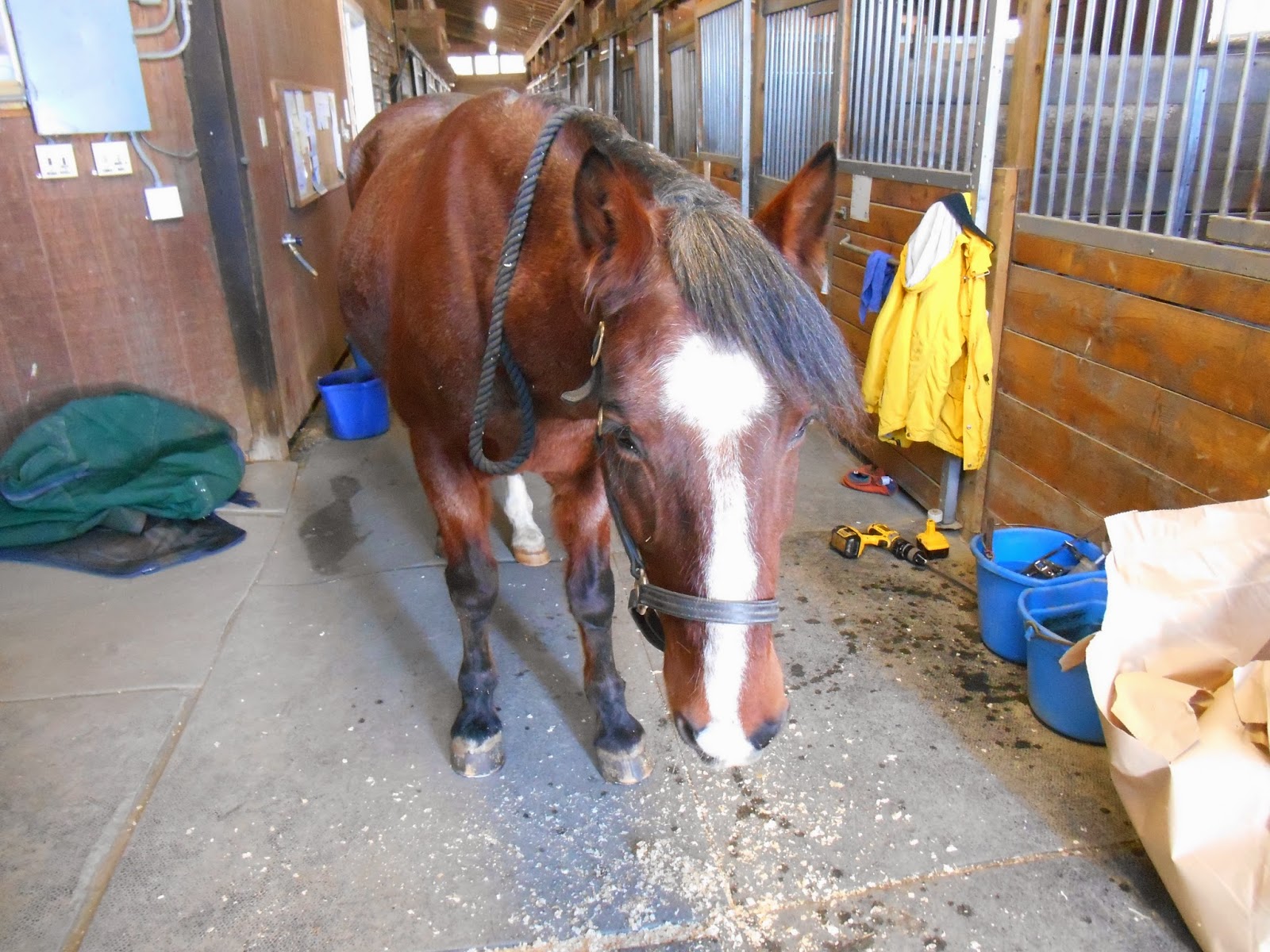
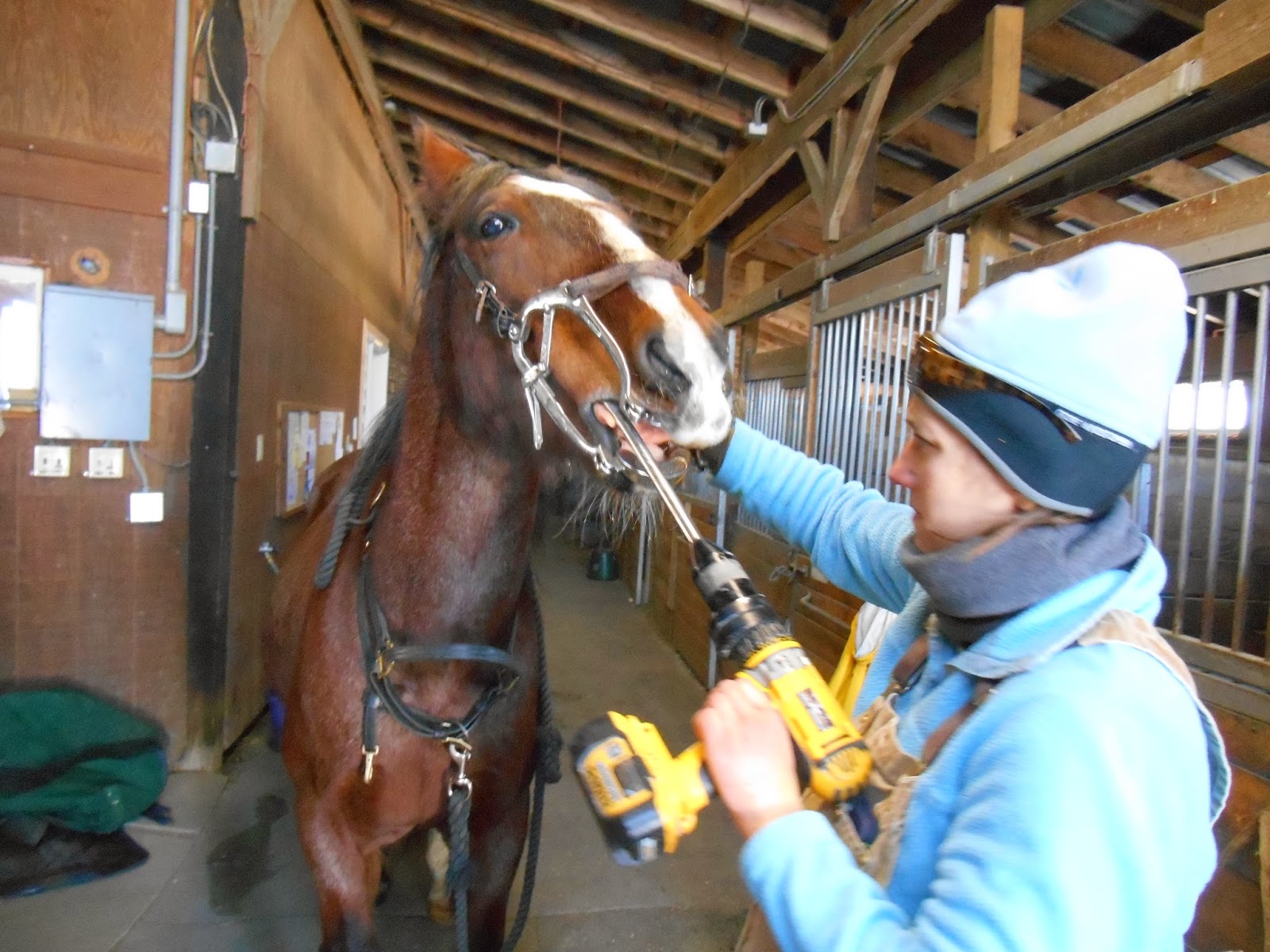
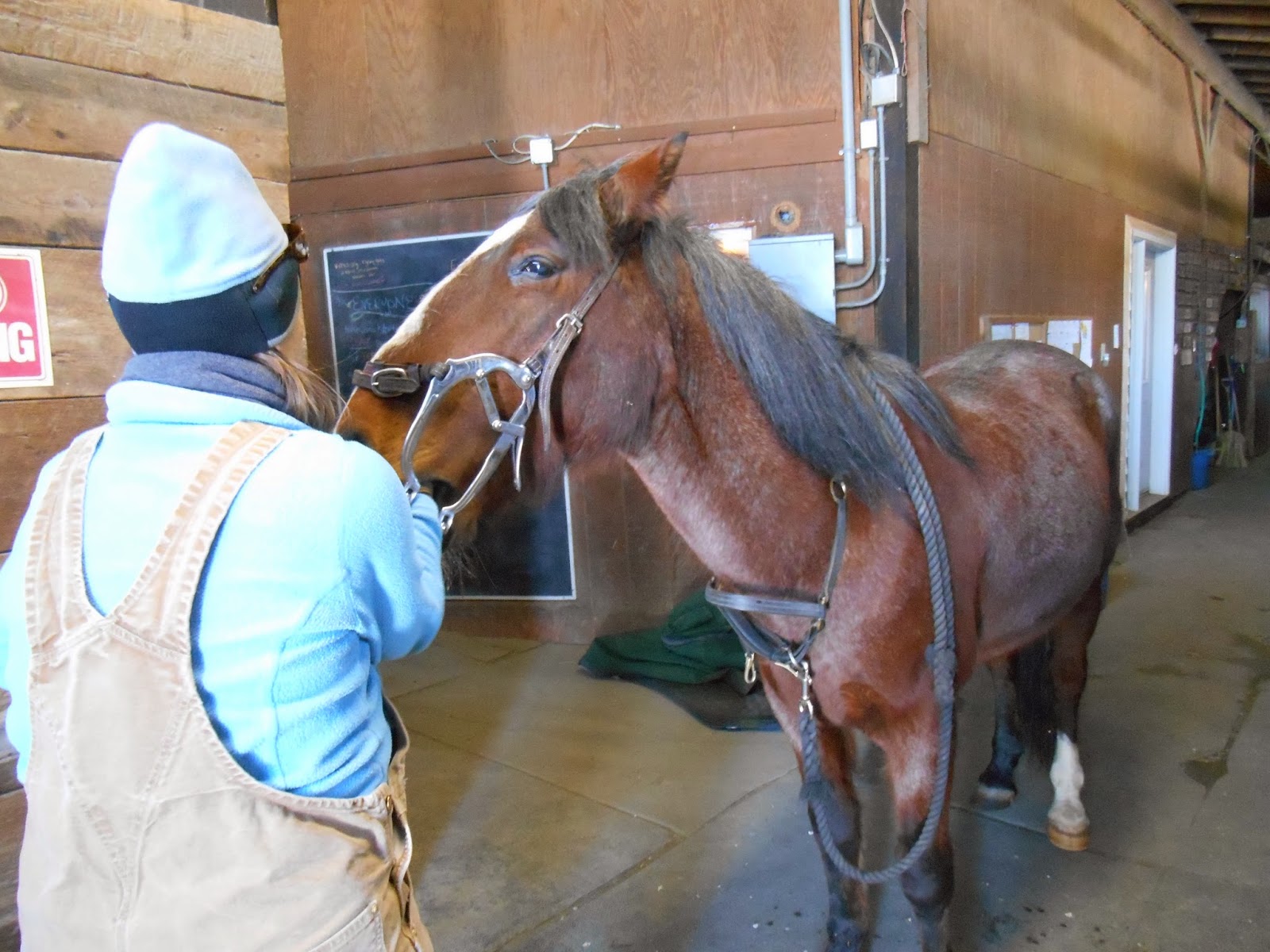
What you can’t tell in these pictures: she is 8.75 months pregnant. Yep. Due in less than 2 weeks. She had another vet with her to help with difficult horses, and to help keep track of everything, but Tris is so good about things that he had his teeth done exactly as you see here: untied, with a mild sedative. He just stood and looked miserable.
Can I be done now?

He also got vaccines, all the ones I detailed here and we ended up going with strangles after all. It’s been around a bit in our area so the vet went with better safe than sorry.

Did I mention, by the by, that it was WELL below zero for this vet appointment? And that it was -6 this morning when I walked to work, which set a new record even for this frozen tundra we call Vermont? Worst. Spring. Ever.

In happier news, experiment the first is ON. Wedgewood is shipping me a bottle of Pentosan and it will arrive by the end of the week and I am excited. I will report back in detail.

adventures with the vet · winter

#VermontProblems

Tristan did not get his spring shots yesterday after all; my poor vet had a day entirely filled with emergency calls, and finally mid-afternoon sent a text that started like this:

“Hello girls! Just left a goat found buried in a snowbank…”

Apparently a poor goat wandered off in the snowstorm, got lost, got stuck in a snowbank, and they found him just in time. She thinks he will be ok. Poor goat!

Today, it is in the 20s and 30s, hallelujah, so I will ride tonight after work. Tomorrow, hack; Monday, we’ll see what happens since I have a full day of meetings scheduled on my day off and it might not get into single digits. In MARCH, god damn it, Vermont. Enough already!

adventures with the vet · crunching the numbers

What vaccines did my horse get?

In case you haven’t noticed, I am a fairly obsessive record-keeper and chronicler and monitor of all things Tristan. Someday I’ll post about his medical records binder. It is a thing that even the most hardened Pony Club stable management judge would admire.

Tristan is scheduled for his spring vaccines later this afternoon, so I thought I’d do a bit of a table of what vaccines he’s received over the years. (Yes, I know it’s not spring yet; my vet is 8 months pregnant and we are avoiding her due date!)

2005
2006
2007
2008
2009
2010
2011
2012
2013
2014
Rabies
X
X
X
X
X
X
X
X
X
X
E/W/T
X
X
X
X
X
X
X
X
X
X
Flu/Rhino
X
X
X
X
X
X
X
X
X
Potomac
X
X
X
X
X
X
West Nile
X
X
X
X
X
X
X
X
X
Strangles
X
X
X
X
X
Botulism
X

Assume he got a Coggins every year as well (though not 2000-2005; he was in his first home and then the rescue), too. All vaccines were given based on the health outlook of a horse in a boarding situation in New England; some boarding barns were busier than others, but all were a minimum of 10 horses.

E/W/T = EEE, WEE, and Tetanus

As well-acquainted as I am with Tristan’s medical history, a few things surprised me.

First, though this chart does not reflect it, those first few years there were typically flu/rhino and Potomac boosters in the fall. That was apparently a thing we did in Vermont at the time.

Second, how clearly certain vaccines align with certain barn trends.

Look at strangles, f’rexample. 2006 and 2009-2012. 2006 I actually remember really well: it was a barn-wide vaccination after a horse at the fairgrounds 10 miles north came down with strangles during a summer show. Every barn in the county was on quarantine, and most vets recommended vaccinating, so we did.

2009-2012 were years at a specific barn that strongly recommended it, though not as strongly as others I’ve been at. By far the busiest showing barn I’ve ever boarded at, so that makes sense.

But interestingly, take Potomac. Those gap years, 2010-2012, also overlapped with that same busy barn, and it was not a typical vaccination for that barn. Why? I wish I had a better answer, but my memory is hazy.

This is my basic list, and usually I tweak Potomac and strangles at the recommendation of the vet administering the shots. Some of those vets I’ve had close partnerships with; others I’ve barely had a passing word with. (For all the many, many vets Tristan saw in 2012, the vet who administered his vaccines, ie the barn’s go-to, I never actually met; we always called in specialists for his foot.)

Last but not least, the outlier: botulism. I did not even know such a vaccine existed until this year, when the barn went on round bales for winter turnout and suggested that the whole barn get the vaccine. It was by far one of the most expensive I’ve ever done, with three rounds at $20 a pop. It was…not required, but strongly suggested.

In all, vaccines are cheap insurance for me. Tristan doesn’t react to them at all – some of those he’s gotten all in one day, and one or two years he got a five-way (E/W/T/Flu/Rhino) and didn’t bat an eye. There’s never been any difference in soreness or demeanor whether he gets ’em all in one day or spaces ’em out. For which I am grateful, and lucky!

Of all of these, the only required to be given by a vet are rabies and the Coggins, but I’ve had every single one of these done by a vet or the barn staff. I’ve never given a shot, and I go back and forth about whether that’s ok. Part of me thinks I should suck it up and be more hands-on. Part of me is glad to pay the vet to do it, since I get hands-on and an opportunity for a conversation. If I ever move to my own land, I will absolutely learn how to do IM and IV, but for now – this suits me, I think.

How about you? Do you do your own shots? What shots does your horse get? Are there some you’ve gone back and forth on over the years? Any regionalisms that you see, either in this list or in your own list?

adventures with the vet · supplements

Notes on Experimentation

Note the First: Pentosan. Should we do a round in the spring, and see if he responds? Is it available again?

Legend injection in late fall made zip, zero difference that I could tell. Had a marvelous ride the day after, and then two days later, nothing. Taking him off Previcox has not resulted in a gimpier horse. I am not necessarily addressing a specific issue, but rather hoping I can improve the overall picture.

Note the Second: Gut issues. He remains the gassiest horse in the barn by yards and yards. Do I want to worry about this? Do I think harder about a hindgut treatment of some kind? Do I make some attempts at ulcer treatment?

He’s already on a pre & probiotic and doesn’t seem bothered by his gassiness.

Note the Third: General supplementation for weight/energy/hydration. Will try hay cubes/pellets, soaked, or beet pulp, soaked, as a snack/meal when out and hauling, or as something to give him as a treat after riding in the summer.