gifs · winter

Lucky speaks for all of us

(this post is brought to you by the mistake I made in checking next week’s weather which will be JUST AS COLD, FFS, VERMONT, ENOUGH ALREADY)
Friday afternoon it should reach the high single digits, which means I’ll head out to the barn and try to do some walking, at least, with a quarter sheet. Long slow distance, right? Or at lest getting and keeping him moving.
Saturday it should be warm enough to properly school!
Then it plunges back down again, most likely, with lows in the double digits below zero most days next week. Siiiiiiiiigh.

equestrian history

A stable full of imaginary horses

I am reading a book that I will review later on this blog, but I could not resist posting this one tidbit.

Apparently one of the performance horses with Buffalo Bill’s Wild West Show, described as “one of the best hoop jumpers,” was named “Ta-ra-ra-boom-de-ay.”
That NEEDS to be an event horse name, y/y? “Now on course, Boyd Martin riding the Thoroughbred gelding Ta-ra-ra-boom-de-ay.”
Someone make that happen, ok?
(I’m going to have that song in my head for the rest of the day.)

(these are the kinds of things I think about when I can’t get to the barn, ENOUGH ALREADY, WINTER.)

Uncategorized

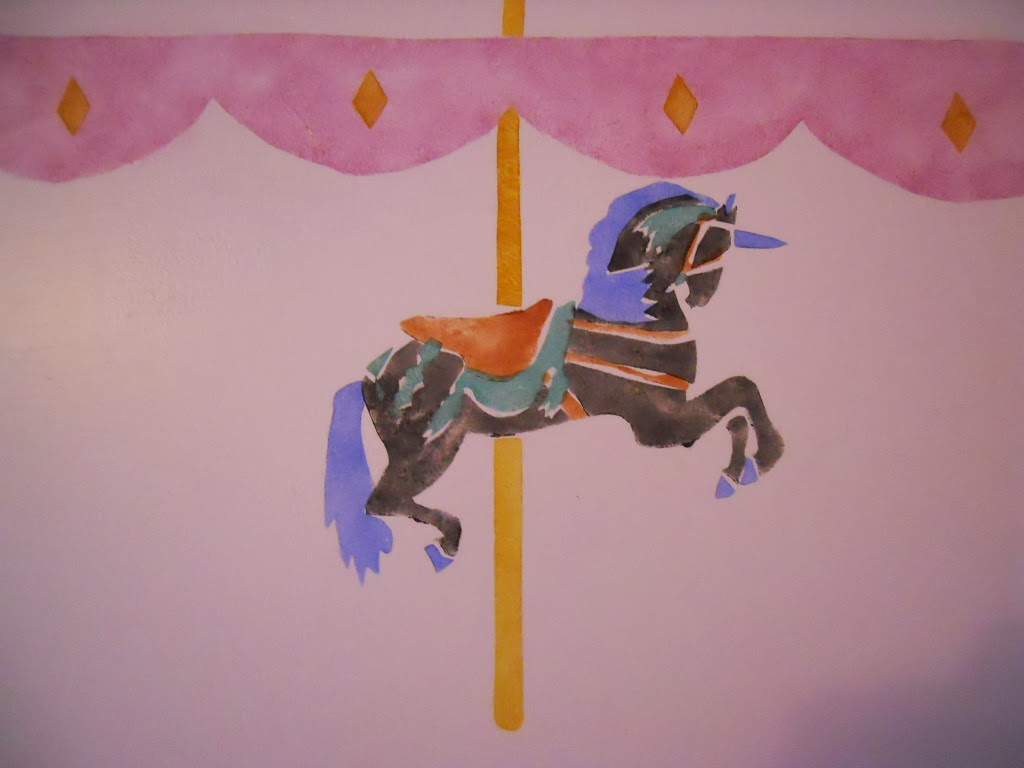
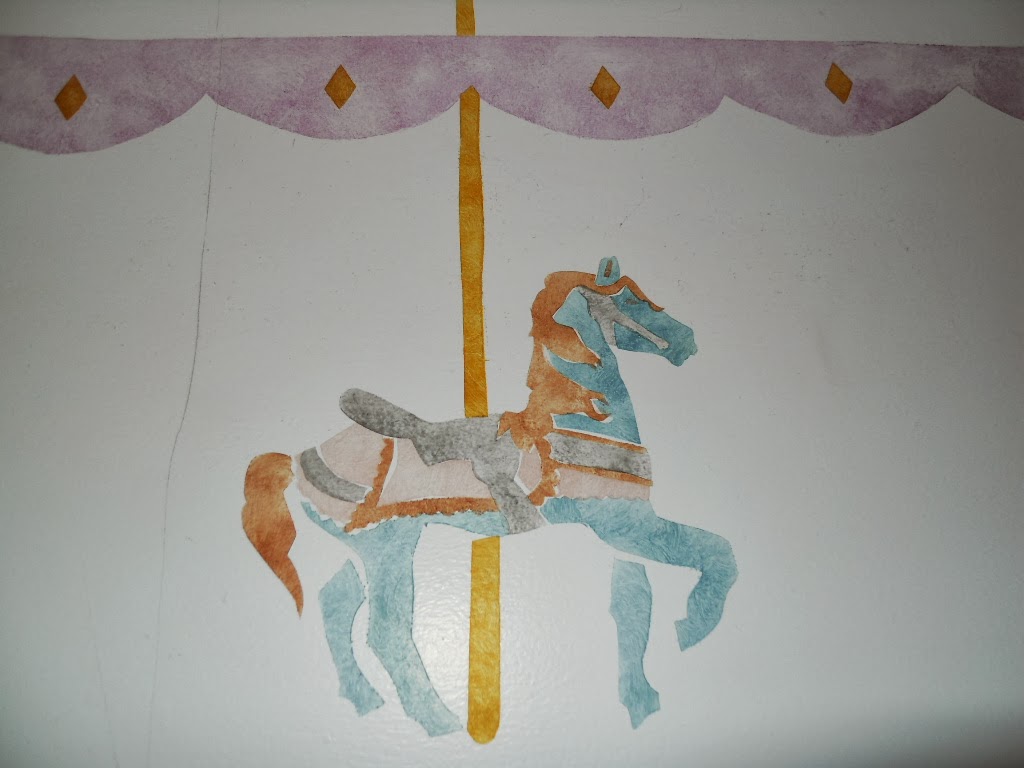
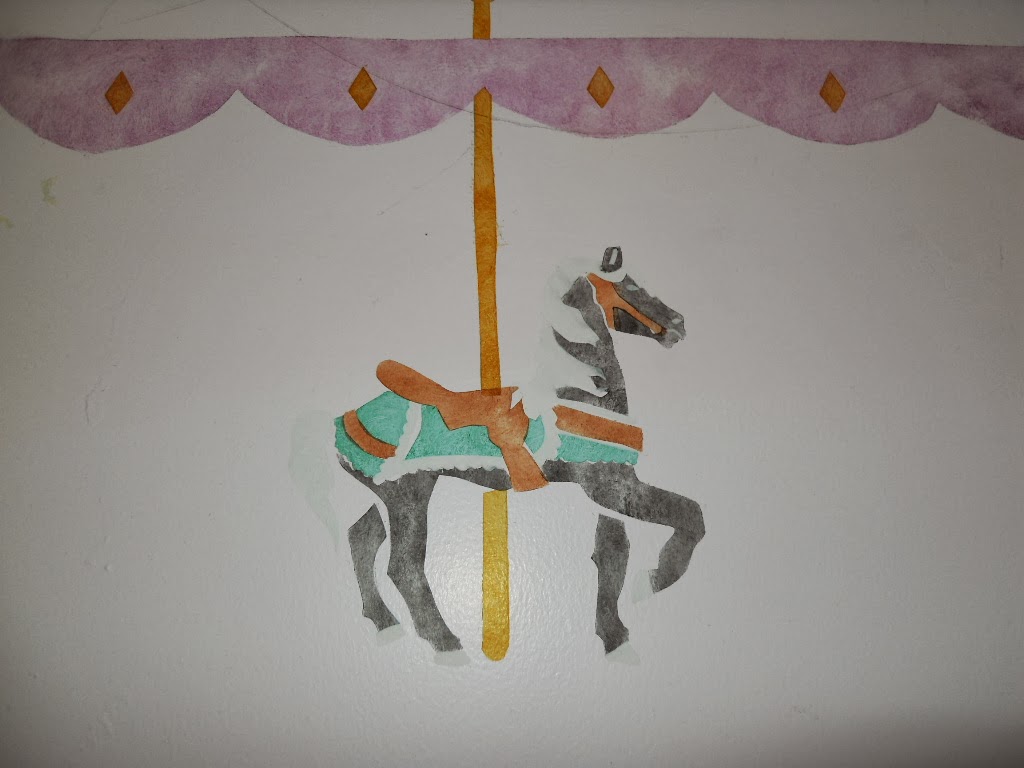
Carousel Horse Stencils

Some time ago, Amanda at Keeping it Low Key shared the horsey themed decorations she made for her daughter’s room, and that triggered fond memories for me of my childhood bedroom.

For my tenth birthday, I was allowed to redo my room, within certain allowable parameters. (I wanted blue walls; my mother wanted lavender; the walls were painted lavender.)

The best feature of the redecorating, without a doubt, was a series of custom carousel horse stencils that my aunt painstakingly created based on a coloring book I had. Every single one was unique. When I moved out and my bedroom was turned into the guest room, they were all painted over, but not before I took photos of every single one. Here are some of my favorites.

alois podhajsky · dressage

The Leg Yield: According to Alois Podhajsky

I have made no secret in the past of my love for Alois Podhajsky (see also my review of Miracle of the White Stallions). His The Complete Training of the Horse and Rider is one of my training bibles, a book I return to on a regular basis when I’m thinking or seeking inspiration. So with my current emphasis on leg yielding, I went back to see what he had to say – and I was surprised! Here’s what he writes:

As a preparation for lateral work the exercise known as yielding to the leg may be practised in order to make the horse undersatnd the effect of the rider’s legs pushing sideways. But the importance of yielding to the leg must not be over-rated; it should be used only to teach the young horse to understand the rider’s leg aids. Unfortunately in recent years the contrary is often the case when practising equitation. This auxiliary aid has taken too great a part in the German instruction for cavalry. The Spanish Riding School has always used this yielding to the leg only to a limited degree, recognizing its original purpose.

[he then describes how and why to teach the turn on the forehand, and concludes that it should never be asked for in a dressage test]

Yielding to the leg will be made easier for the horse by giving his head more position to the opposite side, that is to say, when yielding to the left, the position should be more to the right.

When the young horse has learned in this manner to answer to the pressure of the rider’s leg by stepping to the side, the yielding to the leg should be practised only when in motion in order to consolidate the understanding of these aids. At the Spanish Riding School it is practised in the walk only and disapproved of at the trot. It seems illogical that the horse should be taught to go sideways and forward with exactly the opposite position to that which will later be demanded of him in the half pass.

 As soon as the young horse is obedient to the sideways pushing action of the rider’s leg, the rider may start to practise correct lateral work.

Correct lateral work, to Podhajsky’s mind, is the succession of shoulders in, travers, and renvers. He goes into great and loving detail about each of these exercises, how they work the horse’s body, how they are to be ridden correctly, and what they do to benefit the horse in its progression toward the haute ecole movements.

On the one hand: Podhajsky always backs up his advice with good reasons, and when you think about it the shoulder in works many of the same muscle groupings and gets at the same things that a leg yield does.

On the other hand: Podhajsky’s goal in this book is to build a horse in the correct classical dressage way, and the leg yield is not a classical dressage movement. He’s referring to a broader body of work, and his method is half scholarly erudition and half military precision (he was, after all, a career cavalry officer until World War II). Training a horse is like painting a masterpiece, and extraneous brush strokes are not necessary.

So taking that into account, Podhajsky is working from the blank slate of an impeccably bred and well-started young horse. He doesn’t (at least in this book) talk about working through physical deficits of an older horse, or a mis-trained one, or a less talented one. (He writes eloquently about those horses in My Horses, My Teachers, but that book is not the training manual that this one is.)

I think he has a point about moving on to the shoulder in, and I’ll try and start working that in more. Mastering a corect shoulder in, and building the muscles to do so, will address many of the problems that we’re working on with the leg yields: a more supple hind end, more controllable shoulders, keeping straight, and keeping rhythm through it all.

Does anyone have any other thoughts about leg yield vs shoulder in?

Uncategorized

Polar Vortex, Take 2

You guys, I am officially sick of winter. Our heating and hot water bills are off the charts. My skin is so dry I get a cut or abrasion every time I bump against something. I am eating bread three meals a day with snacks in between and still my body craves more. Whenever I find a sunny spot I sit in it for as long as I can, cat-like. I want to ride my horse, but it’s too cold, so I worry about him instead. Is he staying warm enough? Is he coping ok with his frequently frozen solid water bucket? When will we be able to hack out without worrying about the ice? Will there ever be green and growing things in the world again?!

SIGH.
Ok. Time to bundle up and walk to work…

lesson notes

What makes a good lesson horse?

A narrative of my lesson with my boyfriend on Tristan has been requested, and in thinking about how to write it I thought a bit about a bigger question: what makes a good lesson horse?

But I’ll get to that in a minute. There’s honestly not much to recap about the lesson. It was 20 minutes, with about 15 on the longe line. A lot of talking him through position at the walk. I made him reach all over and do stretching, and call out to me which feet were hitting the ground at what moment, trying to get him to feel what each part of Tristan was doing in order to propel them forward.
We talked about keeping weight deep in the saddle and it was a bit of an exercise in frustration for me to see him refuse to grasp the idea that it is weight, not muscle, that keeps a rider in the saddle. He insisted it was physically impossible for him to drop his weight through his heels without gripping the saddle with his knees. I told him to see what happened when he gripped as tightly as he thought he should with his whole leg, and bless my horse, he launched into a beautiful forward trot, obedient as you please, and then stopped after two strides because M. was bouncing around like a potato sack.
We talked about posting, and finding the rhythm of it, and then I turned him loose off the longe for about five minutes of experimenting at the walk, seeing what happened when he asked Tris to move off his leg and go different places. We talked about how contrary to Hollywood’s bad example, reins are not the way to make a horse go left or right, and what the right feel of a horse’s mouth in your hands is, and there were some very brief, faint glimmers as Tris tried so hard to figure out what this strange person was doing, when my poor pony offered to step under and reach in response to the sort of, kind of, muffled aids asking him to do so. (I love him so.)
I have always maintained, and yesterday proves it once again, that Tristan would be a really superlative lesson horse. His brain is so rock solid, and his self-preservation instincts are so good. When he feels inexperienced riders on his back his preference is to slow down, and not speed up and take off in reaction to their imbalance. He tries to read muddled aids, and in size and in overall temperament he is the very opposite of intimidating. At the up-down, walk-trot level he is not a complicated or difficult horse to ride; his issues crop up when you get further along, and are usually in response to a more experienced ride.
But he would not be happy as a lesson horse. He doesn’t thrive on work. He keeps his temper cheerfully for the occasional up-down ride but string two or three of those together and he would start to get seriously sour and cranky. He would start to shut himself in. He is a one-rider kind of horse; that’s where his personality really shines through, and I don’t think I’m saying that just because I happen to be that one rider. His interest in and devotion to work is not sufficient to carry him through a lesson schedule.
So I think, perhaps even more than that steady-eddie adult amateur horse (of whatever discipline) the truly good lesson pony is the rarest of equines. The horses that can take a joke all day long and still make faces on the cross ties. The horses who will adjust their way of going to the ride they’re getting, will be kind when interpreting aids, and will generally work to preserve the balance of the rider on their back rather than to upset it. Who do as they’re told not in the deadhead way, but in the highly competent, thoughtful way of a seasoned professional.
What do you think? What qualities go into the truly superlative lesson pony? Would your horse be a good schoolie?
abscess

Foot Progression Collage

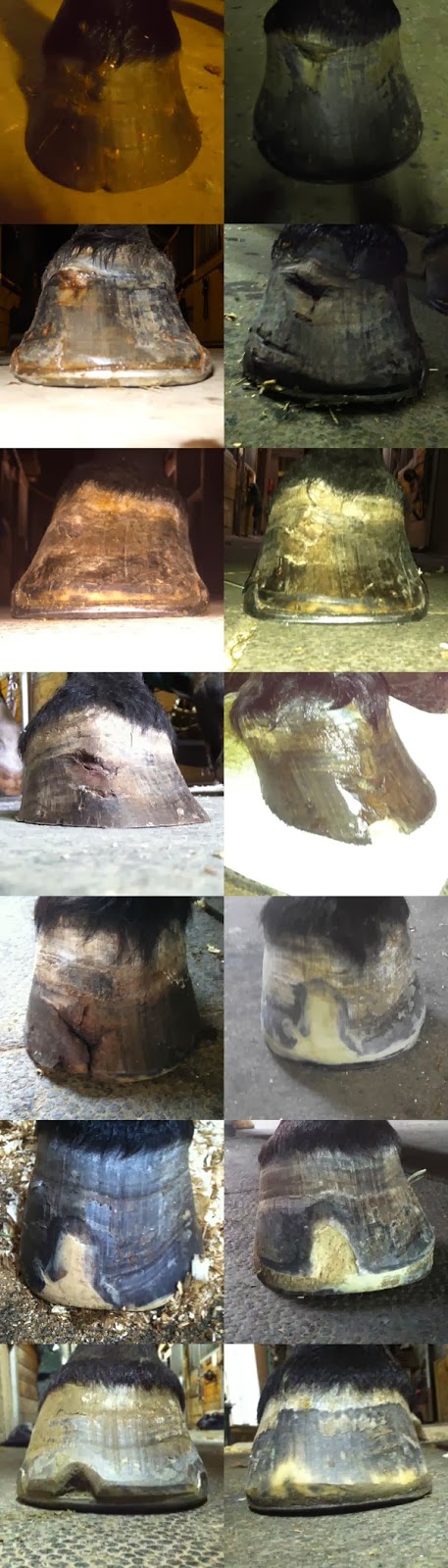
I finally completed a project I’ve been wanting to do for some time: a complete collage of the progression of Tristan’s right front.

For those who haven’t heard this before, let me make a long story short: in August 2012, Tristan blew a massive abscess out his coronet band. Over the next few weeks, he blew it again halfway down the foot and at the toe. Eventually, we discovered that it was due to an infected stress fracture of the coffin bone, and in March 2013 had surgery to remove bone chips and dead bone.

(if you want the story in excruciating detail, check out the abscess and surgery tags)

Photos are as follows. The top left photo is from August 2012, the night I discovered the abscess. They follow through monthly, left to right, at roughly the same time each month. August and September 2013 were lost in a camera data card crash, and I don’t have a November 2013. The bottom right photo was taken on December 18, 2013 and still roughly represents where his foot is today.

For anyone who has ever wondered what a massive abscess hole looks like as it grows down from the coronet band to the toe, look no further.

This will, please God, be the last entry in the abscess tag set.

dressage

Two rides, or, how having a plan for a ride doesn’t always work out (in a good way)

I’ve been doing really well keeping Tristan to a consistent schedule with varied work. The last two weeks I’ve had energy and plans and executed them well. When I got stuck at work way late and was cracking my jaw with yawns by 7pm, I swapped days and went out on a planned rest day. Of course, some of that is about to get waylaid by winter (high of 3 on Tuesday and Wednesday!) but I can look at those days more as a planned rest rather than a frustrating interruption, because we’ve had some good rides lately.

Friday, the plan was to incorporate lots of leg yields and lateral work. Supple, supple, supple! Then straight, straight, straight! Back and forth times infinity, at all gaits. Well – that plan didn’t work out. We ended up in the ring at the same time as a lesson with a horse that was being extremely crabby and cow-kicking, so scratch that. I could barely do centerline leg yields without bumping into him somewhere.

So we worked instead on transitions and keeping straight through them. Changes of direction, turns on corners, walk-trot-canter and back and forth between them on a circle. My job, keep my body and hands still and straight. His job, respond to the leg, don’t pop the shoulders, stay in the outside rein. It wasn’t the kind of ride that set the world on fire but we accomplished things, and there was a good progression.

Saturday, my planned rest day, became instead a day of planned poles and hind end action. I laid out eight poles and the idea was to work through them in the walk and trot, then change them up and do some individual poles at the canter to work on hock action and jump. Straight through all things!

Instead, I got on at the walk, and we warmed up straight and forward on a long rein. And he was striding forward beautifully. He’s easily 50% more forward right off the bat than he was even two months ago, and he’s holding it better – my signal that he’s starting to get that muscle back and he’s responding to my drilling the forward. So I started to play with that, picked up the reins enough to feel his mouth and keep a steady contact but not do much more with it.

We ended up doing 30 minutes in the walk, which I’ve rarely, if ever, done with so much productivity before. Leg yields everywhere: quarter line to center line, center line to quarter line, off the wall and back to the wall, into turns, onto diagonals. Straight and even in the reins, riding every step. Cueing each individual step over and then going straight again. Mixing it up, so he didn’t just zoom to one direction or the other. Simple, basic stuff, but focused and thoughtful and good.

I had set up poles after all, eight of them in a row along one long side, and we walked over those from time to time: straight down the middle, go where I point you, stay forward and reaching. I didn’t prop them up to make full cavaletti, since it was already clear that poles were not going to be my focus for the night, but I did jump off and adjust them for trot – they were a touch too close together. God love a horse who ground ties: I literally jumped off, said “Stand!” and he watched me from where I’d left him as if rooted to the ground.

He really likes the poles when I use them as I did, as something to aim him at and trust him to figure out. My job is forward; his is the footwork. He clearly thought of them as an interesting puzzle, and having eight of them – twice as long as I’ve ever laid out for him before! – was a bigger challenge. He couldn’t just power through on a wing and a prayer. He had to have a plan and a rhythm and an adjustable stride.

I did most of the trotting poles in two point, looped rein: something about my posting rhythm wasn’t helping him, and after two or three passes I figured I’d get up off his back and let him use it more effectively without me. We also did a teensy bit of cantering after the poles. The first few times through, he was losing impulsion toward the end despite my aids, and so when we finished I sent him forward into a strong canter on a circle, then brought him out and sent him down the poles again. That seemed to do the trick.

Today, a lighter ride planned – I’m going to be teaching my boyfriend a short longe line lesson – and then Monday through Wednesday off for work insanity (me) and temperature (Mother Nature).

sleigh rally

Antique Sleigh Rally at Old Sturbridge Village

Old Sturbridge Village in Sturbridge, Massachusetts, is near and dear to my heart for many reasons. I did my graduate internship there, and got to ride Tristan through the village one day before it opened.

They also do some really cool programs. Their upcoming Antique Sleigh Rally looks to be even more exciting than GMHA’s Sleigh Rally. If you’re anywhere nearby, I can’t recommend the experience enough!

book review

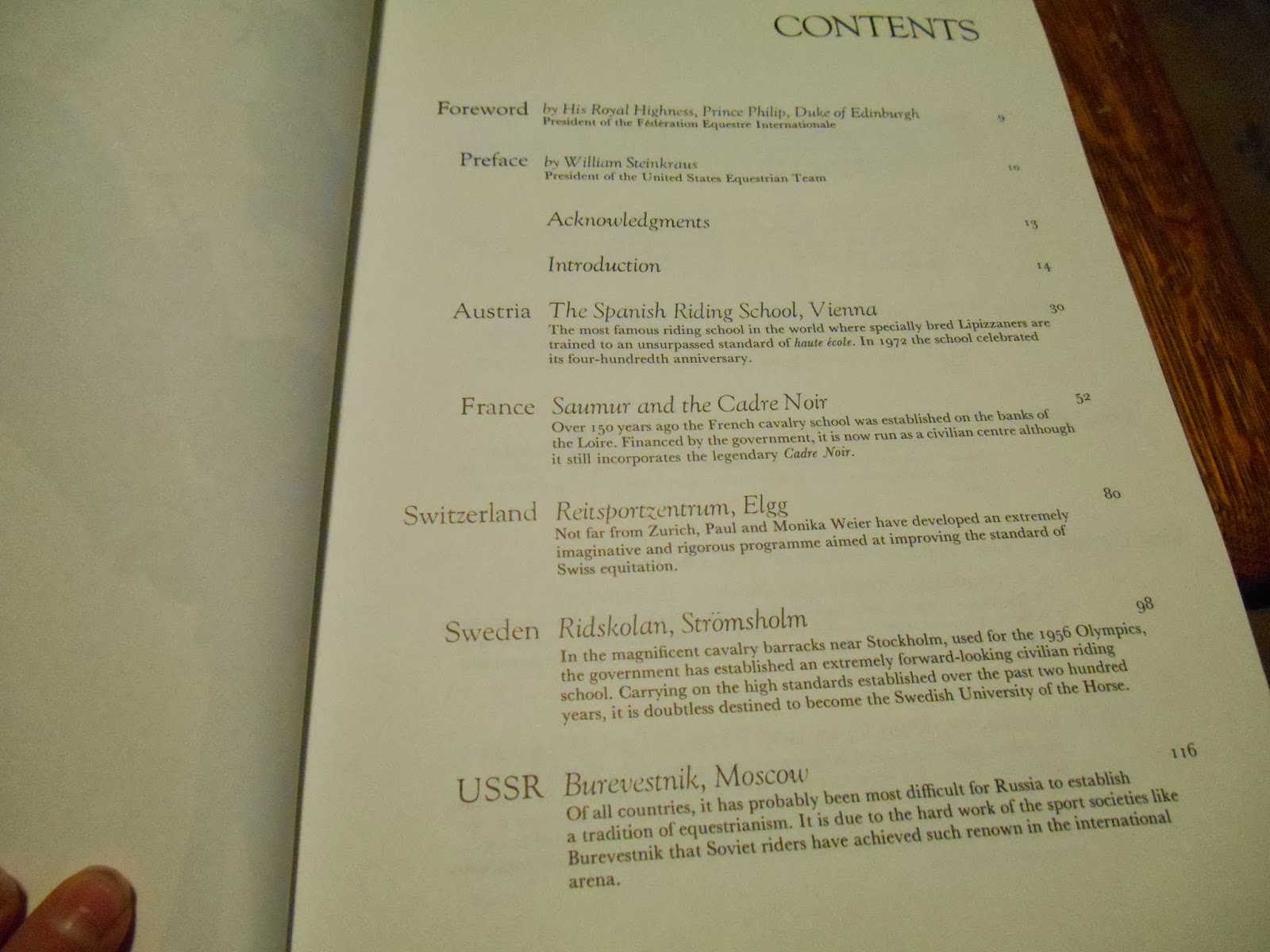
Book Review: Great Riding Schools of the World

I am an historian by training and by profession, which means that whenever I get the chance to buy an historic horse book I snap it up. Older editions of fictional favorites, old vet manuals, you name it.

When I spied this book on the shelf at a library book sale recently for the bargain price of $1 it was a no-brainer, and I snapped it right up.

It even had someone’s horsey bookplate still in it! ❤

The introduction starts by saying that at a certain FEI meeting in the 1970s, it was decided that equestrian sport was on the rise, and some bright soul had the idea to bring more public awareness to the “official” schools of countries around the world as an attempt to highlight where people could receive professional training.

It ends up being a picture-heavy, information-heavy romp through some really terrific horsemanship, some gorgeous facilities, and the inevitable conclusion that most of these schools are not really for the general public – they’re more like finishing schools for pre-selected riders. Which I think everyone knew at the outset, but I am not complaining – this is a gorgeous book!

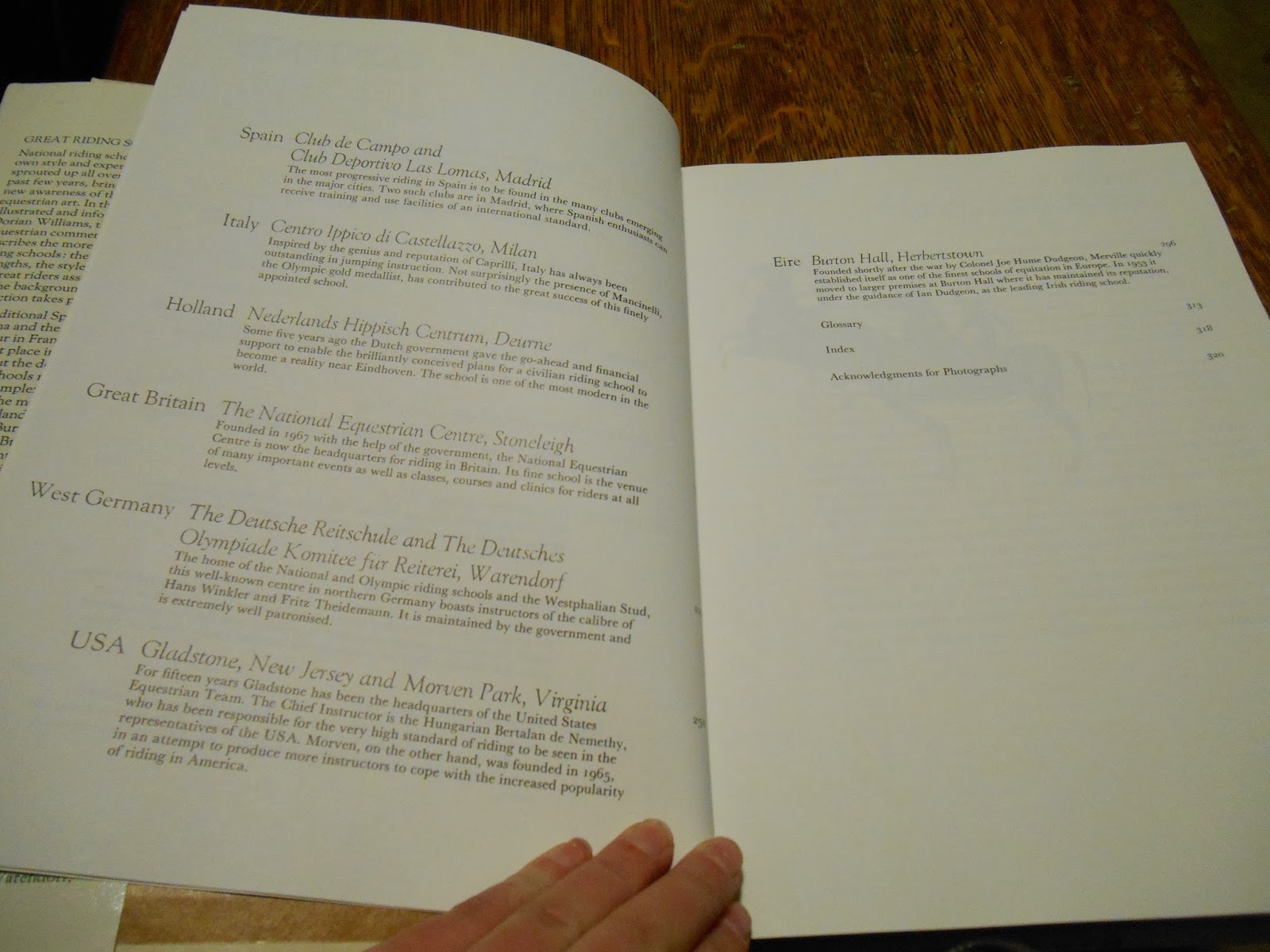
There are a LOT more riding schools than I had ever heard of, too. For instance, despite living with one of the proudest Swedish-Americans in the lower 48, I had no idea that Sweden had a national riding school!

All the Swedes! Each school is introduced by a two-page spread with their facilities and often their horses and riders. Then that’s followed by as many as 20 pages of picture-heavy text about the facilities, the program of instruction, and what each school specializes in.
Switzerland (I know, right?) apparently specializes in insane cross-country jumps. Eeeeek.
The Cadre Noir in France, they would like you to know, are able to do all their haute ecole movements in unison. Click on that picture and zoom in if you will. It’s kind of insane.
SPEAKING OF INSANE CROSS COUNTRY WHAT THE HELL.
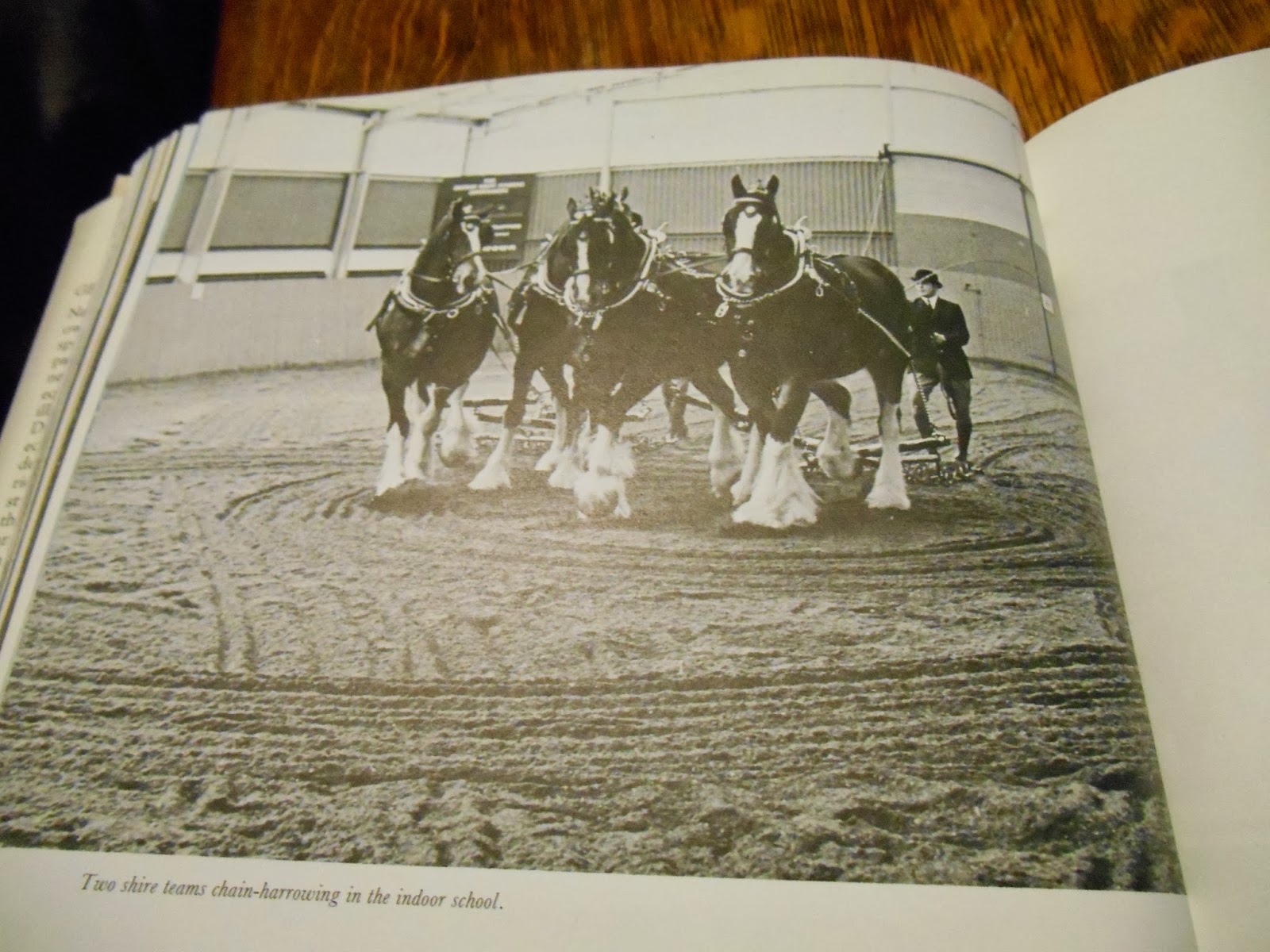
England still drags its rings with a draft horse team!
This photo demonstrates something I wish would happen more often these days. It’s a team of RSPCA inspectors getting a workshop and demonstration on carriage horses: proper handling, proper care, and how to evaluate what a healthy horse looks like generally. Isn’t that a great idea?
Aaaand we’re back to the nutso cross-country riding. England again. Please note the utter lack of helmet.
On close examination of this photograph, I believe that Michael Page and Grasshopper are jumping concrete drainage pipes. Lengthwise. I am not kidding.
George Morris, of course.

There are many, many other similar, gorgeous photos, and fascinating accompanying text. Some of it is very dated, but overall it’s a great window into its time. I’m thrilled to have found it to ad to my collection.