
Dante Alighieri famously imagined Hell for his epic poem Divine Comedy. In the section labeled “Inferno,” he and the classical poet Virgil travel downward through nine circles, each one worse than the last. The idea is that the lower you go, and the higher the number of the circle, the worse the sins you’ve committed. (So for example, the first circle is full of “virtuous pagans,” who get off relatively lightly; the ninth circle has traitors.)
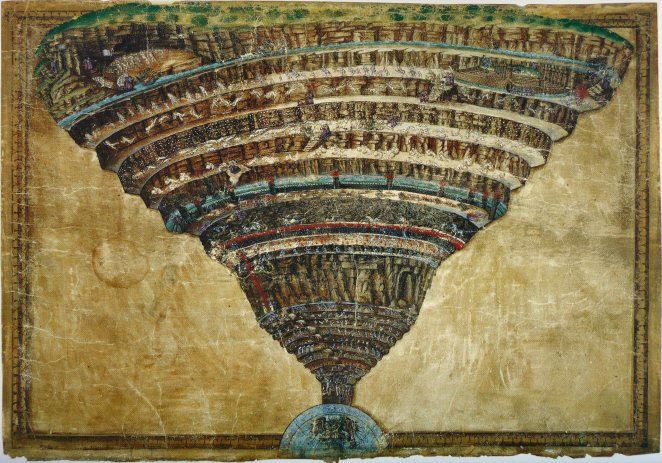
So, how would Dante classify equestrian sins in his circles?
Here are some ideas.
1st Circle: Unknowing Transgressions
- sharing the 52 Thoroughbreds meme every time you see it on your Facebook wall
- yelling at owners for blindfolding their horses when you see fly masks
- asking if your child/boyfriend/dog can ride your friend’s horse
2nd Circle: Little White Lies
- pretending you rescued a horse that you actually just bought out of someone’s backyard
- bending the truth a little bit about the height you jump when you’re in a new group of horse friends
- writing a sales ad that says your horse is half a hand taller than he actually is
3rd Circle: Fashion Faux Pas
- sneering at eventers for flaunting their colors XC
- dropping fashion brand names into casual conversation just to prove you know what’s up
- criticizing someone else’s horsekeeping over trivial superficial things like mane maintenance (roached, pulled, long) or clipping
- looking down on people who love color and bling in their riding gear
- looking down on people who buy all their riding gear in black
4th Circle: Showing
- not being on deck & ready when your name is called
- any kind of abuse of any kind of show official or volunteer
- bringing a stallion for stabling without notifying show management
5th Circle: Barn Transgressions
- leaving your halter still hooked to the crossties
- leaving manure in the aisle or the ring
- not leaving the ring just as you found it ie leaving poles down OR tampering with jumps as they’ve been set up
- not removing hair from the wash stall drain
- not putting the broom or manure fork back
6th Circle: The Internets
- participating in indiscriminate public shaming by ad hominem attack instead of legitimate, thoughtful dialogue, whether via forum or Facebook
- bros who tell you that it’s not really a sport
- that one aunt who keeps asking when you’ll give up horses and start having babies
- most forums
7th Circle: Un-Professionals
- clinicians who do nothing but shit all over riders in front of them in the guise of sounding smart and tough
- barn workers who ignore special instructions that have been discussed and agreed upon
- cranky old men & woman whose entire schtick is bitching about kids these days and how they’ll never be true horsemen
- riders who only show up to take the reins at a show
- anyone who is needlessly rude to barn workers, vet techs, working students, anyone in a relatively lower position of power
8th Circle: Money, Money, Money
- Unpaid vet or board bills
- Breaking a sales contract and/or being shitty during communication around a sale
- Stealing show photos and using them in your social media
9th Circle: Unforgiveable
- fat-shaming, whether in-person or online, public or private
- sending a horse to auction
- any kind of abuse
- boyfriends/husbands who take the horses in the divorce/breakup
- anyone who asks “when are you going to get over horses and get a life?”
Any other sins you’d add? Where would you put them?
 beljoeor.com